
Trip guides / Outdoors
Wildlife in Portugal: Whales, Dolphins, Flamingos and More
Portugal is surprisingly rich in wildlife: whales and dolphins off the coast and islands, flamingos in the lagoons, storks nesting on sea cliffs, wild horses in the mountains and huge flocks of migrating birds. Here’s where to see Portugal’s best wildlife.
Quick answer: see whales and dolphins in the Azores and Madeira, bottlenose dolphins in the Sado estuary near Setúbal, flamingos in the Ria Formosa and Castro Marim, white storks nesting on sea stacks at Cabo Sardão, wild garrano horses in Peneda-Gerês, and birds of prey migrating over Sagres in autumn.
Why Portugal is good for wildlife
Portugal sits where the Atlantic meets the Mediterranean world, on one of Europe’s main bird migration routes. Deep ocean water comes close to the Azores and Madeira, which brings whales near the shore. On the mainland, wetlands, cork forests and empty mountain valleys give space to animals that have vanished from much of Europe. Many of the best spots are easy to reach from the main tourist areas.
Whales and dolphins
- The Azores: one of the best places in the world, with sperm whales year-round and migrating whales in spring. See Pico and Ponta Delgada.
- Madeira: dolphins year-round and frequent whales. See Funchal.
- The Sado estuary: a resident pod of bottlenose dolphins near Setúbal. See Setúbal.
- The Algarve: common and bottlenose dolphins on boat trips. See Algarve boat trips.
In the Azores, spring (roughly April and May) is when large migrating whales such as blue and fin whales pass the islands. Trips leave from Ponta Delgada on São Miguel and from Pico and Faial, and lookouts on the cliffs help the boats find the animals. See whale watching in the Azores.
The Sado dolphins are one of very few resident bottlenose populations in Europe. The group is small, only about 25 animals, each known by its dorsal fin and given a name, so choose a licensed operator that keeps its distance. Trips from Setúbal take a few hours and often include the Arrábida coast. In recent summers the nature authority (ICNF) has banned dolphin watching at the mouth of the estuary in August to cut boat traffic, so check the current rules when you book.
Madeira’s boats also run to the Desertas Islands, a nature reserve south-east of the main island that shelters a small colony of Mediterranean monk seals, one of the rarest seals in the world. Sightings are never guaranteed.
Birds
- Flamingos: in the Ria Formosa lagoons and the Castro Marim salt marshes. See the eastern Algarve.
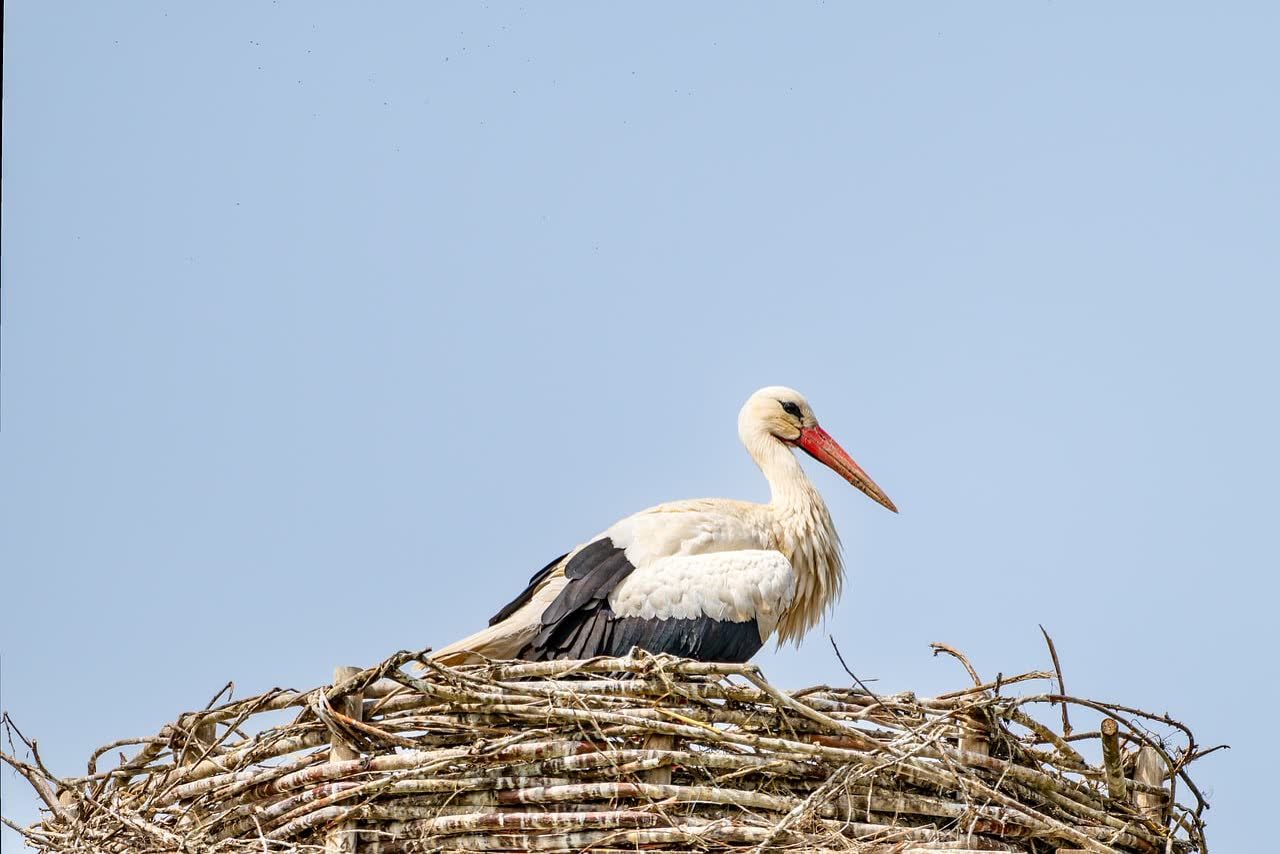
- White storks: on chimneys and poles across the Alentejo and Algarve, and uniquely on sea stacks at Cabo Sardão. See Costa Vicentina.
- Migrating raptors: over Sagres and Cape St Vincent in autumn, with a festival in early October. See Sagres.
- Seabirds: big colonies on the Berlengas islands. See Berlengas.
- Madeiran chaffinches and other island species along the levadas.
Where to start
The Ria Formosa near Faro and Olhão is the easiest birding spot in the country. Boardwalks and boat trips take you past flamingos, spoonbills and waders, and you can do it in a morning. See the Ria Formosa Natural Park. The Tagus estuary near Lisbon also holds large numbers of flamingos and wading birds. EVOA, a visitor centre in the estuary marshes near Vila Franca de Xira, has hides over the lagoons and guided visits; check opening days before you go, as it closes on Mondays and for part of the summer.
At Cabo Sardão on the Alentejo coast, storks build their huge nests on rock pillars above the sea, which you can watch from the clifftop path. The best time is spring, when the birds are nesting. The Sagres Birdwatching and Nature Festival takes place in early October (2 to 5 October in 2026), with guided walks and boat trips as eagles, vultures and storks pass on their way to Africa.
Plains and gorges
The open plains around Castro Verde in the Baixo Alentejo, a UNESCO biosphere reserve, are the best place in Portugal for great bustards and other steppe birds. Go in spring, early in the morning, with binoculars. In the far north-east, the deep river gorges of the Douro Internacional park near Miranda do Douro are home to griffon vultures and eagles, which you can watch from clifftop viewpoints.
On land
- Garrano horses: semi-wild ponies in Peneda-Gerês. See Peneda-Gerês.
- Iberian wolves and roe deer: in the remote north (rarely seen).
- Chameleons: in parts of the eastern Algarve.
- Iberian lynx: back in the wild in the Guadiana valley around Mértola, Serpa and Alcoutim, after a reintroduction that began in 2014 (very rarely seen).
The lynx was close to extinction in the early 2000s. A breeding centre near Silves in the Algarve, open since 2009, has helped it return. The first pair was released near Mértola in December 2014, and the 2025 count found 394 lynx in Portugal’s Guadiana valley, a record. You’re unlikely to see one, but the area is also good for birds of prey such as vultures and eagles. See Mértola.
In Peneda-Gerês, Portugal’s only national park, you’ll often see garrano ponies and long-horned cattle grazing near the trails. Wolves live in the park but keep well away from people.
Under the sea
The Berlengas, Sesimbra and the Azores are among Portugal’s best diving spots, with rich marine life. See Sesimbra.
The Berlengas are a UNESCO biosphere reserve with clear water, and boats run from Peniche in the warmer months. Numbers on the island are capped, so book ahead in summer. In the Azores, divers can meet manta rays and blue sharks in summer with specialist operators.
When to go
- Spring: migrating whales in the Azores, nesting storks and wildflowers.
- Summer: the calmest seas for dolphin trips and diving.
- Autumn: raptor migration over Sagres, peaking in September and October.
- Winter: wading birds and flamingos in the estuaries.
Responsible wildlife watching
- Choose licensed operators that follow guidelines for approaching whales and dolphins.
- Keep your distance from nesting birds and wild horses.
- Stay on trails in protected areas.
- Bring binoculars: they make a huge difference for birds and distant dolphins.
- Never feed wild animals, including the ponies in Peneda-Gerês.
FAQ
Where can I see dolphins in Portugal?
Almost anywhere along the coast on a boat trip, but the surest places are the Azores, Madeira and the Sado estuary near Setúbal, home to a small resident pod of bottlenose dolphins.
When is the best time for whale watching in the Azores?
Sperm whales are seen year-round, but spring, roughly April and May, brings migrating blue and fin whales. Summer has the calmest seas.
Can you see wild lynx in Portugal?
They live in the Guadiana valley around Mértola, and numbers are rising, but they are shy and very rarely seen. Treat any sighting as pure luck.
More: hiking in Portugal and the best time to visit the Azores.
See also: Miranda do Douro, sustainable travel in Portugal and dolphin watching in Portugal.
Prices and details change, so please double-check before you travel. Spotted something out of date? Tell us in the groups.
Still got questions?
Ask 305,000+ travellers and locals in our free Facebook groups.