
Pico Island, Azores: Climbing the Volcano, Vineyards and Whales
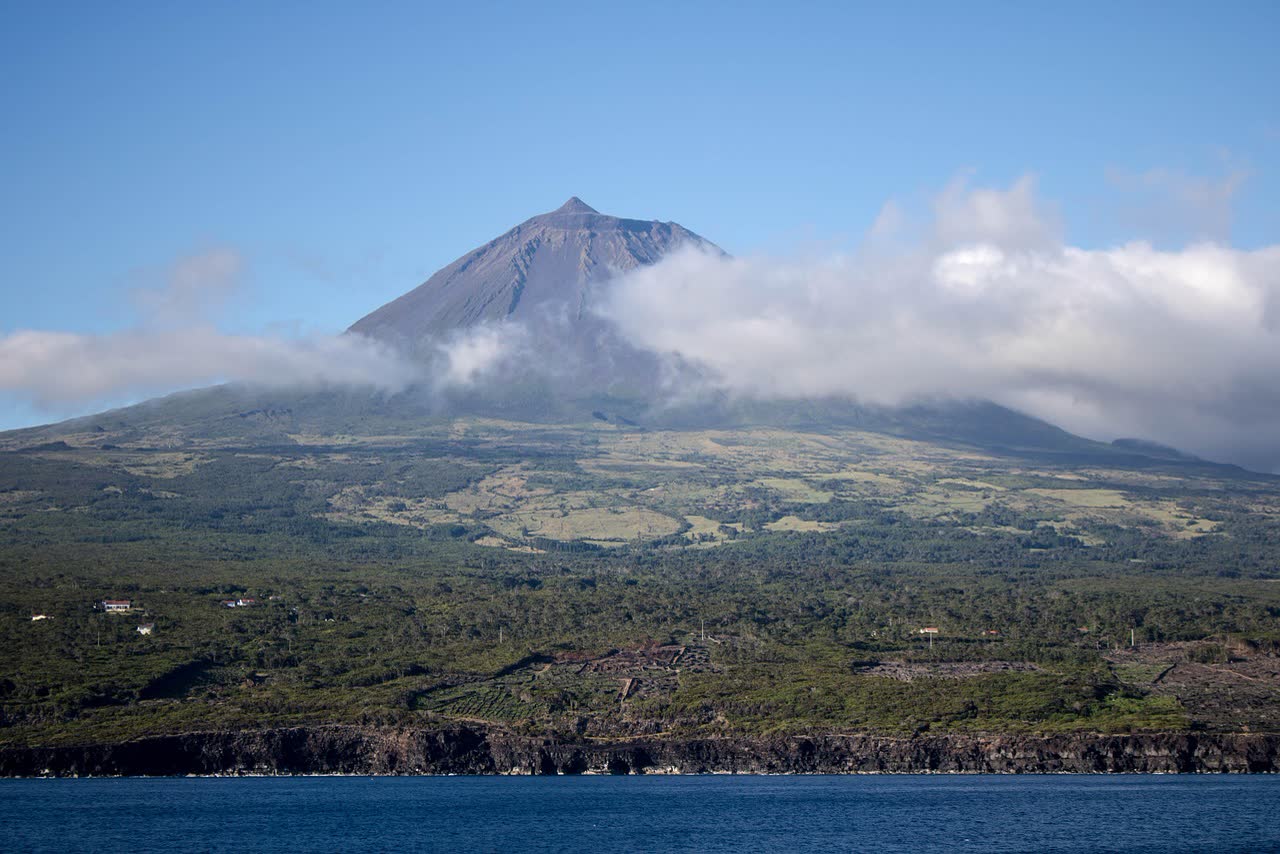
Pico is the Azores’ most dramatic island: dominated by Mount Pico, Portugal’s highest mountain at 2,351 metres, with UNESCO-listed vineyards growing inside black lava walls and some of the world’s best whale watching offshore. Here’s how to visit Pico.
Quick answer: climb Mount Pico (register at the Casa da Montanha; €25 to the summit), explore the lava-walled vineyards around Madalena and the Lajido area, go whale watching from Lajes do Pico or Madalena, and swim in natural lava pools. Pico is 30 minutes by ferry from Horta on Faial.
Why go
Pico feels wilder and quieter than São Miguel. The volcano fills the view from almost everywhere, including from neighbouring Faial and São Jorge, and the island mixes three very different experiences: a serious mountain climb, a wine landscape unlike anywhere else, and a whaling history that has turned into some of the best whale watching in Europe. Allow at least two full days, or three if you plan to climb.
Climbing Mount Pico
- Register at the Casa da Montanha (the mountain house) before climbing; you’ll be given a GPS tracker. The house sits at about 1,200 metres, reached by a winding road from Madalena, and is the only official starting point.
- Book ahead: there’s a daily limit on climbers, so reserve your climb on the official booking site as soon as you know your dates, especially in summer.
- Opening hours: the Casa da Montanha is usually open around the clock from May to September, with shorter daytime hours the rest of the year (roughly 8am to 6pm from November to March).
- Fees: €25 to the summit (Piquinho), €15 to the crater, plus €10 to stay overnight in the crater. A shorter walk to the Furna Abrigo cave costs €5. Azores residents climb free.
- GPS tracker: keep it with you and hand it back at the end. Losing it or not returning it costs about €270 to €300.
- Difficulty: a steep, rocky climb of about 3–4 hours each way. Good fitness and proper boots are essential. The path is marked by numbered posts, and the last section to the Piquinho is a scramble over rock.
- The summit: numbers on the Piquinho are limited, to about 30 people at a time for up to 20 minutes each, so you may have to wait your turn.
- Guides: not compulsory, but strongly recommended if you’re not an experienced hiker. See guided climbs.
- Weather: it changes fast; check conditions and be ready to turn back. Climbs can be closed in bad weather.
- Sunrise: many climbers go up overnight or camp in the crater for sunrise above the clouds.
- What to bring: warm layers, a waterproof, gloves, a head torch and at least 2 litres of water. It can be cold at the top even in August.
For a full walk-through, see climbing Mount Pico.
The vineyards
Pico’s vineyards are a UNESCO World Heritage Site: vines grow in thousands of tiny plots enclosed by black basalt walls (currais) that protect them from the wind and sea spray. Walk among them, visit the wine museum and taste the island’s volcanic wines. The Lajido area, on the north coast between Madalena and São Roque, has stone houses, old wine presses and a marked walking trail through the walls. Look for dry white wines made from the Verdelho, Arinto dos Açores and Terrantez do Pico grapes, and the island’s traditional fortified wine. See the Pico vineyards.
Whale watching
Pico has a long whaling history, now turned into world-class whale watching. Lajes do Pico has a whaling museum and trips that often see sperm whales and dolphins. Old clifftop lookouts (vigias), once used to spot whales for the hunters, now guide the tour boats by radio. Trips usually last about 3 hours. The season runs roughly from April to October, with spring the best time for passing baleen whales. See whale-watching trips. See whale watching in the Azores.
Other things to do
- Natural lava pools along the coast for swimming in summer, with ladders and sun decks in several villages.
- Lava tubes and caves, like the Gruta das Torres, the longest lava tube in Portugal. Visits are guided, last about an hour and include a helmet and torch. Check current times, as they’re reduced outside summer.
- Coastal villages and black-rock shores, such as São Roque and Lajes do Pico.
- The “Triangle”: combine Pico with Faial and São Jorge by ferry.
- The interior plateau: a high road crosses the middle of the island past small crater lakes and cattle pasture, often in mist.
A two or three day plan
- Day 1: whale watching from Lajes do Pico in the morning, the whaling museum, then a drive back along the coast to swim in a lava pool.
- Day 2: Gruta das Torres, the Lajido vineyards and a wine tasting, then sunset over Faial from Madalena.
- Day 3 (optional): the mountain. Keep it flexible and pick the clearest day.
Food and drink
Try Pico cheese, a soft cow’s milk cheese, local octopus stewed in wine, fresh fish, and the island’s white wines. A glass of fortified wine after dinner is a local habit.
When to go
June to September brings the best chance of clear summit days and calm seas. The climb is possible in other months, but expect cold, wind and cloud. Lajes do Pico holds its Whalers’ Week festival in late August, with regattas of old whaling boats. See the best time to visit the Azores.
Getting there
- Ferry: about 30 minutes from Horta (Faial) to Madalena, several times a day year-round, weather permitting.
- Flights: Pico’s airport has direct flights from Lisbon, with extra flights in summer, plus links to the other islands.
- Getting around: hire a car. Buses are infrequent.
Where to stay
Madalena is the main town and ferry port. Places to stay on Pico.
FAQ
How much does it cost to climb Mount Pico?
€25 to the summit (Piquinho) or €15 to the crater, plus €10 to stay overnight. Azores residents climb free.
Do you need a guide to climb Mount Pico?
No, but you must register at the Casa da Montanha and carry the GPS tracker you’re given. A guide is a good idea if you’re not an experienced hiker or the weather is uncertain.
How long does the climb take?
Usually 3 to 4 hours up and a similar time down, so plan for a full day and start early.
How do you get to Pico?
Take the ferry from Horta on Faial, which takes about 30 minutes, or fly direct from Lisbon or from the other islands.
More: Azores island hopping, Faial and Madeira vs the Azores.
See also: climbing Mount Pico and the Pico vineyards.
Some links in this guide are affiliate or referral links (GetYourGuide, Booking.com, Discover Cars, Welcome Pickups, Airalo, Yesim, Saily, Tiqets, Radical Storage, EKTA, AirHelp, Uber). If you book or sign up through them we may earn a small commission or ride credit at no extra cost to you. It helps keep our groups and this site free.
Still got questions?
Ask 305,000+ travellers and locals in our free Facebook groups.