
Trip guides / Day trips
Setubal and Arrabida: Beaches, Dolphins and Wine Near Lisbon
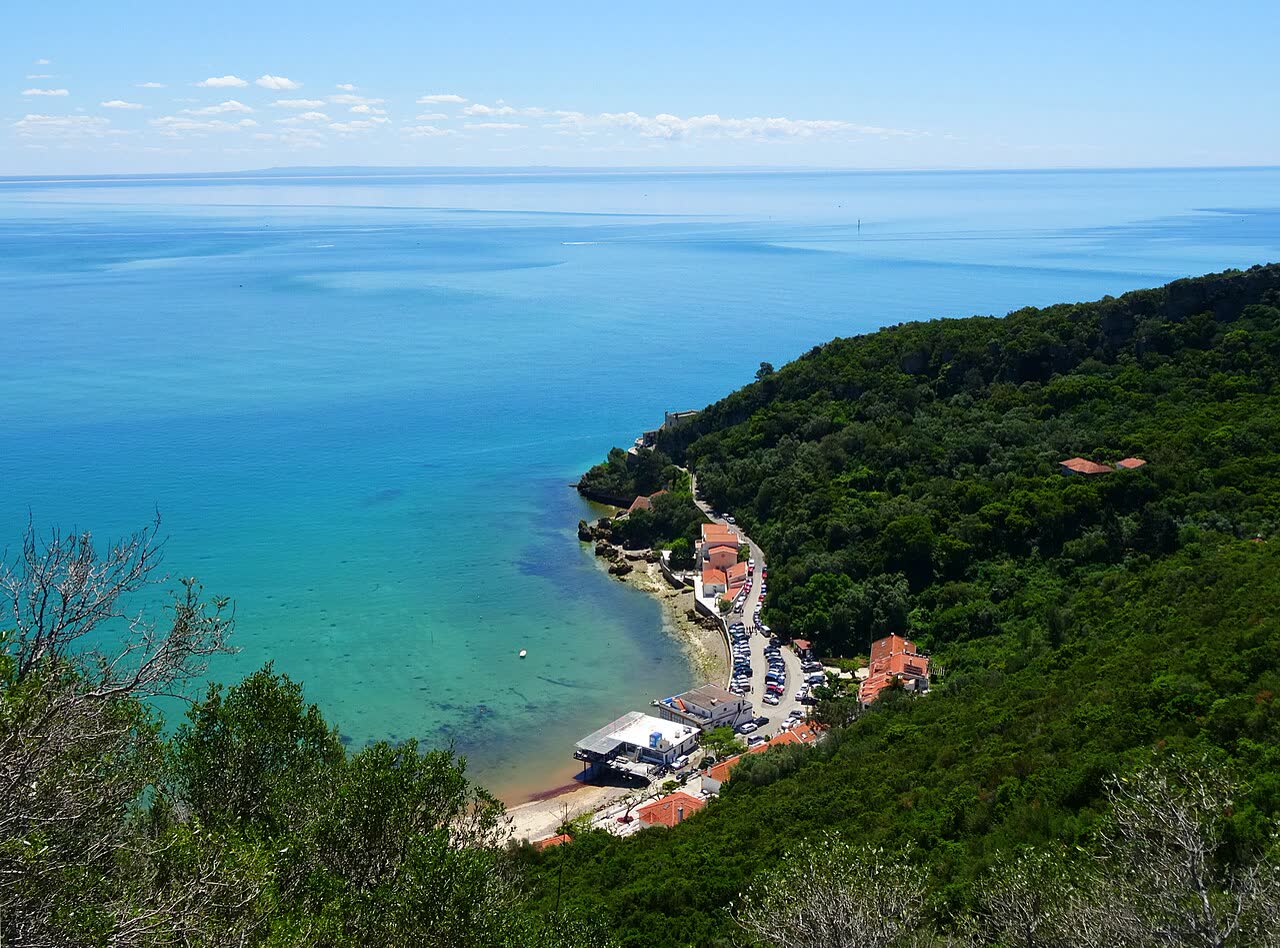
Just south of Lisbon, across the Tagus, the Arrábida hills drop straight into a turquoise sea. It’s home to some of the most beautiful beaches near the capital, dolphins in the Sado estuary and the excellent fried cuttlefish of Setúbal. It’s a favourite escape for Lisboetas, and far less touristy than Sintra or Cascais.
Quick answer: get to Setúbal by train (Fertagus, about an hour from Lisbon) or car. In summer (early June to mid-September), cars are restricted on the Arrábida beach road, so use the buses and shuttles from Setúbal. Swim at Galapinhos or Portinho da Arrábida, take a dolphin-watching boat, and eat choco frito in Setúbal.

Getting there from Lisbon
- Train: the Fertagus line crosses the 25 de Abril bridge from Lisbon (Roma-Areeiro, Entrecampos and Sete Rios) to Setúbal in about an hour. The views from the bridge are great.
- Bus: buses from Lisbon (including Sete Rios) also run to Setúbal.
- Car: about 45 minutes via the A2 (tolled). A car makes it easy to combine the beaches, Azeitão wineries and Sesimbra, but see the summer restrictions below.
- Tour: day trips from Lisbon often combine Arrábida, a wine tasting and Sesimbra. See Arrábida tours.
Not every Fertagus train goes all the way to Setúbal (some stop at Coina), so check the destination board. Since December 2024, trains to Setúbal have run about every 20 minutes through the day. Fertagus trains end at Setúbal station, about a 15 to 20-minute walk from the riverfront. CP trains on the Sado line also stop at Praça do Quebedo, closer to the old town, but Fertagus trains don’t. The 25 de Abril bridge is free heading south out of Lisbon by car, and the toll is charged on the way back north.
Summer car restrictions: “Arrábida sem carros”
To protect the natural park and ease traffic, Setúbal restricts cars on the coastal road to the beaches every summer. Separately, the coastal stretch between the Figueirinha tunnel and Galapos has been closed since February 2023 because of rockfall risk, so you can’t drive the coast from Setúbal to Creiro; buses and cars go over the hills via Azeitão. In 2026 the rules ran from 4 June to 15 September, from 7am to 8pm, covering the roads to Albarquel, Figueirinha, Portinho da Arrábida, Creiro and Galapos. Instead:
- Buses run from Setúbal to the beaches (Creiro and Figueirinha), and a shuttle runs between Creiro and Galapos every 30 minutes.
- The navegante card works on these buses.
- Arrive early on summer weekends, as buses fill up.
In detail, private cars are banned throughout those hours on the road to Albarquel and Figueirinha beaches, while the road on to Portinho, Creiro and Galapos is closed whenever its car parks are full, which on a sunny weekend can be by mid-morning. Taxis, Uber and Bolt, motorbikes and bikes are still allowed. The Carris Metropolitana beach buses include line 4474 from Alegro to Figueirinha (very frequent at weekends), line 4471, a circular to Albarquel, line 4470 from Setúbal to Creiro via Azeitão (about an hour), and the 4477 shuttle from Creiro to Galapos. Free car parks in Setúbal, such as the one at the Alegro shopping centre, link up with the buses, and there is another free car park in Azeitão, by the monthly market ground. The small car park at Creiro charges by the day and fills early.
Winter storms in January and February 2026 also damaged the main road down to the beaches. Repairs are expected to be costly and had no date at the last update, and the council is studying boat links to the beaches from 2027. Check the latest access news before you go.
Dates change each year, so check the Setúbal council website before you go. Outside summer you can drive and park along the road as normal.
The best Arrábida beaches
- Galapinhos: once voted the best beach in Europe. A small cove of white sand and clear water under green cliffs, reached by a steep path.
- Portinho da Arrábida: a sheltered bay with calm, shallow water and seafood restaurants. Great for families and snorkelling.
- Creiro: a long, easy beach next to Portinho.
- Figueirinha: the closest to Setúbal, with shallow water and sandbanks at low tide.
The water here is calmer and often warmer than on Lisbon’s Atlantic beaches, as the hills shelter the bay.
Galapinhos has no lifeguard, café or toilets, and the path down is steep and loose, so wear proper shoes and bring water. Portinho and Creiro are the best choices with children. There is very little shade on any of the beaches, so a parasol helps.
Other things to do
Dolphin watching in the Sado
The Sado estuary has a resident pod of about 25 bottlenose dolphins, one of only a few in Europe. Boat trips leave from Setúbal, take 2–2.5 hours and cost around €40–45. Sightings are very likely but never guaranteed. See dolphin-watching trips.
Trips run all year, weather permitting. Morning trips usually have calmer water. Licensed operators follow rules on how close boats can get, so the dolphins are not chased.
Setúbal town
A working port town with a lively market (Mercado do Livramento, one of the best fish markets in Portugal), a pretty old centre and the hilltop São Filipe fort with views over the estuary. Places to stay in Setúbal.
The market is at its best in the morning, usually opens from about 7am to 2pm, and is closed on Mondays. Look up at the tile panels inside, which show local scenes. The old centre around Praça do Bocage and the Gothic-Manueline Igreja de Jesus is easy to explore on foot in an hour or two.
Choco frito
Setúbal’s signature dish: strips of fried cuttlefish, crispy outside and tender inside, often with chips and salad. Order it along the waterfront Avenida Luisa Todi.
Setúbal is also known for grilled red mullet (salmonete) and other fresh fish straight off the boats.
Convento da Arrábida
A 16th-century Franciscan monastery tucked into the green hillside, with wonderful sea views. It belongs to the Fundação Oriente, and visits are by appointment only, on set days (usually Wednesdays and weekends), so book ahead.
Azeitão wine
On the inland side of the hills, the village of Azeitão is famous for Moscatel de Setúbal (a sweet fortified wine) and for José Maria da Fonseca, one of Portugal’s oldest wineries, which runs cellar tours and tastings. Try the local queijo de Azeitão (a creamy sheep’s cheese) and tortas de Azeitão (rolled sponge cakes).
Hiking in the Serra da Arrábida
The hills are a natural park, covered in thick Mediterranean scrub, with marked trails and viewpoints high above the sea. The road along the ridge (the N379-1) has several viewpoints where you can stop for photos. Avoid hiking in the middle of a summer day, as there is little shade, and check for fire-risk closures in hot, dry weather.
Tróia
Across the estuary, the Tróia peninsula has miles of white sand. The Atlantic Ferries catamaran takes about 15 minutes and costs about €5 each way.
Sesimbra
A fishing town on the far side of Arrábida, with a lovely town beach, a castle on the hill and grilled-fish restaurants. Cabo Espichel, with its cliffs and old pilgrim church, is nearby. See our Sesimbra day trip guide.
A perfect day
- Early train or drive to Setúbal, and a look around the market.
- Morning dolphin-watching trip, or straight to the beach.
- Lunch at Portinho da Arrábida, or choco frito in Setúbal.
- Afternoon swimming at Galapinhos or Creiro.
- A wine tasting in Azeitão on the way back to Lisbon if you have a car.
When to go
- June to September: beach season, with lifeguards on the main beaches and the warmest water. Weekdays are far quieter than weekends.
- Spring and autumn: great for hiking, dolphin trips and wine tastings, and you can drive the coast road freely. September often still has warm sea.
- Winter: quiet and green. Fine for the town, the market and the wineries, though many beach restaurants close.
FAQ
Can you drive to the Arrábida beaches in summer?
Mostly not. In 2026, from 4 June to 15 September, cars were banned from 7am to 8pm on the road to Albarquel and Figueirinha, and the road to Portinho, Creiro and Galapos closed whenever its car parks filled. Taxis, Uber and Bolt can still get through.
How do you get to Arrábida from Lisbon without a car?
Take the Fertagus train to Setúbal, about an hour, then a Carris Metropolitana beach bus: the 4474 to Figueirinha or the 4470 to Creiro, with the 4477 shuttle on to Galapos. The navegante card works on all of them.
Can you drive the Arrábida coast road?
Not all of it. The stretch between the Figueirinha tunnel and Galapos has been closed since February 2023 because of rockfall risk, so you reach Portinho and Creiro over the hills.
Will you see dolphins in Setúbal?
Very likely, as about 25 bottlenose dolphins live in the Sado estuary all year, but sightings are never guaranteed. Book a licensed operator and go in the morning for calmer water.
More day trips
See the best day trips from Lisbon, Cascais and Évora and the Alentejo.
See also: where to stay in Setúbal and Arrábida, the Arrábida beaches, Palmela Castle, the Troia peninsula and dolphin watching in Portugal.
Some links in this guide are affiliate or referral links (GetYourGuide, Booking.com, Discover Cars, Welcome Pickups, Airalo, Yesim, Saily, Tiqets, Radical Storage, EKTA, AirHelp, Uber). If you book or sign up through them we may earn a small commission or ride credit at no extra cost to you. It helps keep our groups and this site free.
Still got questions?
Ask 305,000+ travellers and locals in our free Facebook groups.