
Costa Vicentina: Wild Beaches and the Fishermen's Trail
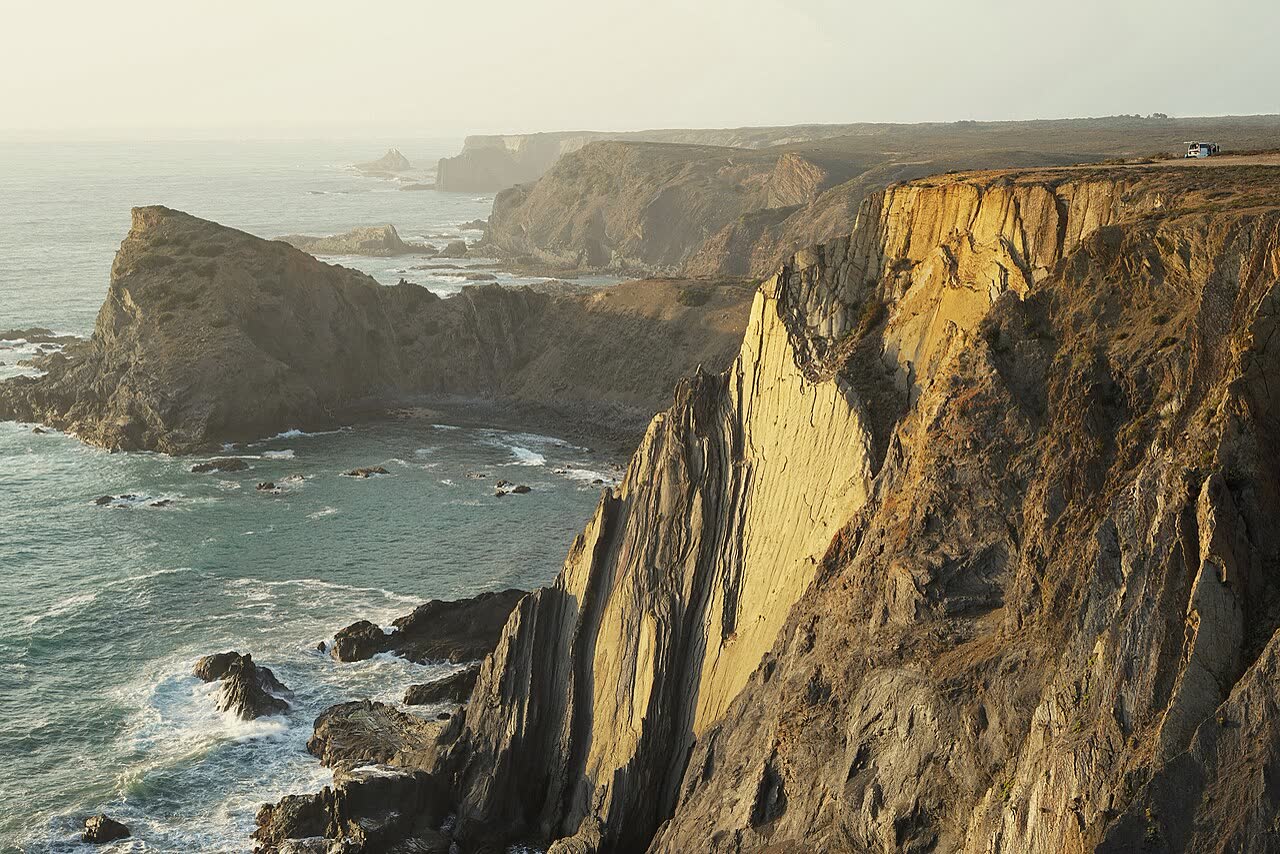
Portugal’s wild southwest coast is the opposite of the resort Algarve: towering cliffs, empty golden beaches, surf villages and storks nesting on sea stacks. The Costa Vicentina runs north from Cape St Vincent into the Alentejo, protected as a natural park, with one of Europe’s most beautiful long-distance walks along the clifftops. Here’s how to explore it.
Quick answer: hire a car and base yourself in Aljezur, Odeceixe or Vila Nova de Milfontes. Don’t miss the beaches of Odeceixe, Amoreira, Arrifana and Bordeira, and walk a stretch of the Fishermen’s Trail. The Atlantic here is cold and powerful, so swim only at lifeguarded beaches. It’s best from May to October.

Where is the Costa Vicentina?
The coast of the Southwest Alentejo and Vicentine Coast Natural Park stretches for more than 100km from Burgau and Cape St Vincent in the Algarve north to São Torpes, near Sines. Strict protection means low-key villages, no high-rise hotels and lots of untouched coastline.
The Algarve part is often called the Costa Vicentina, and the Alentejo part the Costa Alentejana, but for visitors it’s one long stretch of coast. The main road, the N120 and then the N268, runs a few kilometres inland, with side roads down to each beach.
Getting there and around
- By car (best): Aljezur is about 30 minutes from Lagos, 1h15 from Faro airport and about 2.5 to 3 hours from Lisbon. A car lets you hop between beaches. See our car rental guide.
- By bus: buses link Lagos, Aljezur, Odeceixe and Milfontes, and Lisbon to the Alentejo coast, but services are infrequent, especially out of season.
- On foot: the Rota Vicentina trails, with luggage transfers available from local companies.
Rough driving times between bases: Vila Nova de Milfontes to Odeceixe about 50 minutes to an hour, Odeceixe to Aljezur about 20 minutes, and Aljezur to Sagres about 45 minutes. The A22 in the Algarve has been toll-free since 2025, which helps if you’re coming from Faro. Rede Expressos runs long-distance coaches from Lisbon to the coast, and local buses connect Lagos and Aljezur, but many beaches have no bus at all.
The best beaches
Algarve side
- Praia do Castelejo and Cordoama: huge beaches below dark cliffs near Vila do Bispo. Wild and dramatic.
- Praia do Amado: a classic surf beach with surf schools and a relaxed vibe.
- Praia da Bordeira: a vast beach with a river lagoon and wooden boardwalks over the dunes from Carrapateira.
- Praia da Arrifana: a curving bay under high cliffs with a ruined fort on top. One of the best places to learn to surf in Portugal.
- Monte Clérigo: a family-friendly beach with a little village of colourful houses.
- Praia da Amoreira: where a river meets the sea between green hills. Calm river water for kids, waves for everyone else.
- Odeceixe: the most famous, where the Seixe river snakes around a sandbank into the ocean. Gorgeous from the viewpoint above.
Don’t miss the short clifftop loop road around Carrapateira, between Bordeira and Amado. It has several viewpoints over the beaches and the old fishing harbour of Pontal, and it’s spectacular at sunset.
Alentejo side
- Zambujeira do Mar: a clifftop village with a chapel above the beach and Blue Flag coves to either side (its big summer festival, Sudoeste, has not run since 2024).
- Cabo Sardão: a lighthouse on the cliffs, famous for the white storks that nest on the sea stacks, the only place in the world they do so.
- Vila Nova de Milfontes: a pretty town where the Mira river meets the sea, with calm river beaches and ocean beaches.
- Porto Covo: a whitewashed fishing village with little coves, and Pessegueiro island just offshore.
The storks at Cabo Sardão are easiest to see from late winter to early summer, when they are on their nests. Watch from the clifftop path and stay well back from the edge.
The Rota Vicentina
A network of more than 750km of waymarked walking trails, run by a local association, stretching from Santiago do Cacém to Cape St Vincent and Lagos. There are no permits or fees (donations are welcome).
- The Fishermen’s Trail: the star route, 226.5km in 13 stages from São Torpes to Lagos, walkable in either direction, following the paths fishermen use to reach the beaches and fishing spots along the clifftops. Stages are mostly 15–20km, often on soft sand, which is harder than it looks. Stunning the whole way.
- The Historical Way: an inland route through villages, cork forests and farmland. Easier underfoot, and good for cyclists too.
- Circular walks: shorter loops from many villages if you just want a half-day hike.
Spring (March to May) is the best time to walk, with wildflowers and cooler temperatures. Summer is hot and exposed, and the Rota Vicentina association recommends walking its trails between September and June. Groups are limited to 15 people on the Fishermen’s Trail. Carry plenty of water, keep away from cliff edges and check the Rota Vicentina website for the latest trail conditions.
The Historical Way runs for about 263km in 13 stages from Santiago do Cacém to Cape St Vincent. If you only have one day, a popular Fishermen’s Trail stage is Almograve to Zambujeira do Mar (about 21.5km), past Cabo Sardão, or the shorter clifftop walk from Odeceixe towards Aljezur. Walk north to south and the wind and sun are usually at your back.
Surfing
This coast has waves all year. Arrifana, Amado, Monte Clérigo and Bordeira have surf schools offering lessons and board hire for all levels, and there are plenty of surf camps around Aljezur and Sagres.
Beginners do best in summer, when the swell is usually smaller. Autumn and winter bring bigger, cleaner waves for experienced surfers.
A sample road trip
- Day 1: Porto Covo and Pessegueiro island, then on to Vila Nova de Milfontes for the night.
- Day 2: Cabo Sardão and Zambujeira do Mar, then south to Odeceixe for sunset from the viewpoint.
- Day 3: Amoreira, Monte Clérigo and Arrifana, with a night in Aljezur.
- Day 4: Bordeira, the Carrapateira loop and Amado, then Castelejo and sunset at Cape St Vincent.
Where to stay
- Aljezur: central for the best Algarve-side beaches, with a castle above the old town.
- Odeceixe: a charming village on the border between the Algarve and Alentejo.
- Vila Nova de Milfontes: the liveliest base on the Alentejo side, with lots of restaurants.
- Porto Covo: small and peaceful at the northern end.
- Sagres: surf town at the southern tip.
Wild camping and sleeping in campervans outside campsites is not allowed in the natural park, and fines are common. Use the official campsites instead.
Safety
- Respect the ocean. Strong currents and big waves are common. Swim between the flags at lifeguarded beaches (usually June to September; on Aljezur’s beaches 1 June to 30 September in 2026).
- Stay back from cliff edges. They can crumble without warning.
- The water is cold, even in summer (often 17–20°C). A wetsuit helps for surfing.
- Don’t leave valuables in the car at beach car parks.
- Expect wind and morning mist, even in summer. Bring a warm layer for the evenings.
Food
Fresh fish and seafood, especially percebes (goose barnacles), harvested on these very cliffs. Aljezur is famous for its sweet potatoes (batata-doce), celebrated with a festival in late November, usually on the last weekend of the month (check the dates before you go).
Also look out for grilled sea bream and octopus, seafood rice, and on the Alentejo side, hearty dishes with bread, pork and coriander. Finish with a glass of medronho, the local strawberry-tree fruit brandy, made in the hills behind the coast.
When to go
- Spring (March to May): wildflowers, green hills and the best walking weather.
- Summer (June to September): beach season, with lifeguards and warm days, but the coast is busiest in August. Book places to stay early.
- Autumn (October and November): quieter, often sunny, with good surf.
- Winter: mild but rainy and windy, and many restaurants close. Peaceful if you like it empty.
FAQ
Is it safe to swim on the Costa Vicentina?
Only with care. The Atlantic here has strong currents and big waves, so swim at lifeguarded beaches, usually staffed from June to the end of September, and stay between the flags. River beaches such as Odeceixe and Amoreira are calmer for children.
How long is the Fishermen’s Trail?
It is 226.5km in 13 stages from São Torpes to Lagos, and most people take about two weeks to walk it all. You can also walk a single stage as a day hike.
Do you need a car on the Costa Vicentina?
It helps a lot, as buses are infrequent and many beaches have no bus at all. Walkers can manage without one by using luggage transfers and taxis.
What is the best month to visit?
May, June and September are ideal for beaches and walking, with fewer people than August. For long hikes, spring and autumn are cooler and more comfortable.
More of the south
Combine the coast with Lagos and the western Algarve and the best Algarve beaches, or head inland to Évora and the Alentejo. At the southern end, see Sagres and Cape St Vincent.
See also: Aljezur, Odeceixe, Vila Nova de Milfontes, Porto Covo, camping in Portugal, Arrifana Beach and the best Alentejo beaches.
Some links in this guide are affiliate or referral links (GetYourGuide, Booking.com, Discover Cars, Welcome Pickups, Airalo, Yesim, Saily, Tiqets, Radical Storage, EKTA, AirHelp, Uber). If you book or sign up through them we may earn a small commission or ride credit at no extra cost to you. It helps keep our groups and this site free.
Still got questions?
Ask 305,000+ travellers and locals in our free Facebook groups.