
The Ria Formosa Natural Park
The Ria Formosa is a protected lagoon system that stretches along the eastern Algarve coast, from near Quinta do Lago past Faro to Manta Rota. It’s a world of channels, salt marshes, sandbanks and barrier islands, full of birdlife, shellfish beds and empty beaches. Here’s how to explore it.
Quick answer: take a boat tour from Faro or Olhão through the channels to the islands, or a ferry to Ilha Deserta, Culatra, Armona or Ilha de Tavira. Look for flamingos, herons and spoonbills, and try local clams and oysters. See Ria Formosa tours.

Why go
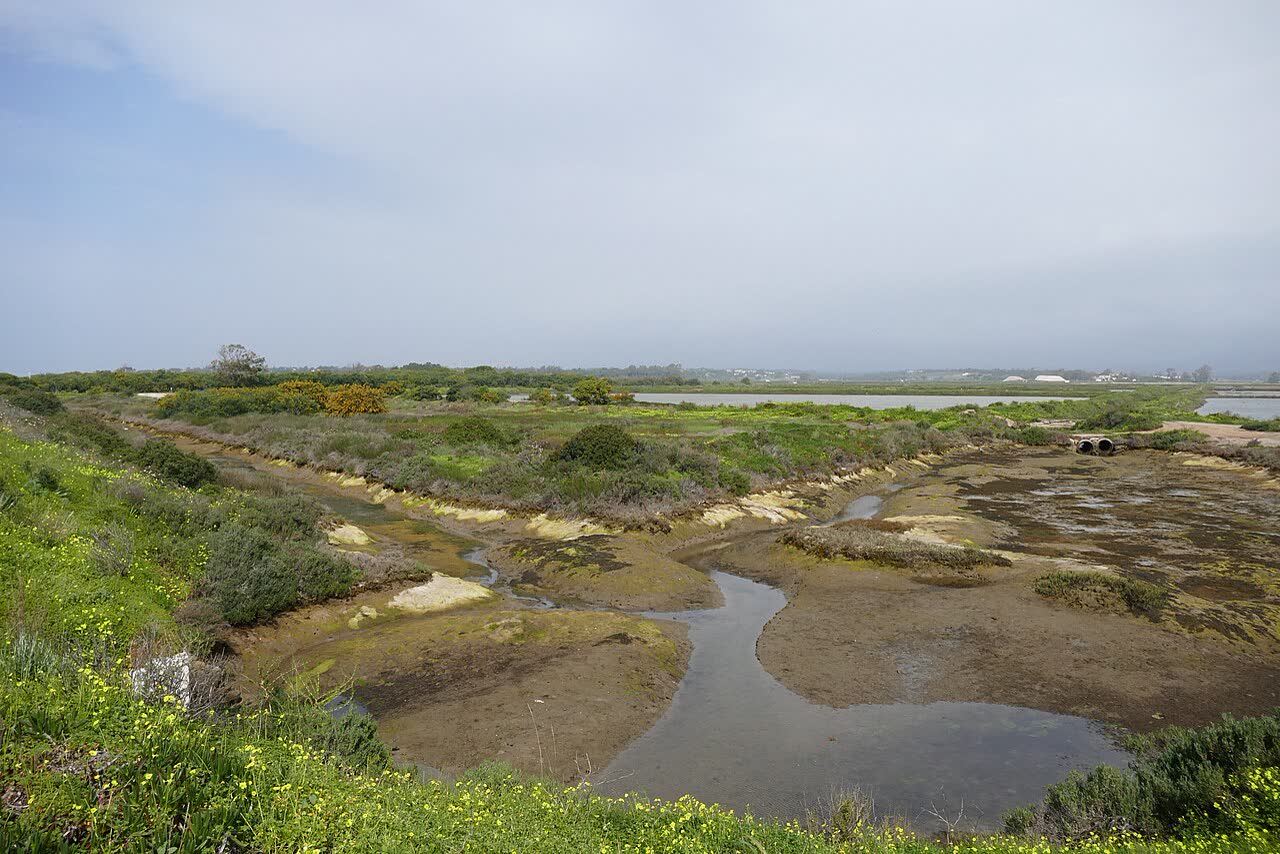
The lagoon runs for about 60 km, from Ancão near Quinta do Lago in the west to Manta Rota, just past Cacela Velha, in the east. It covers around 18,000 hectares and has been a natural park since 1987. A chain of sandy barrier islands shields it from the open Atlantic, with inlets letting the tide in and out. In 2010 it was voted one of the Seven Natural Wonders of Portugal. For you, that means calm water, long empty beaches a short boat ride from town, and some of the best birdwatching in the country.
It’s also a working landscape. Locals dig for clams on the mudflats at low tide, oysters are farmed in the channels, and salt is still harvested in pans around Olhão and Tavira.
Things to do
- Boat tours: birdwatching and island-hopping trips, usually two to four hours. Smaller boats can get into the shallow channels. See the best boat trips.
- Island beaches: see Ilha Deserta and Olhão’s islands. Culatra has a working fishing village and, at its western end, the lighthouse settlement of Farol. Armona is closest to Olhão and has a long ocean beach a short walk from the jetty.
- Birdwatching: flamingos, storks and waders, especially in autumn and winter. Tens of thousands of birds pass through on migration. Look out too for the purple swamphen in the reed beds. See wildlife in Portugal.
- Kayaking and SUP on the calm channels. Go with a guide if you don’t know the tides.
- Walking trails: marked paths around the lagoon, including near Quinta do Lago and Olhão. The park’s visitor centre at Quinta de Marim, just east of Olhão, has a nature trail past salt marsh, a restored tide mill and Roman fish-salting remains. Allow one to two hours.
- Shellfish: clams and oysters farmed in the lagoon. See the seafood guide.
The islands at a glance
- Ilha Deserta (Barreta): the most remote feel, with a boardwalk across the dunes and miles of beach. Its tip, Cabo de Santa Maria, is the southernmost point of mainland Portugal.
- Farol: a small settlement of holiday houses around a lighthouse, with ocean beaches on one side and lagoon views on the other.
- Culatra: a real fishing community with sandy lanes, no cars and a few simple seafood restaurants.
- Armona: the easiest island from Olhão. A path runs from the jetty to the ocean beach.
- Ilha de Tavira: a long, busy summer beach facing Tavira. At its western end, Praia do Barril has the “anchor cemetery”, rows of old tuna-fishing anchors in the sand, reached on foot or by a little tourist train from Pedras d’El Rei.
Getting there and around
- From Faro: ferries leave from the jetty by the old town for Ilha Deserta, and in recent summers also for Farol and Culatra (summer only, so check this year’s times). The crossing to Ilha Deserta usually takes about 45 minutes. The year-round ferries to Culatra and Armona leave from Olhão.
- From Olhão: public ferries run to Armona, Culatra and Farol all year, with fewer boats in winter. Water taxis fill the gaps.
- From Tavira: ferries cross to Ilha de Tavira from the town in summer and from Quatro Águas, a short way downriver, for more of the year.
- Trains: the Algarve line stops at Faro, Olhão and Tavira, so you can do it all without a car. The whole line has been electric since July 2026. See getting around the Algarve.
How long to spend
Give it at least one full day. A good plan from Olhão: morning ferry to Culatra, lunch in the village, a walk to the ocean side, then an afternoon boat back and an early evening at the Marim trail. With two days, add a boat tour from Faro to Ilha Deserta.
Short on time? From Faro, a two-hour birdwatching boat trip and lunch in the old town make a good half-day.
Food
- Clams: try amêijoas à Bulhão Pato, cooked with garlic, olive oil and coriander.
- Oysters: often sold straight from local farms.
- Cataplana and grilled fish: both found all round the lagoon. See cataplana.
- Olhão market: the two red-brick market halls on the waterfront sell fish in one and fruit and vegetables in the other. Saturday morning is the busiest and best.
Bases
- Faro: see Faro.
- Olhão: see Olhão.
- Tavira: see where to stay in Tavira.
When to go
Summer is best for the beaches. Spring and autumn are better for birds, walking and quieter boats. Winter is mild and good for flamingos, though some island cafes close. In August, Olhão usually holds its seafood festival, the Festival do Marisco, on the waterfront. Check the dates before you plan around it.
Tips
- Tides: they shape the lagoon, so boat schedules follow them.
- Sun: little shade on the islands. Take water and a hat.
- Last boat: note the time of the last ferry back before you head off along the beach.
- Protected area: stay on paths and don’t disturb wildlife.
- Seahorses: the lagoon is home to one of the world’s largest seahorse populations. Never touch them.
FAQ
Can you visit the Ria Formosa without a tour?
Yes. Public ferries from Faro, Olhão and Tavira reach the main islands, and the visitor centre at Quinta de Marim has a walking trail. A guided boat trip is the easiest way to see the inner channels and birds, though.
Which Ria Formosa island is best?
For empty beaches, Ilha Deserta. For a village feel, Culatra. For the quickest trip with an easy beach, Armona from Olhão, or Ilha de Tavira if you’re staying in Tavira.
When can you see flamingos?
Flamingos are seen most often from autumn to spring, in the salt pans and shallows around Faro, Olhão and Tavira. Numbers vary from year to year, so a local birdwatching guide is your best bet.
Is the Ria Formosa good for swimming?
The ocean side of the islands has long sandy beaches. The lagoon side is calmer and shallower, which suits children, but tides and currents near the inlets can be strong, so swim where others do.
More: the eastern Algarve and east vs west Algarve.
See also: Ilha de Tavira and Culatra Island.
Some links in this guide are affiliate or referral links (GetYourGuide, Booking.com, Discover Cars, Welcome Pickups, Airalo, Yesim, Saily, Tiqets, Radical Storage, EKTA, AirHelp, Uber). If you book or sign up through them we may earn a small commission or ride credit at no extra cost to you. It helps keep our groups and this site free.
Still got questions?
Ask 305,000+ travellers and locals in our free Facebook groups.