
Trip guides / Destinations
The Most Beautiful Small Towns in Portugal
Some of Portugal’s most memorable places are its small towns: walled hilltop villages, whitewashed fishing towns, granite villages built into boulders and riverside towns with medieval bridges. Here are the most beautiful small towns in Portugal, and how to fit them into your trip.
Quick answer: the most beautiful small towns are Óbidos, Monsaraz, Marvão, Monsanto, Piódão, Ponte de Lima, Tavira, Ericeira, Mértola and Pinhão in the Douro. Stay overnight to see them after the day-trippers leave.
Why visit the small towns?
Lisbon and Porto are wonderful, but the small towns show you a slower Portugal: castles on hilltops, local cafes on the square and regional food you won’t find in the cities. Most can be seen in a few hours, so they fit easily between bigger stops on a road trip.
Central Portugal and the Silver Coast
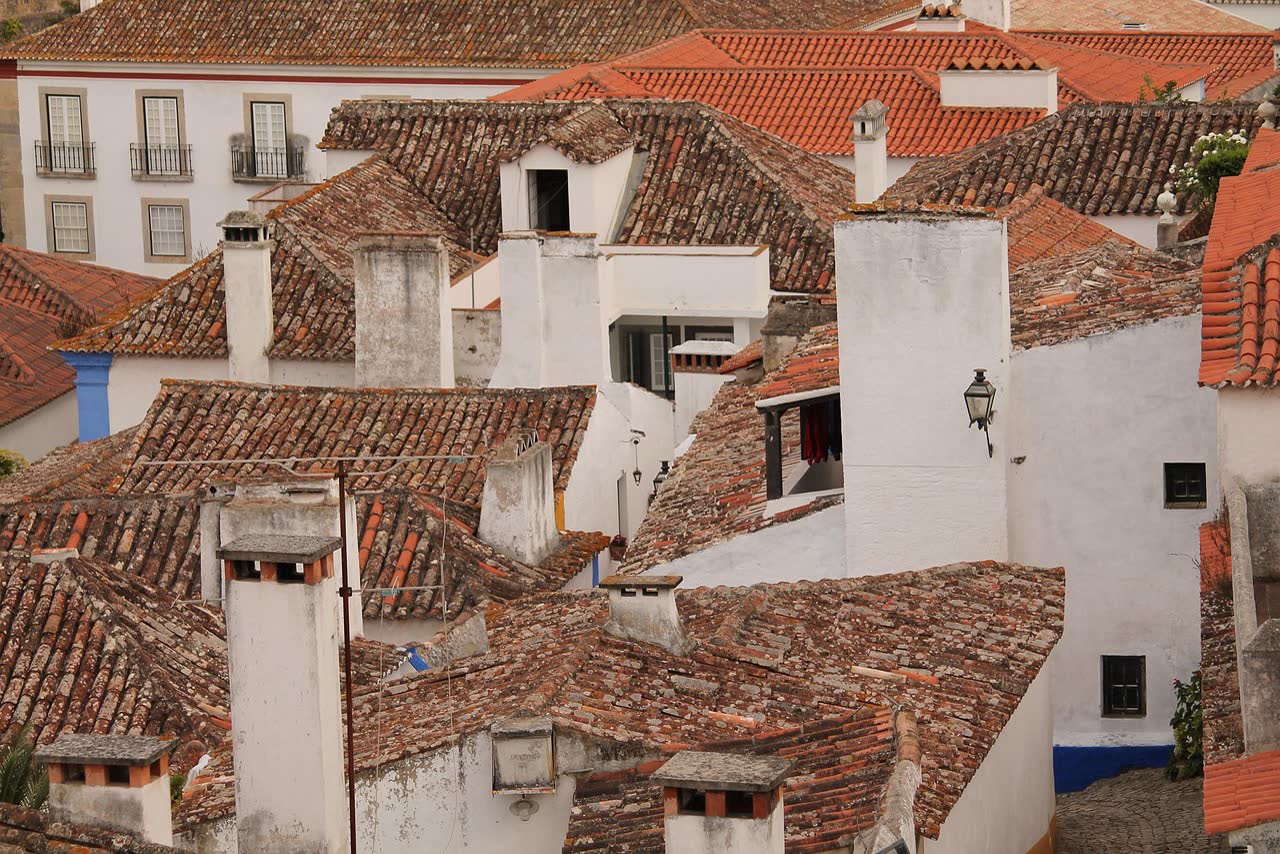
- Óbidos: a walled medieval town of white houses and flowers, famous for ginjinha in chocolate cups. You can walk part of the walls, which have no railings, so take care. Allow two to three hours. About an hour’s drive north of Lisbon. See Óbidos.
- Nazaré: a fishing town with giant winter waves. Take the funicular up to the Sítio for the view. It has had closures for maintenance since 2025, with a replacement bus when it isn’t running, so check before you go. See Nazaré.
- Tomar: home of the Templar castle and Convent of Christ, a UNESCO World Heritage Site. Allow half a day. See Tomar.
- Ericeira: a whitewashed surf town near Lisbon, with blue-trimmed houses and fish restaurants above the beach. See Ericeira.
The Alentejo
- Monsaraz: a tiny walled village above the Alqueva lake, with whitewashed lanes and a castle you can climb. See Monsaraz.
- Marvão: a clifftop fortress village with huge views into Spain. It sits high in the Serra de São Mamede, so it can be cool and misty. See Marvão.
- Castelo de Vide: a hillside town with a Jewish quarter and flower-filled lanes, a short drive from Marvão.
- Mértola: a town above the Guadiana with a mosque converted into a church, plus small museums on its Islamic and Roman past.
- Vila Nova de Milfontes: a river-mouth beach town on the wild coast. See Costa Vicentina.
The mountains and interior
- Monsanto: granite houses wedged between giant boulders, below a ruined castle. It was named “the most Portuguese village in Portugal” in a 1938 contest. See Monsanto.
- Piódão: a schist village on a terraced mountainside in the Serra do Açor. The roads in are narrow and winding. See Piódão.
- Sortelha and Belmonte: walled frontier villages. Belmonte has a long Jewish history and was the birthplace of the explorer Pedro Álvares Cabral.
See the historic villages of Portugal.
The north
- Ponte de Lima: a riverside town with a medieval bridge, often called Portugal’s oldest town (its charter dates from 1125). A big fair is held on the riverbank every other Monday. See the Minho.
- Amarante: a pretty river town with a famous bridge and pastry shops selling traditional convent sweets.
- Pinhão: the heart of the Douro wine country, with a tiled train station. See the Douro.
- Soajo and Lindoso: stone villages with granaries in Peneda-Gerês. See Peneda-Gerês.
The Algarve
- Tavira: the Algarve’s prettiest town, with an old bridge, churches and a river through the middle. See Tavira.
- Alte, Salir and Cacela Velha: traditional villages. See the best Algarve villages.
- Sagres: a laid-back surf town at the end of Europe. See Sagres.
Getting there without a car
- Óbidos: no trains run on the Oeste line at the moment, after storm damage in January 2026. Take the Rodotejo Rápida Verde express bus from Campo Grande in Lisbon instead.
- Tomar: direct regional trains from Lisbon’s Santa Apolónia or Oriente stations take about two hours.
- Ericeira: Carris Metropolitana buses from Campo Grande take about an hour.
- Pinhão: trains from Porto’s São Bento take about two and a half hours. The Marco to Régua section of the Douro line reopened in April 2026.
- Ponte de Lima and Amarante: buses from Porto take about an hour to an hour and a half. Amarante has had no railway since 2009.
- Tavira: a short train ride from Faro on the Algarve line.
- The interior: Monsaraz, Marvão, Monsanto, Sortelha and Piódão really need a car. If you come by fast train to Coimbra, note that it stops at Coimbra-B, as Coimbra-A closed in January 2025.
Sample routes
- From Lisbon (one day): Óbidos in the morning, then Nazaré for lunch and the view, back via Alcobaça or Batalha if you have time.
- The Alentejo (two to three days): Évora, Monsaraz, then north to Marvão and Castelo de Vide.
- The interior (two to three days): Monsanto, Sortelha and Belmonte, then Piódão in the mountains.
- The north (two days): Ponte de Lima and the Minho, then Amarante and on to Pinhão.
Food in the small towns
Each region has its own dishes. Try ginjinha in Óbidos, migas and pork in the Alentejo, kid goat and mountain cheese in the interior, sarrabulho rice in the Minho and convent sweets in Amarante. Small family restaurants often serve a good-value set lunch on weekdays.
When to go
Spring and autumn are best: mild weather and fewer coach tours. Summer is very hot in the Alentejo and interior, and the mountain villages can be cold and foggy in winter. Óbidos is busiest during its medieval market in July (16 to 26 July in 2026) and its Christmas village, which usually runs from late November into early January (check the dates each year).
- Ponte de Lima: the Feiras Novas, a big September fair and festival dating from 1826 (9 to 14 September in 2026).
- Mértola: an Islamic Festival, held in May every other year. The last was in 2025, so the next is expected in 2027.
- Pinhão: the grape harvest, usually in September.
Tips
- A car helps: many small towns are poorly served by public transport. Some, like Óbidos (by express bus) and Tomar (by train), are easy from Lisbon. See the best road trips.
- Park outside the walls: most walled villages have car parks at the gates, and the lanes inside are too narrow to drive.
- Stay overnight: Óbidos, Monsaraz and Marvão are magical once the day-trippers leave. Find places to stay.
- Comfortable shoes: steep cobbled lanes everywhere.
- Check opening times: small museums and castles often close at lunchtime and on Mondays.
FAQ
What is the most beautiful small town in Portugal?
It’s a matter of taste, but Óbidos, Monsaraz and Monsanto top most lists.
Which small towns can I visit from Lisbon without a car?
Óbidos by express bus, Tomar by train and Ericeira by bus are the easiest.
How long do you need in a small town?
Two to three hours covers most of them, and half a day for Tomar. Stay the night in a walled village like Óbidos or Monsaraz to see it quiet.
See also: Castelo de Vide and the Schist Villages.
Some links in this guide are affiliate or referral links (GetYourGuide, Booking.com, Discover Cars, Welcome Pickups, Airalo, Yesim, Saily, Tiqets, Radical Storage, EKTA, AirHelp, Uber). If you book or sign up through them we may earn a small commission or ride credit at no extra cost to you. It helps keep our groups and this site free.
Still got questions?
Ask 305,000+ travellers and locals in our free Facebook groups.