
Trip guides / Destinations
The Best Cities in Portugal for a City Break
Portugal’s cities are compact, walkable and full of character, from the capital on its seven hills to a university town, a Roman-walled Alentejo city and a canal city by the sea. Here are the best cities in Portugal for a city break, and what makes each special.
Quick answer: Lisbon and Porto are the two great city breaks. For smaller, historic cities, visit Coimbra, Évora, Braga and Guimarães. Aveiro has canals, Faro is a gateway to the Algarve, and Funchal and Ponta Delgada are the island capitals.
Why a city break in Portugal
Even the biggest cities are easy to cover on foot, and the smaller ones can be seen in a day. Trains link most of them, so you can combine two or three on one trip without a car. Each has its own food, festivals and style, from Lisbon’s tiled facades to Porto’s granite churches and Évora’s whitewashed lanes.
The big two
Lisbon
The sunny capital, with viewpoints, trams, fado, Belém and easy day trips to Sintra and Cascais. Plan at least three days. The old neighbourhoods of Alfama and Mouraria are made for wandering, and Belém’s Jerónimos Monastery and Tower are UNESCO-listed. The Belém Tower reopened on 27 May 2026 after restoration, with timed entry, so book a slot. See things to do in Lisbon and where to stay.
Porto
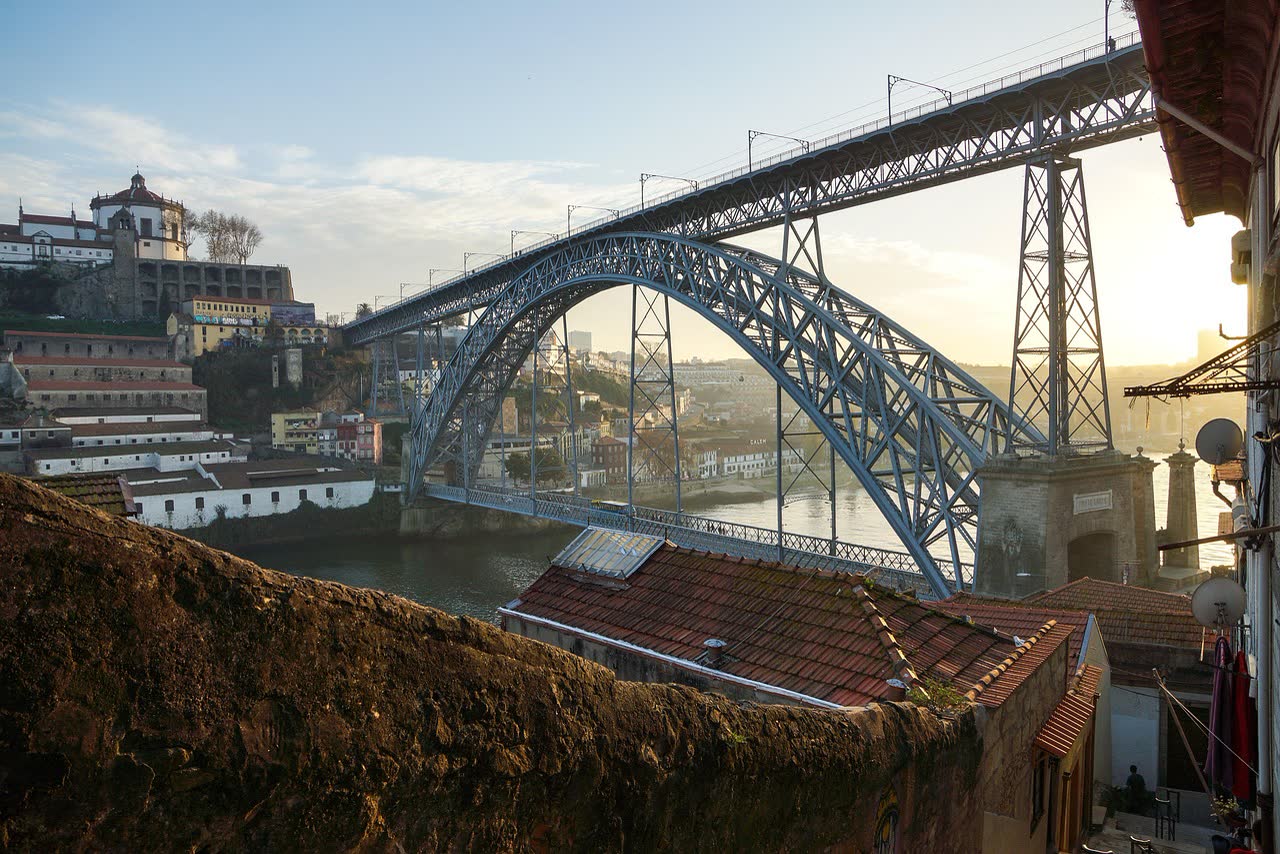
A riverside city of granite and tiles, with port wine, great food and the Douro on its doorstep. The historic centre is a UNESCO World Heritage Site. Cross the Dom Luís I Bridge to the port cellars in Vila Nova de Gaia, and try a francesinha. Two or three days is ideal. See things to do in Porto and where to stay.
Torn between them? See Porto vs Lisbon. The fast train between them takes about three hours.
Historic cities
- Coimbra: the university city. Portugal’s oldest university sits on the hilltop, with the baroque Joanina Library, and it’s UNESCO-listed. Students in black capes add to the atmosphere, especially during the Queima das Fitas, a week of student celebrations in mid to late May. Coimbra fado is sung by men. Allow a full day. Fast trains stop at Coimbra-B, outside the centre (the central Coimbra-A station closed in January 2025), so take the bus link or the Metrobus into town. See Coimbra.
- Évora: Roman and medieval, in the Alentejo. The whole walled centre is a UNESCO site, with a Roman temple, a Gothic cathedral and the Chapel of Bones. It’s about an hour and a half from Lisbon by train. Évora will be a European Capital of Culture in 2027, alongside Liepāja in Latvia, so expect a busier events calendar that year. See Évora.
- Braga: churches, gardens and Bom Jesus. Braga’s cathedral is the oldest in Portugal, and the zigzag baroque staircase of Bom Jesus do Monte is UNESCO-listed. Holy Week processions here are among the country’s biggest. See Braga.
- Guimarães: the medieval birthplace of Portugal. Its castle is linked to Afonso Henriques, the first king, and the old town is UNESCO-listed. In 2023 the listing was extended to the old tanneries of the Couros quarter. It’s easy to pair with Braga, about 30 minutes away. See where to stay in Braga and Guimarães.
- Viana do Castelo: elegant, with a hilltop basilica. The Santa Luzia basilica has wide views over the river mouth. The big Agonia festival takes over the town in August (15 to 23 August in 2026), with processions, flower carpets and fireworks. See Viana do Castelo.
By the water
- Aveiro: canals, colourful boats and nearby Costa Nova. It’s small, so half a day is enough, plus time at the striped beach houses of Costa Nova. Try ovos moles, a sweet egg-yolk treat. Fast trains from Porto take about half an hour, and local trains just over an hour. See Aveiro.
- Faro: a walled old town and the Ria Formosa. Go through the Arco da Vila gate to the cathedral, then take a boat into the lagoon. See Faro.
- Setúbal: seafood, dolphins and Arrábida. Order fried cuttlefish (choco frito), the local speciality, then take a boat trip on the Sado estuary. The coast road into Arrábida has been closed between the Figueirinha tunnel and Galapos since a 2023 rockfall, so use the buses or the beach shuttle instead. See Setúbal.
Island capitals
- Funchal: Madeira’s capital, with a mild climate all year, a lively market and gardens on the hills. See things to do in Funchal.
- Ponta Delgada: the main town of São Miguel in the Azores, with black-and-white stone streets and a base for crater lakes and hot springs. See things to do in Ponta Delgada.
- Angra do Heroísmo: a UNESCO-listed old town. See Terceira.
A one-week city route by train
- Days 1 to 3: Lisbon, with a day trip to Sintra.
- Day 4: train to Coimbra (about 1 hour 40 minutes on a fast train) and spend the afternoon at the university.
- Days 5 to 7: on to Porto (about an hour), with a day trip to Braga and Guimarães or to Aveiro.
With a few more days, add Évora from Lisbon, or finish in Faro: Lisbon to the Algarve is about three hours by train.
Tips for city-hopping
- Use the train: CP trains link Lisbon, Coimbra, Porto, Aveiro, Braga and Guimarães. See the train guide.
- Wear good shoes: nearly every old centre is hilly and cobbled.
- Time it well: spring and autumn are best. Summer can be very hot in Évora and Coimbra.
- Visit on festival days: June brings the Santo António festival in Lisbon and São João in Porto and Braga.
FAQ
Which Portuguese city is best for a first visit?
Lisbon, for its size, its sights and the easy day trips to Sintra and Cascais. If you have a week, add Porto: the fast train takes about three hours.
Can you visit Portugal’s cities without a car?
Yes. Trains link Lisbon, Coimbra, Porto, Aveiro, Braga, Guimarães, Évora and Faro, and the old centres are best seen on foot.
Is Évora worth a day trip from Lisbon?
Yes. It’s about an hour and a half by train, and the walled centre with its Roman temple and Chapel of Bones fits into a day.
How many days do you need in Lisbon and Porto?
Plan at least three days for Lisbon and two or three for Porto. Add a day for each smaller city you want to see.
More: the best places to visit in Portugal and the most beautiful small towns.
See also: Évora 2027, European Capital of Culture.
Prices and details change, so please double-check before you travel. Spotted something out of date? Tell us in the groups.
Still got questions?
Ask 305,000+ travellers and locals in our free Facebook groups.