
Trip guides / Alentejo
Castelo de Vide: Jewish Quarter, Castle and Fountains
Castelo de Vide is a charming hillside town in the northern Alentejo, with a castle, flower-filled lanes, a historic Jewish quarter and one of Portugal’s oldest synagogues. It’s greener and gentler than much of the Alentejo, and pairs perfectly with nearby Marvão.
Quick answer: Castelo de Vide is about 2.5 hours’ drive from Lisbon, 15 minutes from Marvão. See the Judiaria (Jewish quarter) and its medieval synagogue, the Fonte da Vila fountain, the castle and the main square. Allow half a day, or stay overnight. See places to stay in Castelo de Vide.
Why go
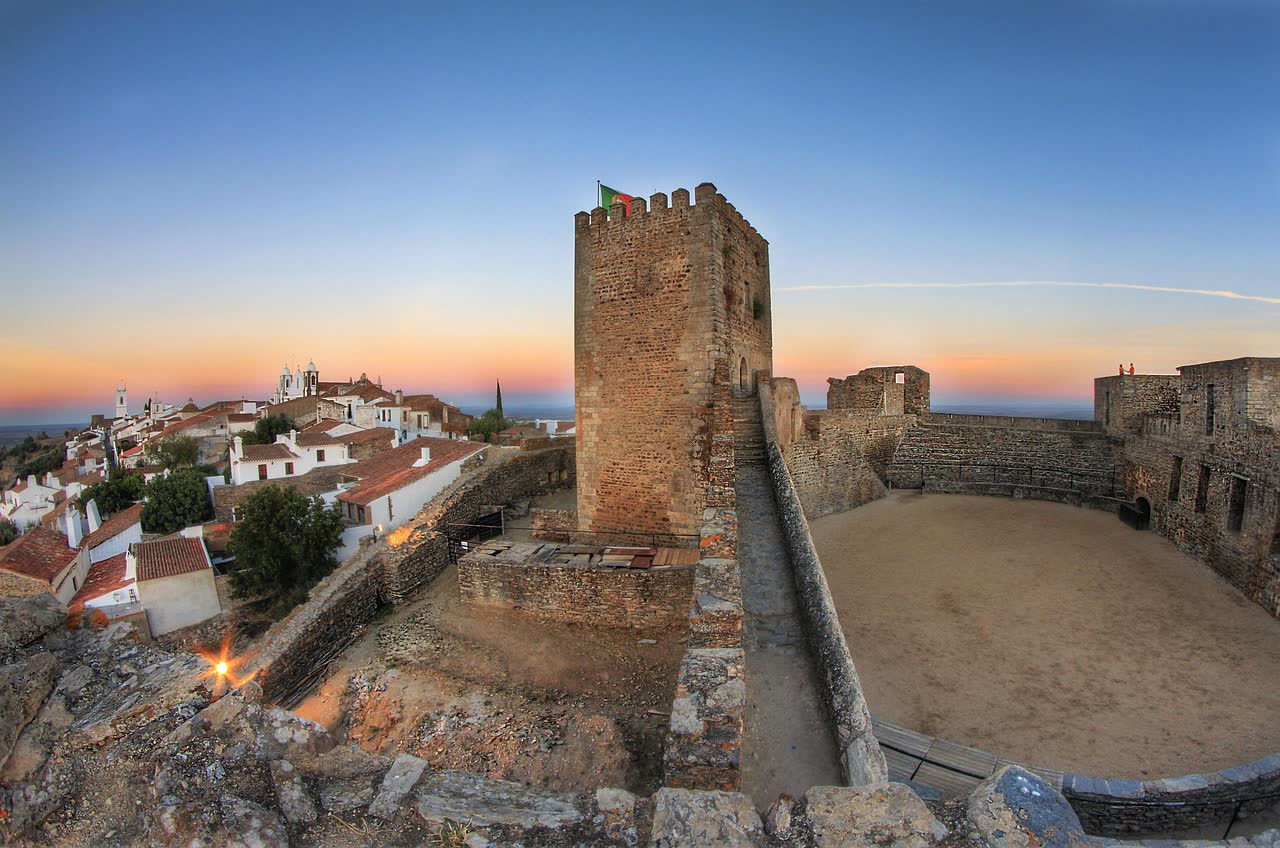
Castelo de Vide sits on the slopes of the Serra de São Mamede, so it’s cooler and leafier than the plains further south. The town is small enough to walk in a morning, but it packs in a lot of history: a castle, a medieval Jewish quarter, Renaissance fountains and some of the most unusual Easter traditions in Portugal. Few coach tours come here, so it stays calm. Its gardens and wooded hills have earned it the nickname “the Sintra of the Alentejo”, though it is far quieter than Sintra.
Things to do
The Jewish quarter and synagogue
- The Judiaria: steep cobbled lanes with Gothic doorways, a reminder of the Jewish community that lived here before the expulsions of the late 15th century. Look closely at the door frames: some still show a small groove where a mezuzah may once have been fixed.
- The synagogue: a small medieval building, usually dated to the 14th century, and one of very few synagogues in Portugal to survive from before the expulsion of 1496. It’s now a small museum about the town’s Jewish history, with the original holy ark niche and displays on local families. Most labels are in Portuguese. Entry has usually been free. Allow about 30 minutes.
The old town
- Fonte da Vila: a 16th-century fountain in a little square below the Judiaria, said to make whoever drinks from it return. It has a granite canopy on columns and is one of the most photographed corners of town.
- The castle: climb to the medieval castle and the small walled village around it for views over the rooftops and the hills. Allow 30 to 45 minutes.
- Praça D. Pedro V: the elegant main square, with the large parish church of Santa Maria da Devesa, old town houses and cafés.
- Mineral water: the town is known for its springs, and you’ll see old fountains all over the centre. Water from local springs is still bottled and sold across Portugal.
- Nossa Senhora da Penha: a small chapel on the hill above town, reached by car or a steep walk, with wide views back over Castelo de Vide and towards Marvão.
Getting there
- By car: about 2.5 hours from Lisbon, mostly on motorways, then country roads. The drive from Portalegre takes about 20 minutes. See driving in Portugal.
- By bus: Rede Expressos runs a limited service from Lisbon (Sete Rios) via Portalegre. It takes around 4 hours and there are only a couple of buses a day, so check current times before you go. See Portugal by bus.
- By train: there is no practical rail link. The few trains on the line nearby stop at stations well outside town, so a bus or a car is the way to go.
- Parking: park near the main square or at the edge of the old town. The upper lanes are too narrow and steep for driving.
How long to spend
Half a day is enough for the town. Stay a night if you want to add Marvão and a walk in the hills.
- Morning: start at Praça D. Pedro V, walk up through the Judiaria to the synagogue, stop at the Fonte da Vila and finish at the castle.
- Lunch: Alentejo cooking in town.
- Afternoon: drive 15 minutes to Marvão for the walls and the sunset.
With a second day
Drive north to see the Menir da Meada and some of the dolmens in the countryside, then walk a section of the marked trails in the Serra de São Mamede. In the afternoon, visit the Roman town of Ammaia in the valley below Marvão.
Food
Expect classic Alentejo cooking: roast lamb and kid, black pork, migas, bread soups and local cheese. Lamb is the star at Easter. Chestnuts from the São Mamede hills are a speciality in autumn. Many restaurants close one day a week and stop serving lunch by about 3pm, so plan ahead in a small town like this. See Alentejo food.
When to go
- Easter: the town’s Easter celebrations are famous and draw big crowds. On Holy Saturday, lambs are blessed by the parish church and cowbells are rung during the services, customs that mix Christian practice with echoes of the town’s Jewish past. Book well ahead. See Easter in Portugal.
- Spring: the lanes are full of flowers and the hills are green.
- Autumn: mild weather and chestnut season.
- Summer: warm, but usually less fierce than the lower Alentejo.
- Winter: quiet and often misty, with cold nights. Some places keep shorter hours.
Nearby
- Marvão: the spectacular clifftop village. See Marvão.
- Serra de São Mamede: walks among chestnut and cork woods.
- Megaliths: dolmens and standing stones dot the countryside, including the tall Menir da Meada to the north of town, often described as one of the tallest standing stones in the Iberian Peninsula.
Tips
- Shoes: the lanes are steep and cobbled.
- Car: essential. See the best road trips.
- Opening hours: times for the synagogue and castle change with the season, and many sights close at lunchtime. Check current times before you go.
- Easter bookings: rooms for Easter weekend can sell out months ahead.
FAQ
Is Castelo de Vide worth visiting?
Yes, especially if you are also visiting Marvão. It is a calm, green town with a rare medieval synagogue and a well-kept Jewish quarter.
How long do you need in Castelo de Vide?
Half a day covers the synagogue, the Fonte da Vila, the castle and the main square. Stay overnight to add Marvão and the countryside.
Can you visit Castelo de Vide and Marvão in one day?
Yes. They are about 15 minutes apart by car, so you can see Castelo de Vide in the morning and reach Marvão for the afternoon and sunset.
When is Easter in Castelo de Vide?
The celebrations run over Holy Week and Easter weekend, which moves each year. Holy Saturday, with the blessing of the lambs, is one of the highlights.
More: the most beautiful small towns and Évora and the Alentejo.
Some links in this guide are affiliate or referral links (GetYourGuide, Booking.com, Discover Cars, Welcome Pickups, Airalo, Yesim, Saily, Tiqets, Radical Storage, EKTA, AirHelp, Uber). If you book or sign up through them we may earn a small commission or ride credit at no extra cost to you. It helps keep our groups and this site free.
Still got questions?
Ask 305,000+ travellers and locals in our free Facebook groups.