
Trip guides / Central Portugal
Monsanto: The Village Built Among Boulders
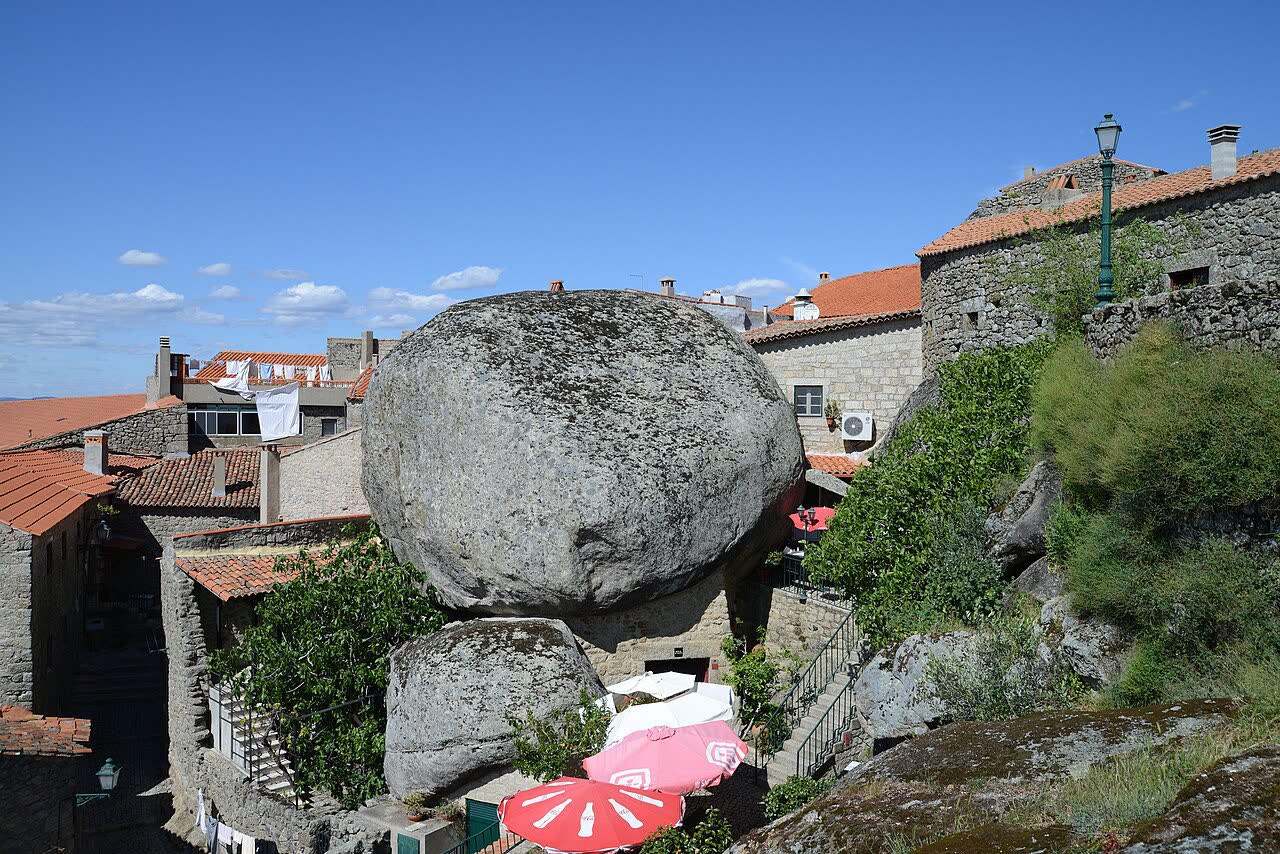
Monsanto is one of the most extraordinary villages in Europe. Its granite houses are squeezed between, beside and even under giant boulders, on a hillside crowned by a ruined castle. In 1938 it was named “the most Portuguese village in Portugal”. Here’s how to visit.
Quick answer: Monsanto is in central Portugal near the Spanish border, about 3 hours from Lisbon or about 3 hours from Porto. Walk up through the village to the castle for huge views, find the house with a single boulder for a roof, and visit nearby Idanha-a-Velha. A car is essential, and staying overnight is best. See places to stay in Monsanto.

Why go
Nowhere else in Portugal looks quite like this. The village climbs a lone granite hill, about 758 metres high, that rises out of the flat plains of the Beira Baixa. Boulders the size of houses are part of the walls, roofs and gardens. The site has been settled since prehistoric times, and after the Christian reconquest the castle was handed to the Knights Templar in the 12th century. It’s one of the Historic Villages of Portugal.
The 1938 title came from a national competition run by the Estado Novo regime’s propaganda office, and it stuck. The whole area is part of the Naturtejo Geopark, a UNESCO Global Geopark known for its granite landscapes and fossils.
Things to do
- The boulder houses: houses built around and under huge granite rocks, including the famous “house with one tile” (Casa de uma só telha), roofed by a single boulder. Allow an hour to wander the lanes.
- The castle: a steep 20 to 30 minute walk up rocky paths from the village to the ruined castle at the summit. Much of it was damaged by a gunpowder explosion in the 19th century, but the walls and the views across the plains to Spain are superb. Allow 1 to 1.5 hours there and back.
- The chapel of São Miguel: a small Romanesque chapel ruin with rock-cut graves beside it, on the way up to the castle.
- The silver rooster: the trophy from the 1938 competition, a silver cockerel on top of the Torre de Lucano (the clock tower) in the village.
- Walking trails: a marked path loops around the hill, through boulders, olive groves and old threshing floors.
Getting there
- By car: about 3 hours from Lisbon or Porto, mostly on motorways, with the A23 for the final stretch before country roads. Castelo Branco is about 50 minutes away. See driving in Portugal.
- Tolls: the A23 has been toll-free since 1 January 2025, but the A1 from Lisbon still has tolls. See Portugal’s tolls explained.
- By train and bus: CP trains run from Lisbon to Castelo Branco. Local buses on to Monsanto are rare and don’t suit day trips, so most people without a car take a taxi from Castelo Branco. Check current times before you go.
- Parking: park at the car parks at the bottom of the village and walk up. The lanes are too narrow and steep for cars.
How long to spend
Allow half a day for Monsanto itself. A night lets you see the village at sunset and add the villages nearby.
- Morning: walk up through the village to the castle while it’s cool.
- Lunch: in the village.
- Afternoon: drive about 20 minutes to Idanha-a-Velha, then on to Penha Garcia if you have time.
A two-day plan
Day one: arrive in the afternoon, wander the lanes and stay for sunset from the castle. Day two: Idanha-a-Velha in the morning, lunch nearby, then the fossil trail at Penha Garcia in the afternoon. With a third day, carry on north to Sortelha or Belmonte.
Food
The Beira Baixa is known for sheep and goat cheese (look for Castelo Branco cheese), roast kid and lamb, olive oil and hearty bean and meat stews. Small cafés and restaurants in the village serve home-style cooking. See the Portuguese cheese guide.
The region has three protected cheeses: Castelo Branco, the yellow Amarelo da Beira Baixa and the strong, peppery Picante da Beira Baixa. Restaurants in the village are few, so book dinner if you stay over.
When to go
- Spring: wild flowers and comfortable walking weather.
- 3 May: the Festa das Cruzes (also called the Festa do Castelo). Women climb to the castle playing square frame drums called adufes and singing, and a pot of flowers is thrown from the walls, recalling a legend of a siege. Marafona rag dolls are also linked to the festival. In recent years the programme has run over several days, from 1 to 3 May, with the climb on the 3rd.
- Autumn: mild and quieter.
- Summer: afternoons are scorching and the rocks hold the heat, so walk early or late.
Nearby
- Idanha-a-Velha: a tiny village built inside Roman walls, with an old cathedral dating back to the Visigothic era.
- Penha Garcia: a village with a fossil trail, a river gorge and a small castle.
- The historic villages: Sortelha and Belmonte. See the historic villages.
- Serra da Estrela: Portugal’s highest mountains, about 2 hours north by car. See Serra da Estrela.
Tips
- Shoes: the paths are steep, rocky and slippery, especially when wet.
- Water: carry some for the castle climb, as there’s little shade.
- Stay: the village is magical once the day-trippers go.
- Mobility: the lanes are steep and cobbled, with steps, so the upper village and castle are hard going with a pushchair or limited mobility.
FAQ
Is Monsanto worth the drive?
Yes, if you like unusual villages and big views. It’s a long way from the main sights, so it works best as part of a road trip through central Portugal with a night in the village.
Can you visit Monsanto without a car?
It’s hard. You can take a CP train to Castelo Branco, but local buses are rare, so most people take a taxi from there.
Is the Monsanto castle free?
Yes. The ruins are open to walk around at any time, with no ticket needed.
How long is the walk up to the castle?
About 20 to 30 minutes from the village on steep, rocky paths. Allow 1 to 1.5 hours there and back.
More: Portugal’s hidden gems, castles in Portugal and Piódão.
Some links in this guide are affiliate or referral links (GetYourGuide, Booking.com, Discover Cars, Welcome Pickups, Airalo, Yesim, Saily, Tiqets, Radical Storage, EKTA, AirHelp, Uber). If you book or sign up through them we may earn a small commission or ride credit at no extra cost to you. It helps keep our groups and this site free.
Still got questions?
Ask 305,000+ travellers and locals in our free Facebook groups.