
Trip guides / Central Portugal
Piodao: Portugal's Schist Village
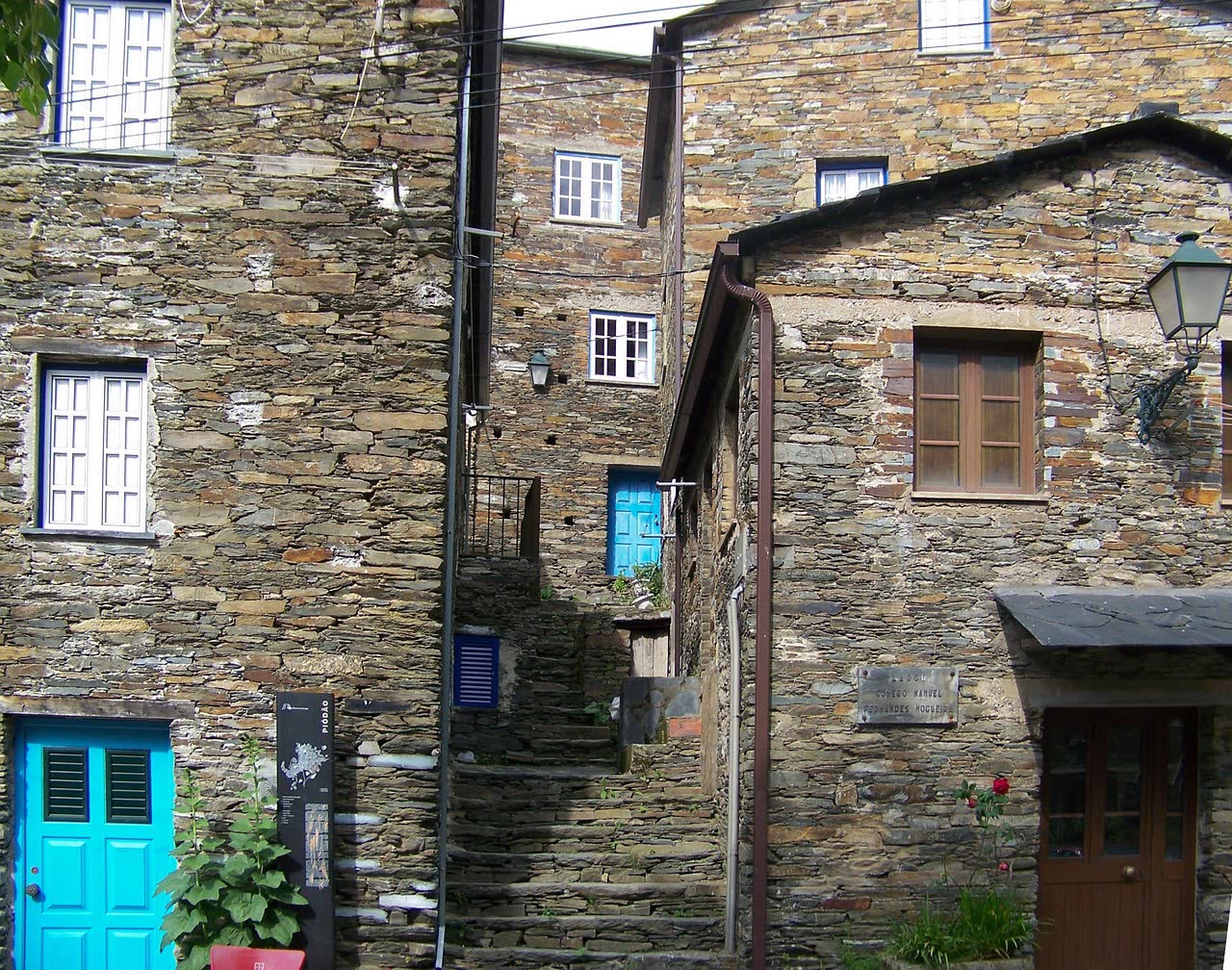
Piódão looks like a nativity scene come to life. It’s a village of dark schist houses with blue doors and windows, stacked in terraces on a steep mountainside, around a little white church. It’s remote, beautiful and one of the most photographed villages in Portugal.
Quick answer: Piódão is in the Serra do Açor in central Portugal, about 1.5 to 2 hours from Coimbra on winding mountain roads. A car is essential. Wander the lanes, see the church, walk a trail to the neighbouring villages and stay overnight for the evening light. See places to stay in Piódão.
Why go
Piódão sits in a deep valley in the Serra do Açor, in the municipality of Arganil. For centuries it was cut off from the rest of the country, and that isolation is why it looks the way it does: houses built from the local schist, roofed with slate, packed into terraces down the slope. Portuguese visitors call it the “nativity village” (aldeia presépio). It’s one of the Historic Villages of Portugal, and the hills around it are full of streams, waterfalls and old footpaths.
The village is still lived in, though by far fewer people than in the past. Many families left during the 20th century for the cities and abroad, and some houses are now guesthouses. Come with respect: these are homes, so keep voices down in the lanes and don’t peer into windows.
Things to do
- Explore the village: narrow stepped lanes between schist houses, with blue painted doors and window frames. It’s small, so an hour covers it, but take your time.
- The church: the white Igreja Matriz of Nossa Senhora da Conceição, with blue trim and rounded, tower-like buttresses, stands out against the dark stone. It was built in the 18th century and has tiles and a gilded altarpiece inside.
- The main square: the small square in front of the church is the centre of village life, with a few cafés and shops selling local honey, liqueurs and crafts.
- The museum: the small Núcleo Museológico shows the tools, crafts and daily life of the village in the past. Allow 20 to 30 minutes. Opening hours are limited, especially outside summer, so ask locally.
- The viewpoint: the classic photo from the road above the village, at sunset or when the lights come on.
- Foz d’Égua: a hamlet a few kilometres away, around 10 minutes by car, where two streams meet in a pool crossed by a small suspension bridge. In summer it’s a river beach for swimming. The water is cold even in August.
Hiking
The marked PR2 AGN trail, “Os Povos das Ribeiras de Piodam”, is a loop of about 10 km that links Piódão with Foz d’Égua and Chãs d’Égua. It has plenty of climbing, so allow around 4 hours and wear proper shoes. Paths can be slippery after rain. If you’d rather not do the full loop, you can drive to Foz d’Égua and walk a shorter stretch, or follow the shorter out-and-back path between Piódão and Foz d’Égua along the stream.
Carry water and food, as there are few places to buy anything on the trail. Mobile signal is patchy in the valleys, so download a map before you set off. See hiking in Portugal.
Getting there
- By car: about 1.5 to 2 hours from Coimbra and roughly 3 hours from Lisbon. The last part is on narrow, twisting mountain roads, so allow extra time and avoid driving at night if you’re not used to them. See driving in Portugal.
- Fuel: fill up before you head into the hills, as fuel stations are few and far between in the mountains.
- Public transport: there’s no practical bus for visitors, so you need a car or a tour.
- Parking: park at the edge of the village and walk in. Cars can’t get into the lanes.
How long to spend
You could see the village in two hours, but the long drive makes an overnight stay much better.
- Afternoon: arrive, explore the lanes, the church and the museum.
- Evening: photos from the road above as the lights come on.
- Next morning: walk to Foz d’Égua, or the full trail loop, before driving on.
As a day trip
If you only have a day, leave Coimbra early, spend late morning in the village, have lunch, then drive to Foz d’Égua for a short walk or a swim before heading back in daylight.
Food
Mountain cooking is simple and filling: roast kid, sausages, corn bread (broa), bean stews and cabbage soups. Local honey and homemade fruit liqueurs make good things to take home. Choice is limited in the village, so in quiet months check that somewhere is open before you rely on dinner.
When to go
- Spring: green hills, full streams and good walking.
- Summer: busiest, and the time for swimming at Foz d’Égua. Arrive early or late to avoid tour groups. In hot, dry spells, check for wildfire warnings before you drive into the hills.
- Autumn: quieter, with good light and colourful woods.
- Winter: cold and damp, with fog on the roads. Atmospheric, but drive carefully.
Practical tips
- Cash: carry some, as small cafés and shops may not take cards.
- Shoes: the lanes are steep steps of uneven stone, so wear good grip.
- Book ahead: rooms in the village are few and fill up on summer and holiday weekends.
Nearby
- The Schist Villages: a network of mountain villages in the Lousã and Açor ranges.
- Serra da Estrela: see Serra da Estrela.
- Monsanto and the historic villages: see Monsanto and the historic villages.
- Coimbra: the old university city, the nearest big base. See Coimbra.
FAQ
Can you visit Piódão without a car?
Not easily. There’s no practical bus for visitors, so you need a car or an organised tour.
Is Piódão worth the drive?
Yes, if you like mountain scenery and old villages. Stay the night if you can, so the long drive doesn’t take over the day.
Can you swim near Piódão?
Yes. Foz d’Égua, a short drive or walk away, has a river beach that is popular in summer.
Why are the doors in Piódão blue?
The blue paint on doors and windows is a village tradition. Combined with the dark schist and slate, it gives Piódão its well-known look.
More: Portugal’s hidden gems and the most beautiful small towns.
See also: the Schist Villages.
Some links in this guide are affiliate or referral links (GetYourGuide, Booking.com, Discover Cars, Welcome Pickups, Airalo, Yesim, Saily, Tiqets, Radical Storage, EKTA, AirHelp, Uber). If you book or sign up through them we may earn a small commission or ride credit at no extra cost to you. It helps keep our groups and this site free.
Still got questions?
Ask 305,000+ travellers and locals in our free Facebook groups.