
Trip guides / Food and drink
Portuguese Soups: Caldo Verde, Sopa da Pedra and More
In Portugal, lunch usually starts with a bowl of soup. It might be a plain vegetable sopa do dia, a garlicky Alentejo bread soup or Almeirim’s meaty stone soup. Here’s what’s in the main ones, where they come from and how to order.
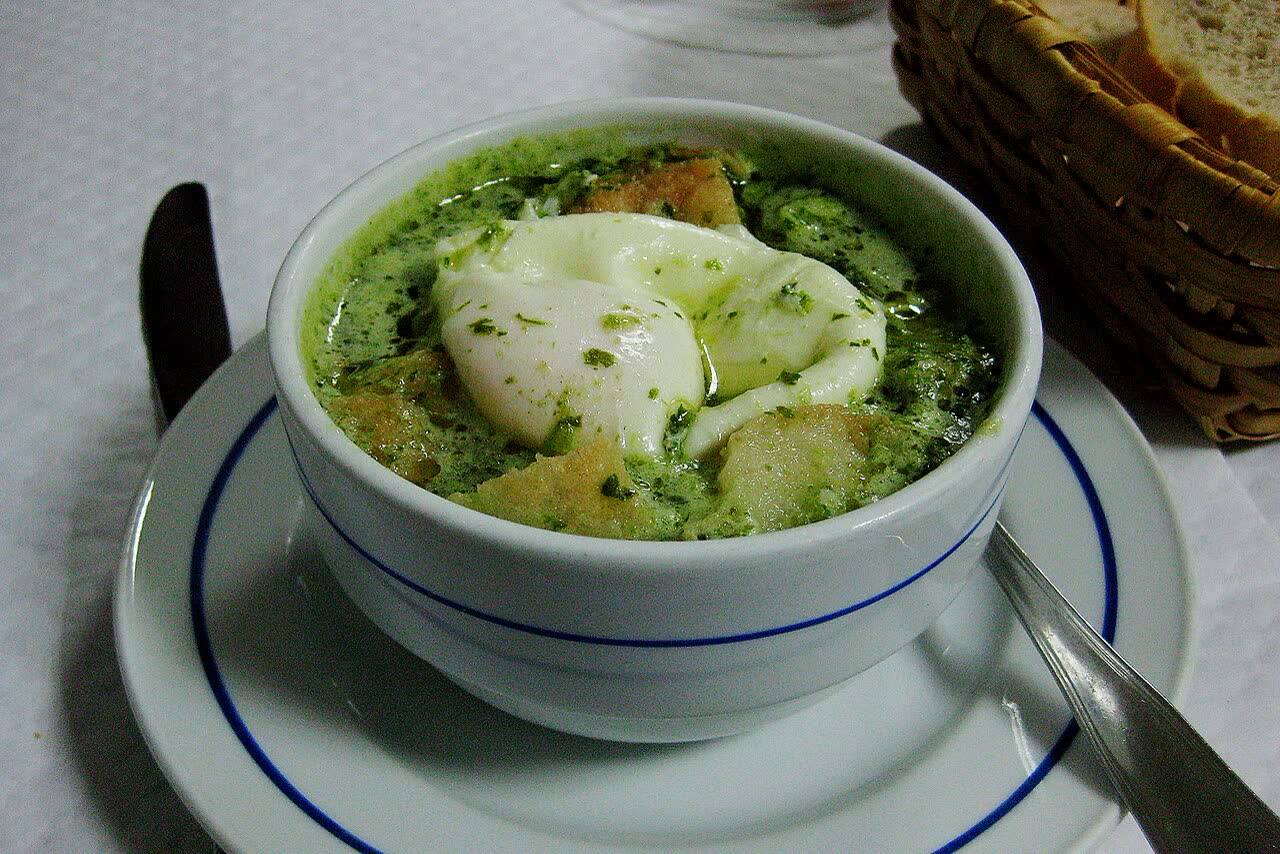
Quick answer: soup is the normal first course at lunch and is often part of the menu do dia (set lunch). The everyday one is sopa de legumes (vegetable soup). Regional classics include caldo verde (kale and potato, from the Minho), sopa da pedra (a bean and pork “stone soup” from Almeirim), açorda alentejana (garlic and coriander bread soup with a poached egg) and cold gaspacho alentejano in summer. Many vegetable soups use meat stock, so vegetarians should ask.

Why soup comes first
At lunchtime in tascas and small restaurants, nearly every table starts with soup. The nutritionist Pedro Graça has called it the great symbol of Portuguese eating, served as a starter or as a meal in itself, and the first Portuguese cookbook, Domingos Rodrigues’ 17th-century Arte de Cozinha, opens with a chapter on soup.
Soup is also part of the menu do dia, the set lunch: usually soup, a main course and a drink, sometimes with dessert and a coffee. See meal times in Portugal.
Everyday soups
- Sopa de legumes: vegetable soup, the usual sopa do dia (soup of the day). The mix changes with the season and the cook: pumpkin and leek, turnip greens (grelos) or beans and cabbage.
- Cremes: smooth, thick soups such as creme de legumes (vegetable) or creme de ervilhas (pea).
- Sopa de feijão: bean soup with red or white beans, often with cabbage.
- Canja: chicken broth with rice or small pasta, depending on the region, sometimes with mint. Some people call it sopa de doente (soup for the sick), but it’s eaten all year as simple comfort food.
- Caldo verde: potato broth with fine ribbons of kale, olive oil and a slice of chouriço. It comes from the Minho and is traditionally eaten with broa (cornbread). See our caldo verde guide.
Sopa da pedra: Almeirim’s stone soup
Sopa da pedra comes from Almeirim, a Ribatejo town across the River Tagus from Santarém, and has been protected by the EU as a Traditional Speciality Guaranteed since 2022. The registered recipe has 16 ingredients, including dried feijão catarino beans, pig’s trotters or face, cured bacon, chouriço, morcela (blood sausage), farinheira (a sausage of pork fat and flour), potatoes, onion, garlic and coriander. Nothing is fried first, and the beans thicken the broth as it rests.
The story told with it is a legend: a hungry friar offers to make soup from a stone, then talks his hosts into adding beans, sausage and pork until only the stone is left. It’s now generally accepted that the story has no basis in fact. The official product description says the name dates from the early 1960s and compares the chunky ingredients to the cobbles of Almeirim’s old streets, and the restaurant O Toucinho is credited with first using it. Some restaurants still put a white stone in the bowl. See Santarém for a day out that takes in Almeirim.
Açorda: two different dishes
The word açorda covers two different dishes.
- Açorda alentejana: a soup. Garlic, salt and fresh coriander are crushed together with olive oil, boiling water is poured over stale Alentejo bread, and a poached egg often goes on top. The soup itself isn’t cooked.
- Lisbon-style açorda: a thick bread porridge served as a main course, often with prawns (açorda de camarão or de gambas), mixed shellfish (de marisco) or salt cod. In many Lisbon restaurants, egg yolks are stirred in at the table.
Pap’Açôrda, a Lisbon restaurant named after the dish and founded in 1981, is now in the Time Out Market. For more seafood dishes, see the Portuguese seafood guide.
Soups from the Alentejo
Many Alentejo soups are built on bread, garlic, olive oil and coriander. See Alentejo food for the rest of the region’s cooking.
- Sopa de cação: dogfish, a kind of shark, is soaked in water with vinegar and bay leaf, then cooked in a broth of olive oil, garlic and coriander (or pennyroyal) thickened with flour and vinegar. It’s served over thin slices of bread.
- Gaspacho alentejano: a cold summer soup of chopped tomato, cucumber and green pepper in iced water, with garlic, olive oil, vinegar, oregano and small pieces of bread. Unlike smooth Spanish gazpacho, you chew the vegetables. It often comes with fried fish, such as horse mackerel or sardines.
- Sopa de tomate: a rich, hot tomato soup served over bread, often with a poached egg.
Fish soup and caldeirada
- Sopa de peixe: thinner or thicker depending on the cook, with vegetables and sometimes clams or prawns. Dunking bread in it is part of the fun.
- Caldeirada: a fish stew rather than a soup, built on fish, onion, peppers and tomato.
Sopas do Espírito Santo in the Azores
The Azores’ Holy Spirit festivals, celebrated above all on Terceira, have their own soup, shared out to the public on the last of the festival Sundays after Easter. Beef and a hen are boiled in big outdoor pots with cabbage, mint, cinnamon and chilli paste, and the broth is poured over thick pieces of bread in clay bowls. The meat comes next and, depending on the parish, alcatra (slow-cooked beef). The tradition is said to go back to Queen Isabel’s gifts of food to the poor in the 14th century. See what to eat in the Azores.
How to order
- Asking: uma sopa, por favor (a soup, please). If it isn’t written up, ask qual é a sopa do dia? (what’s the soup of the day?).
- Words to know: tigela (bowl), caldo (broth) and creme (a smooth soup).
- When: as the first course at lunch. Sopa da pedra and Lisbon açorda are a meal in themselves.
Vegetarian notes
Soups that sound like vegetables can be made with meat stock or pork: Time Out Lisboa found a broad bean cream (creme de favas) made with meat broth, pork belly and ribs. Ask a sopa tem carne? (does the soup have meat in it?) or é feita com caldo de carne? (is it made with meat stock?).
Açorda alentejana and gaspacho are meat-free in their basic recipes, but check what comes with them, as gaspacho is often served with fried fish. See Portugal for vegetarians.
Where to try them
- Any tasca at lunch: the sopa do dia, which changes from day to day.
- Almeirim: sopa da pedra in its home town, which also holds a Sopa da Pedra festival.
- The Alentejo: açorda and sopa de cação in local restaurants, and gaspacho in summer.
FAQ
What is the national soup of Portugal?
There’s no official one, but caldo verde is the best known. In a national vote it was named one of the 7 Wonders of Portuguese Gastronomy.
Why do Portuguese people eat soup before a meal?
It’s a habit that goes back centuries. Soup is the standard first course at lunch, and set lunch menus often include one.
Is açorda a soup?
In the Alentejo, yes: bread in a garlic and coriander broth with a poached egg. In Lisbon, açorda often means a thick bread porridge with prawns or shellfish, served as a main course.
Is there a real stone in sopa da pedra?
Not in the recipe. The legend tells of a friar who made soup from a stone, but the name actually compares the chunky beans, meat and potatoes to cobblestones. Some restaurants put a stone in the bowl as a nod to the story.
Are Portuguese soups vegetarian?
Often not. Even vegetable soups can be made with meat stock, so ask. Açorda alentejana and gaspacho are the safest traditional choices.
More: what to eat in Portugal, petiscos and what to eat in Lisbon.
Prices and details change, so please double-check before you travel. Spotted something out of date? Tell us in the groups.
Still got questions?
Ask 305,000+ travellers and locals in our free Facebook groups.