
Piri-Piri Chicken in the Algarve
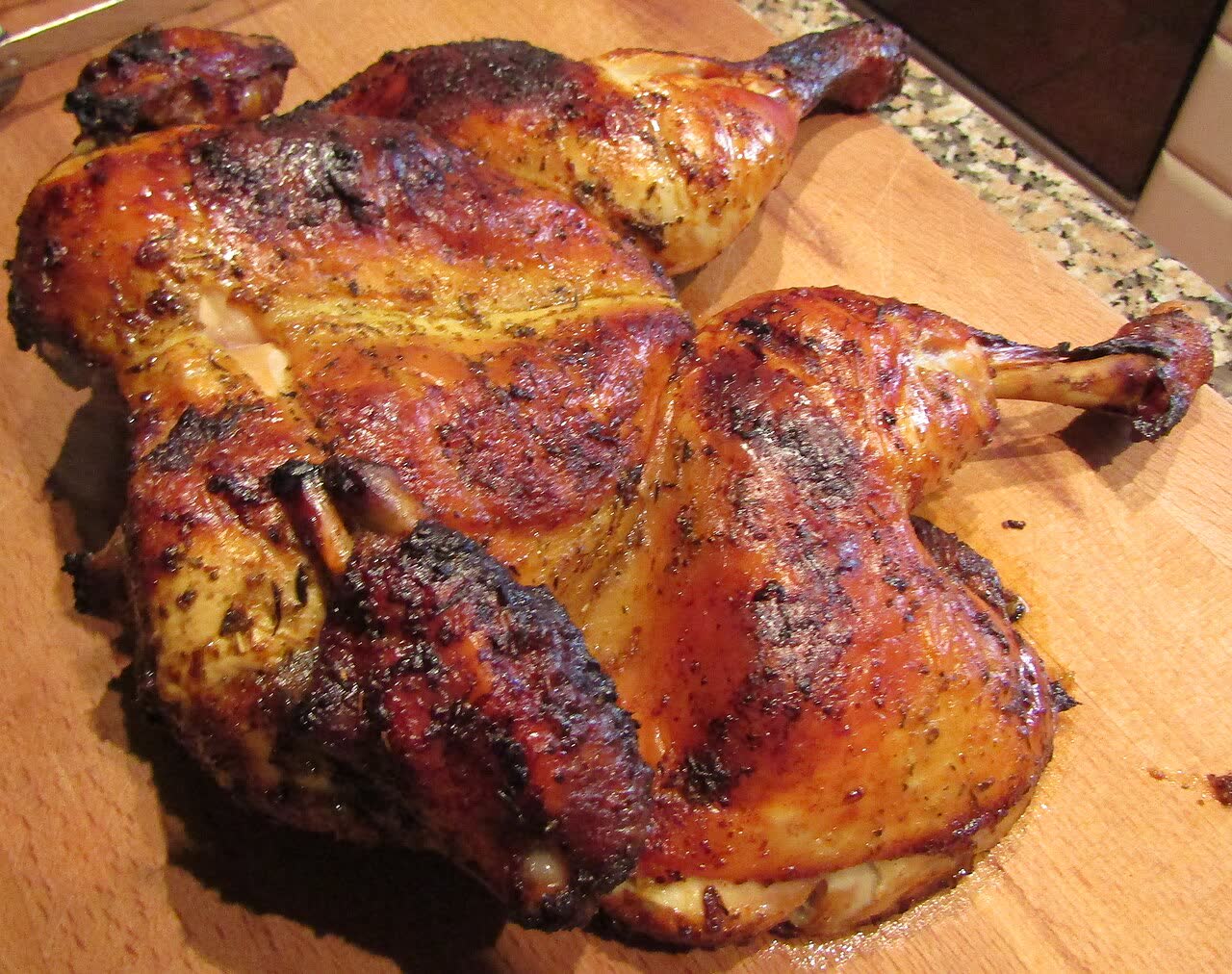
Piri-piri chicken is one of the Algarve’s best-loved dishes: a butterflied chicken grilled over charcoal and basted with fiery chilli oil. Its spiritual home is the village of Guia, near Albufeira, where “frango da Guia” restaurants have been grilling it for decades. Here’s what to know.
Quick answer: head to Guia, a few minutes inland from Albufeira, where several restaurants specialise in frango piri-piri. Order a whole or half chicken with chips and salad, and ask for extra piri-piri sauce if you like it hot. You’ll find good versions all over the Algarve.
![Kolforn (Kolforn) I'd appreciate if you could mail me ([email protected]) if you want to use this picture out of the Wikimedia project scope. This file is licensed under the Creative Commons Attribution-Share Alike 4.0 International license. You are free: to share – to copy, distribute and transmit the work to remix – to adapt the work Under the following conditions: attribution – You must give appropriate credit, provide a link to the license, and indicate if changes were made. You may do so in any reasonable manner, but not in any way that suggests the licensor endorses you or your use. share alike – If you remix, transform, or build upon the material, you must distribute your contributions under the same or compatible license as the original.https://creativecommons.org/licenses/by-sa/4.0CC BY-SA 4.0 Creative Commons Attribution-Share Alike 4.0 truetrue](https://commons.wikimedia.org/wiki/File:2018-02-03_Chicken_Piri-Piri,_Albufeira_(2).JPG)
Why try it here
Piri-piri chicken is now sold around the world, but the Algarve version is simpler and, many would say, better: a small chicken, charcoal, salt, chilli oil and nothing else. It is cheap, quick and eaten by everyone from families on holiday to builders on their lunch break. A meal at a busy grill house, with smoke drifting out of the door, is one of the easiest local experiences you can have in the Algarve.
What is piri-piri?
Piri-piri is a small, hot chilli. Chillies first came from the Americas, and Portuguese traders carried them to Africa, where this variety took hold in places such as Mozambique and Angola. The name comes from Swahili. People returning to Portugal from the former African colonies brought the taste for it home. In Portugal, it’s steeped in olive oil (sometimes with garlic, lemon, vinegar or whisky) to make a spicy oil brushed on chicken, prawns and other grilled food. Every grill house has its own recipe, and most keep it secret.
The oil is usually left to infuse for days or weeks, so it gets hotter over time. On the table you’ll often see a small bottle or jar with chillies floating in it. That’s the real thing, so add it a few drops at a time.
The story of frango da Guia
Guia, a parish of Albufeira, became famous for chicken in the 1960s. The best-known origin story credits Restaurante Ramires, which opened as a small café in 1964 and began grilling chicken with piri-piri as customers asked for it. Other restaurants in the village soon followed, and “frango da Guia” became a name known across Portugal. Guia’s chicken is traditionally made with small, young birds, which stay juicy over the hot coals.
The village now holds an annual chicken festival, the Festa do Frango da Guia, usually over five nights in late July or early August, with food stalls, a craft fair and live music. The 2026 edition, the 37th, ran from 29 July to 2 August. Check Albufeira’s events listings for the next dates.
How it’s cooked
- Butterflied (spatchcocked) so it cooks evenly. In Guia, it is often cut into smaller pieces before it is served.
- Seasoned simply with coarse salt, and sometimes garlic.
- Grilled over charcoal for a smoky flavour, turned often in a hinged wire rack.
- Basted with piri-piri oil as it cooks, and served with more on the side.
How to order
- Frango piri-piri: ask for “com piri-piri” (with chilli) or “sem” (without), as some places serve it plain with sauce on the side.
- Size: a whole chicken (frango inteiro) is usually enough for two with sides; a half (meio frango) suits one.
- Sides: chips, salad, rice and bread.
- Drink: cold beer or vinho verde.
- Takeaway: most grill houses sell chicken to take away (para levar), which is great for a self-catering evening or a picnic.
- Useful phrases: “pouco picante” means only a little hot, and “bem picante” means good and hot.
Where to eat it
Guia’s chicken restaurants are the classic stop. Guia sits just off the N125, a short drive north-west of Albufeira town, so it is easy to reach by car or taxi. Ramires is the most famous name, and several other grill houses in the village serve the same style. Most Algarve towns also have a churrasqueira (grill house) serving it. Look for a busy place with a charcoal grill you can see or smell from the street. It’s cheap, quick and family-friendly. See things to do in Albufeira, where to stay in Albufeira and the Algarve on a budget.
Guia is also home to the large Algarve Shopping centre and the Zoomarine park, so you can easily combine a chicken lunch with a family day out. See the Algarve with kids.
Make it at home
To make your own piri-piri oil, put a handful of small dried or fresh red chillies in a clean bottle with a peeled garlic clove, a strip of lemon peel and a pinch of salt, then fill with olive oil. Leave it for at least a week. To cook, butterfly a small chicken, rub with coarse salt and grill over hot coals or under a hot grill, turning often and brushing with the oil. Small chilli bottles also make an easy souvenir from Algarve markets.
Tips
- Go early or book: the best-known places in Guia fill up on summer evenings and at Sunday lunch.
- Taste the sauce first: house piri-piri oils range from mild to very hot.
- Bread and olives put on the table are charged if you eat them.
- Not just chicken: try piri-piri prawns (camarão) or grilled sardines in summer. See Portuguese sardines.
- Eat with your hands: it’s normal at a grill house, and most bring extra napkins.
- Kids: ask for a portion without piri-piri for children and add the oil to your own plate.
FAQ
Where is the best piri-piri chicken in the Algarve?
The village of Guia, just north-west of Albufeira, is the traditional home of frango piri-piri, and Restaurante Ramires is its best-known grill house. Good churrasqueiras are found in most Algarve towns too.
Is Portuguese piri-piri chicken very spicy?
The chicken itself is often only mildly hot. The heat comes from the piri-piri oil, which you can add at the table, so you control how spicy it is.
When is the Guia chicken festival?
The Festa do Frango da Guia usually runs for five nights in late July or early August. In 2026 it was held from 29 July to 2 August.
Is piri-piri chicken Portuguese or African?
Both. The chilli took hold in Portuguese-speaking Africa, especially Mozambique and Angola, and the grilled chicken style became famous in Portugal, above all in Guia in the Algarve.
More: cataplana, the best Algarve beach restaurants and what to eat in Portugal.
See also: what to eat in the Algarve.
Prices and details change, so please double-check before you travel. Spotted something out of date? Tell us in the groups.
Still got questions?
Ask 305,000+ travellers and locals in our free Facebook groups.