
The Francesinha: Porto's Legendary Sandwich
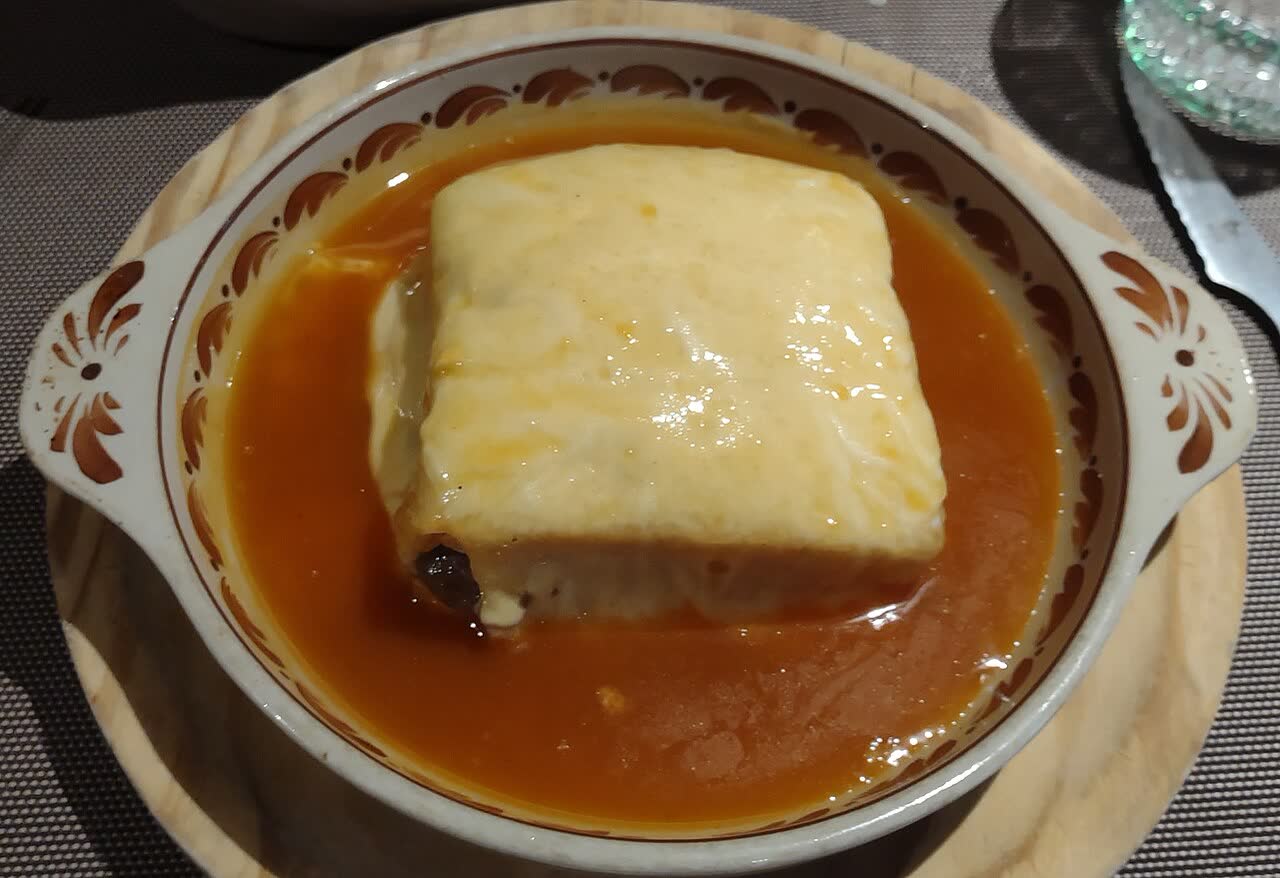
The francesinha (“little Frenchie”) is Porto’s legendary sandwich, and a gloriously excessive one. Layers of bread, ham, sausage and steak are covered in melted cheese and drowned in a hot, spicy tomato and beer sauce, usually with a fried egg on top and a pile of chips. Here’s what it is and how to eat it.
Quick answer: a francesinha is a meat-stuffed sandwich covered in melted cheese and a spicy beer-tomato sauce, served with fries and often an egg. It’s a Porto speciality, so eat it there with a cold beer. It’s very filling, so make it your main meal. Every café claims to have the best sauce.

Why try it
Ask anyone from Porto where to eat a francesinha and you’ll start a long debate. It’s the city’s comfort food, eaten after football, on cold days and late at night, and locals take their favourite sauce very seriously. It isn’t light or delicate, but trying one is part of a visit to Porto, much like a pastel de nata in Lisbon.
It also tells you something about the city. Porto is a working port with a love of hearty food, and the francesinha fits right in: cheap ingredients, big portions and a sauce that every kitchen guards as its own.
What’s in it
- Bread: two or three slices of white bread.
- Fillings: ham, linguiça or fresh sausage, and steak or roast meat.
- Cheese: slices melted over the top until it covers the whole sandwich.
- The sauce: the secret of every café, usually made with tomato, beer, a dash of port or spirits, and spices. It ranges from mild to fiery.
- Toppings: a fried egg (“com ovo”) and chips on the side, often dipped in the sauce.
The sauce is what makes or breaks it. A good one is rich, slightly bitter from the beer and warm with chilli, and thick enough to cling to the cheese. A thin, watery sauce is a sign to try somewhere else next time.
Where it comes from
The francesinha is usually credited to Daniel da Silva, a Portuguese emigrant who had lived in France and Belgium. Back in Porto in the 1950s (around 1953 is the date most often given), he adapted the French croque-monsieur for local tastes at A Regaleira, a restaurant on Rua do Bonjardim. The name nods to its French roots. A Regaleira still serves the dish today, and the sandwich spread from there to snack bars across the city.
A Regaleira dates back to 1934 and has stayed in the same family for generations. It closed in 2019 while its old building was renovated and reopened in 2021 a few doors along the same street, still serving the dish to its original recipe.
How to order
- Egg or no egg: ask for it “com ovo” if you want the fried egg on top. Some places add it by default.
- Chips: usually served on the side, sometimes extra. Dip them in the sauce.
- Specials: some places offer seafood, vegetarian or extra-spicy versions.
- Drink: a cold beer (a fino or imperial) is the classic pairing. See Portuguese beer.
- Share: it’s huge, so consider splitting one.
Useful words
- Francesinha especial: on many menus this means the version with egg and sometimes extra fillings. It varies from place to place, so check the menu description.
- Batatas fritas: chips.
- Molho: sauce. Ask for “mais molho” if you want extra.
- Picante: spicy. Ask if the sauce is picante before you order if you don’t like heat.
How to eat it
Use a knife and fork. It’s far too saucy to pick up. Cut through all the layers at once so every bite has bread, meat, cheese and sauce. Eat it while it’s hot, as the cheese sets quickly once it cools.
Don’t worry about pacing yourself with starters. Most people order a francesinha on its own, perhaps with a soup such as caldo verde if they’re very hungry, and skip dessert.
When to eat it
- Lunch is best: a francesinha is heavy, so many people prefer it as a long lunch with a walk afterwards.
- Not before a big climb: skip it just before the Clérigos Tower steps or the hill up from Ribeira.
- Cold days: it’s at its best on a grey, rainy Porto afternoon. See Porto on a rainy day.
- Football nights: snack bars fill up when FC Porto play, so expect a wait, or join in.
Where to try it
You’ll find francesinhas on menus all over Porto, from old snack bars to modern restaurants. Ask locals for their favourite, or try it on a food tour. See Porto food tours.
- Snack bars and cafés: the classic setting. Look for places full of locals at lunchtime.
- Away from the river: menus right on the Ribeira waterfront are aimed at visitors and often cost more. Walk a few streets uphill for better value.
- Outside Porto: you’ll see it across northern Portugal, but it’s rarer and less reliable in Lisbon and the south.
Vegetarians and special diets
The classic francesinha is built on pork and beef, and many sauces are made with meat stock, so don’t assume that taking out the fillings makes it vegetarian. A growing number of places in Porto offer a proper vegetarian or vegan version with its own sauce. Ask before you order, and see Portugal for vegetarians.
Other Porto dishes to try
- Tripas à moda do Porto: a tripe and white bean stew. It gave Porto people their nickname, “tripeiros”.
- Bifana: a simple pork sandwich, lighter than a francesinha. See bifana and prego.
- Port wine: finish with a glass across the river in Gaia.
FAQ
What does francesinha mean?
It means “little French girl” or “little Frenchie”, a nod to the French croque-monsieur that inspired it.
Is a francesinha spicy?
It depends on the café. Most sauces have some chilli warmth, and a few are properly hot, so ask if it’s picante if you’re unsure.
Who invented the francesinha?
It’s usually credited to Daniel da Silva, who created it at A Regaleira on Rua do Bonjardim in the 1950s. The restaurant still serves it.
Can you get a francesinha in Lisbon?
Yes, some places serve it, but it’s a Porto dish and it’s easier to find a good one in Porto and the north.
More: what to eat in Porto, food tours in Portugal and what to eat in Portugal.
See also: the best restaurants in Porto.
Some links in this guide are affiliate or referral links (GetYourGuide, Booking.com, Discover Cars, Welcome Pickups, Airalo, Yesim, Saily, Tiqets, Radical Storage, EKTA, AirHelp, Uber). If you book or sign up through them we may earn a small commission or ride credit at no extra cost to you. It helps keep our groups and this site free.
Still got questions?
Ask 305,000+ travellers and locals in our free Facebook groups.