
Trip guides / Food and drink
Caldo Verde: Portugal's Famous Soup
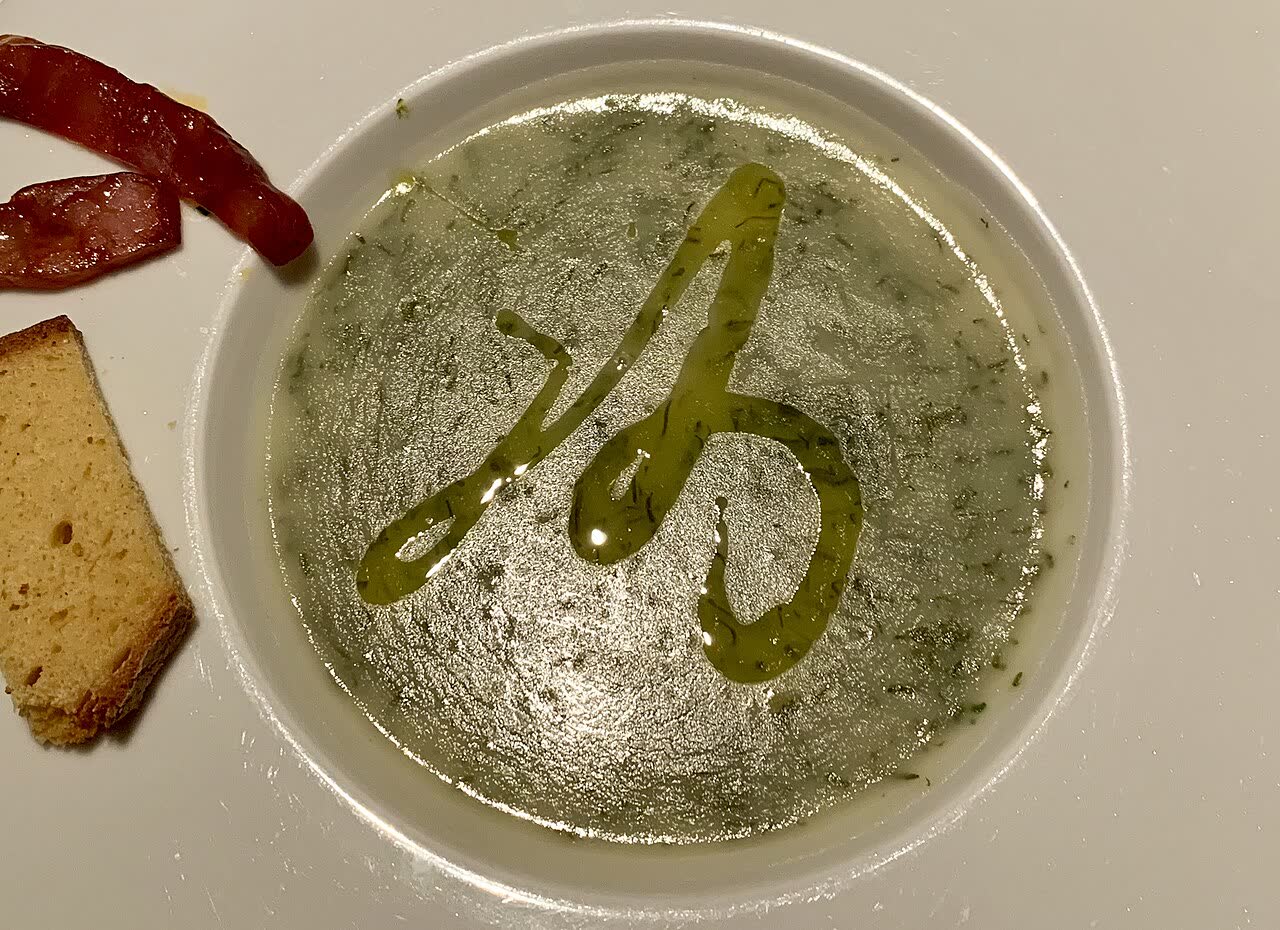
Caldo verde is Portugal’s most famous soup: a simple, comforting bowl of potato broth with finely shredded kale, a drizzle of olive oil and a slice of smoky chouriço. It’s served everywhere, from family kitchens to festivals and late-night parties. Here’s what makes it special.
Quick answer: caldo verde (“green broth”) is made from potatoes, onion and thinly sliced couve galega (a dark green kale), finished with olive oil and a slice of chouriço. It comes from the Minho in northern Portugal. Order it as a starter almost anywhere, often with broa (cornbread).
_at_O_Faia_(46934771085).jpg)
Why it matters
Caldo verde began as a cheap farmhouse soup in the Minho, made from what grew in the garden. Today it’s seen as an unofficial national dish. In 2011 it was voted one of the “7 Wonders of Portuguese Gastronomy” in a national public vote. You’ll find it on menus from Porto to the Algarve, and in Portuguese communities around the world.
Soup matters in Portugal. Most lunch menus start with a bowl, and many families eat soup every day. Caldo verde is the one people miss most when they move abroad, and it’s the soup that turns up at almost every celebration.
What’s in it
- Couve galega: a tall, dark green cabbage with big, flat leaves, grown in gardens all over the north. It’s tougher than ordinary kale, so it holds its shape in the hot broth.
- Potatoes: floury potatoes give the broth its creamy body without any cream.
- Olive oil: a generous swirl goes in at the end, so use a good one.
- Chouriço: a smoked pork sausage seasoned with garlic and paprika. A thin slice or two sits on top of each bowl.
How it’s made
- The base: potatoes, onion and often garlic are boiled and puréed into a smooth broth.
- The greens: the kale is sliced into fine ribbons, often with a special machine sold at markets, and cooked briefly so it stays bright green.
- The finish: a swirl of olive oil and a slice of chouriço.
Make it at home
A simple version for four people:
- Step 1: gently soften one chopped onion and two garlic cloves in olive oil.
- Step 2: add about 500g of peeled, chopped floury potatoes and about 1.5 litres of water. Season with salt and simmer until soft, around 20 minutes.
- Step 3: blend until smooth.
- Step 4: roll the kale leaves tightly, remove the stalks and slice as thinly as you can. Add to the pot and simmer for a few minutes, until just tender.
- Step 5: serve with a thin slice or two of chouriço, a drizzle of good olive oil and black pepper.
If you can’t find couve galega, use cavolo nero or another dark kale. Some cooks fry the chouriço first, others simmer it in the soup.
Tips for a better bowl
- Slice thin: the ribbons should be as fine as you can manage. Thick strips taste chewy and bitter.
- Don’t overcook the greens: a few minutes is enough. The kale should stay bright green with a little bite.
- Add the oil last: raw olive oil stirred in at the end gives the soup its rich flavour.
- Make it ahead: the potato base keeps well in the fridge. Add fresh kale when you reheat it.
When it’s eaten
- As a starter at lunch and dinner, year-round, especially in winter.
- At festivals: it’s essential at Porto’s São João (the night of 23 June) and Lisbon’s Santo António (12 to 13 June). See São João and Santo António.
- At weddings and parties, often served late at night.
Traditionally, caldo verde is served in a small earthenware bowl called a malga. You’ll still see these in old-fashioned tascas and at festival stalls.
Where to try it
- Tascas: small family restaurants with a daily soup almost always have it, and a bowl usually costs only a few euros.
- Porto and the Minho: the soup’s home ground, where it’s often served with broa. See what to eat in Porto and the Minho.
- Markets: look for bunches of ready-shredded kale on market stalls.
Many tascas offer a set lunch, the prato do dia or menu do dia, which often includes a soup, a main course and a drink. It’s one of the cheapest ways to try caldo verde and other everyday dishes. See Portugal on a budget.
Variations you’ll see
- With broa: in the north, a chunk of dense cornbread on the side is the classic pairing.
- With beans or other greens: some home cooks add beans or use turnip tops when kale is scarce.
- Thicker or thinner: every family has its own idea of how smooth the potato base should be.
- To take home: supermarkets sell bags of ready-shredded kale, so you can make it in a holiday flat.
Vegetarian?
Ask for it “sem chouriço” (without sausage), though the broth may sometimes be made with meat stock. See Portugal for vegetarians.
Other Portuguese soups
- Sopa de legumes: vegetable soup, served everywhere.
- Açorda alentejana: bread soup with garlic, coriander and a poached egg.
- Sopa da pedra: “stone soup” with beans and meat, from Almeirim.
- Canja de galinha: a light chicken and rice soup, often eaten when you’re feeling unwell.
FAQ
What does caldo verde mean?
It means “green broth”. The name comes from the bright green ribbons of kale in the soup.
Where does caldo verde come from?
It comes from the Minho, in the far north of Portugal. Today it’s eaten all over the country.
What kale is used in caldo verde?
The traditional green is couve galega, a dark, flat-leaved cabbage. Outside Portugal, cavolo nero or another dark kale works well.
Is caldo verde vegetarian?
Not usually, because it’s served with chouriço and the broth may contain meat stock. You can ask for it without the sausage, but check how the broth is made.
More: what to eat in Portugal and food tours in Portugal.
Prices and details change, so please double-check before you travel. Spotted something out of date? Tell us in the groups.
Still got questions?
Ask 305,000+ travellers and locals in our free Facebook groups.