
Trip guides / Planning
Portuguese Seafood: What to Order and Where
With a long Atlantic coastline, Portugal has some of the best seafood in Europe, and it’s often simply grilled with olive oil, salt and lemon. Here’s a guide to the seafood you’ll see on Portuguese menus, how to order it, and how not to get a shock when the bill comes.
Quick answer: try grilled sardines (best in summer), polvo à lagareiro (roasted octopus), amêijoas à Bulhão Pato (clams in garlic and coriander), cataplana (a seafood stew from the Algarve), arroz de marisco (seafood rice) and percebes (goose barnacles). Fish and shellfish are often priced by the kilo, so ask before you order.

Why seafood is a must in Portugal
The Portuguese eat more fish per person than anyone else in the EU, over 50kg a year and roughly twice the EU average, and it shows. Even small coastal towns have a fish market and a few grill restaurants, and the cooking is simple: fresh fish, charcoal, good olive oil and boiled potatoes. You’ll find two main kinds of place. A marisqueira is a seafood restaurant specialising in shellfish, often priced by weight. A churrasqueira or simple grill house is the place for whole grilled fish at fair prices.
Fish
- Sardinhas assadas: grilled sardines, at their best from June to September and the star of the June street festivals. Eat them on a slice of bread. See Portuguese sardines.
- Dourada and robalo: sea bream and sea bass, grilled whole. Farmed fish is cheaper; wild (selvagem) costs more.
- Peixe espada preto: black scabbardfish, a Madeiran speciality, often served with banana.
- Atum: tuna steaks, especially in the eastern Algarve and the Azores.
- Carapaus: small horse mackerel, often fried and eaten with a tomato and onion salad.
- Salmonete: red mullet, grilled whole, sweet and delicate.
- Bacalhau: salted cod. See our bacalhau guide.
Shellfish and octopus
- Polvo à lagareiro: tender roasted octopus with olive oil, garlic and potatoes.
- Amêijoas à Bulhão Pato: clams with garlic, coriander, olive oil and lemon. The dish is named after the 19th-century poet Raimundo Bulhão Pato. Mop up the sauce with bread.
- Gambas à guilho: prawns sizzling in garlic and chilli oil.
- Carabineiros: big scarlet prawns, usually grilled and priced by weight. Suck the heads: that’s where the flavour is.
- Percebes: goose barnacles, harvested from wild rocks on the west coast, salty and prized (and pricey). Twist off the leathery skin and eat the pink stalk inside.
- Ostras: oysters from the Ria Formosa and the Sado estuary.
- Lingueirão and berbigão: razor clams and cockles, cooked with garlic or added to rice.
- Lapas: limpets grilled with garlic butter in Madeira and the Azores.
- Santola: spider crab, stuffed in its shell.
- Sapateira: brown crab, often served cold with a creamy dressing mixed into the shell.
Classic dishes
- Cataplana: a seafood stew cooked in a clam-shaped copper pan, the Algarve’s signature dish. Usually for two people.
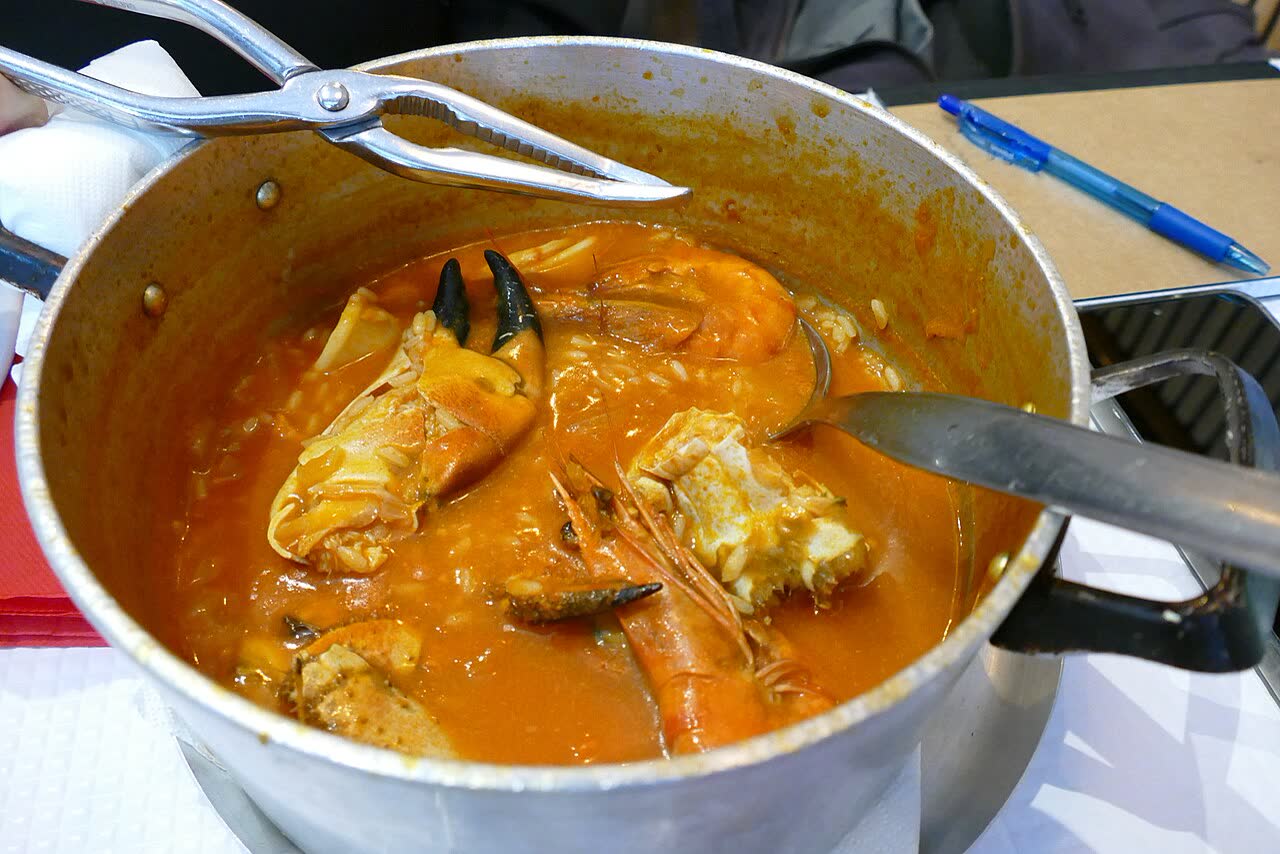
- Arroz de marisco: a soupy seafood rice for sharing. Expect a wait, as it’s cooked to order. Look out for arroz de polvo (octopus rice) and arroz de tamboril (monkfish rice) too.
- Caldeirada: a hearty fish and potato stew.
- Açorda de marisco: a thick bread porridge with seafood, garlic and coriander, a Lisbon favourite.
- Choco frito: fried cuttlefish strips, Setúbal’s speciality. See Setúbal.
- Tinned fish: sardines, mackerel and tuna in olive oil are a Portuguese tradition, sold in colourful tins. See Portuguese tinned fish.
How to order
- Priced by the kilo: fresh fish and shellfish are often sold by weight (ao quilo or “kg” on the menu). Ask the weight and price before it’s cooked.
- Do the maths: a whole fish for two can easily weigh 800g to 1kg, so a price that looks modest per kilo adds up. Say how much you want to spend and ask the waiter to pick a fish to match.
- “Preço de mercado” (market price): ask what it is today before you order.
- Choose from the display: many restaurants show the day’s catch on ice.
- Look for the grill: the best places grill fish outdoors over charcoal.
- The couvert: bread and olives aren’t free. If you don’t want them, send them back before you start. See Portuguese etiquette.
- The prego finish: in Lisbon’s old beer-and-seafood halls, many locals end a shellfish feast with a prego, a thin garlicky steak sandwich, instead of dessert. See bifana and prego.
When to go
- Sardine season: roughly June to September, when they’re fat and full of flavour. Fishing stops over winter and restarts in spring (on 4 May in 2026), but the early catch is leaner.
- June festivals: sardines grill on every corner during Santo António in Lisbon and São João in Porto. See Santo António.
- Algarve festivals in August: Portimão holds its Sardine Festival by the river, and Olhão hosts a big Seafood Festival, usually in the second week of August. In 2026 they ran from 4 to 9 August and 10 to 15 August. Check the dates each year.
- Shellfish: many say shellfish are best in the cooler months (those with an “r” in the name), though you’ll find them year-round.
- Percebes: harvesting is banned for part of the autumn on much of the coast, so they can be scarce and even pricier then.
Where to eat seafood
- Matosinhos (Porto): a street of fish grills a short metro ride from the centre. See Matosinhos and what to eat in Porto.
- Sesimbra and Setúbal: grilled fish by the harbour. See Sesimbra.
- The Algarve: cataplana and beach restaurants. See Algarve beach restaurants.
- Ericeira: clams and sea urchins. See Ericeira.
- Lisbon: traditional marisqueiras for a shellfish feast, plus simple grills in the old neighbourhoods.
FAQ
When is sardine season in Portugal?
Sardines are at their best from June to September. Fishing restarts each spring after a winter break, so you’ll see them from May, but they’re leaner early on.
Is seafood expensive in Portugal?
Grilled fish of the day at a simple grill house is good value. Shellfish and big whole fish sold by the kilo can add up fast, so always ask the weight and price first.
What does “ao quilo” mean on a menu?
It means the price shown is per kilo, not per plate. Your bill depends on the weight of the fish or shellfish you choose.
What is the difference between a marisqueira and a churrasqueira?
A marisqueira specialises in shellfish, often priced by weight. A churrasqueira is a grill house, usually cheaper, for grilled fish and meat.
Pair it with vinho verde. More: what to eat in Portugal.
See also: cataplana.
Prices and details change, so please double-check before you travel. Spotted something out of date? Tell us in the groups.
Still got questions?
Ask 305,000+ travellers and locals in our free Facebook groups.