
Trip guides / Food and drink
Portuguese Rice Dishes: What to Order and How It's Cooked
Rice is everywhere in Portugal: in steaming pots of seafood rice for two, baked with duck and chouriço, and served wet and red with tomato beside fried fish. Much of it is grown at home, in the river valleys of the Tejo, Sado and Mondego. Here’s what the main rice dishes are and how to order them.
Quick answer: Portugal eats more rice per person than any other European country, about 16 kg a year according to 2023 industry figures. Most rice dishes are wet and soupy, a style called malandrinho. Start with arroz de marisco (seafood rice), arroz de tamboril (monkfish rice) and arroz de pato (oven-baked duck rice). Rice is cooked to order, so allow 25 to 30 minutes, and pot rices are usually priced for two or per person.

Why Portugal loves rice
Rice has been grown in Portugal for centuries and is eaten almost daily at home. In 2023 the rice industry association ANIA put consumption at 16 kg of white rice per person a year, the highest in Europe and about four times the EU average. Two types matter:
- Carolino: a rounded grain that soaks up broth and flavour and turns creamy. It’s the type Portugal grows most, and the one cooks choose for soupy rice and rice pudding.
- Agulha: “needle” rice, a long grain that stays separate. It actually sells more: 46.8% of the market in 2021, against 21.9% for carolino.
Wet or dry: malandrinho and oven-baked rice
Most Portuguese rice dishes are cooked in a pot with lots of liquid and served loose and wet, closer to a thick soup than a paella. This style is called malandrinho (or malandro, literally “rascal”). Home recipes use three to four times as much liquid as rice, and the dish is served at once, before the grains drink it all.
- Malandrinho or caldoso (brothy): served in the pot it was cooked in. Seafood rice, razor clam rice and cabidela are classic examples.
- Arroz de forno (oven rice): drier, finished in the oven so the top toasts. Duck rice is the best known. In Marco de Canaveses, east of Porto, lamb roasts in a wood-fired oven over a clay dish of rice that catches its juices (anho assado com arroz de forno).
Seafood rice
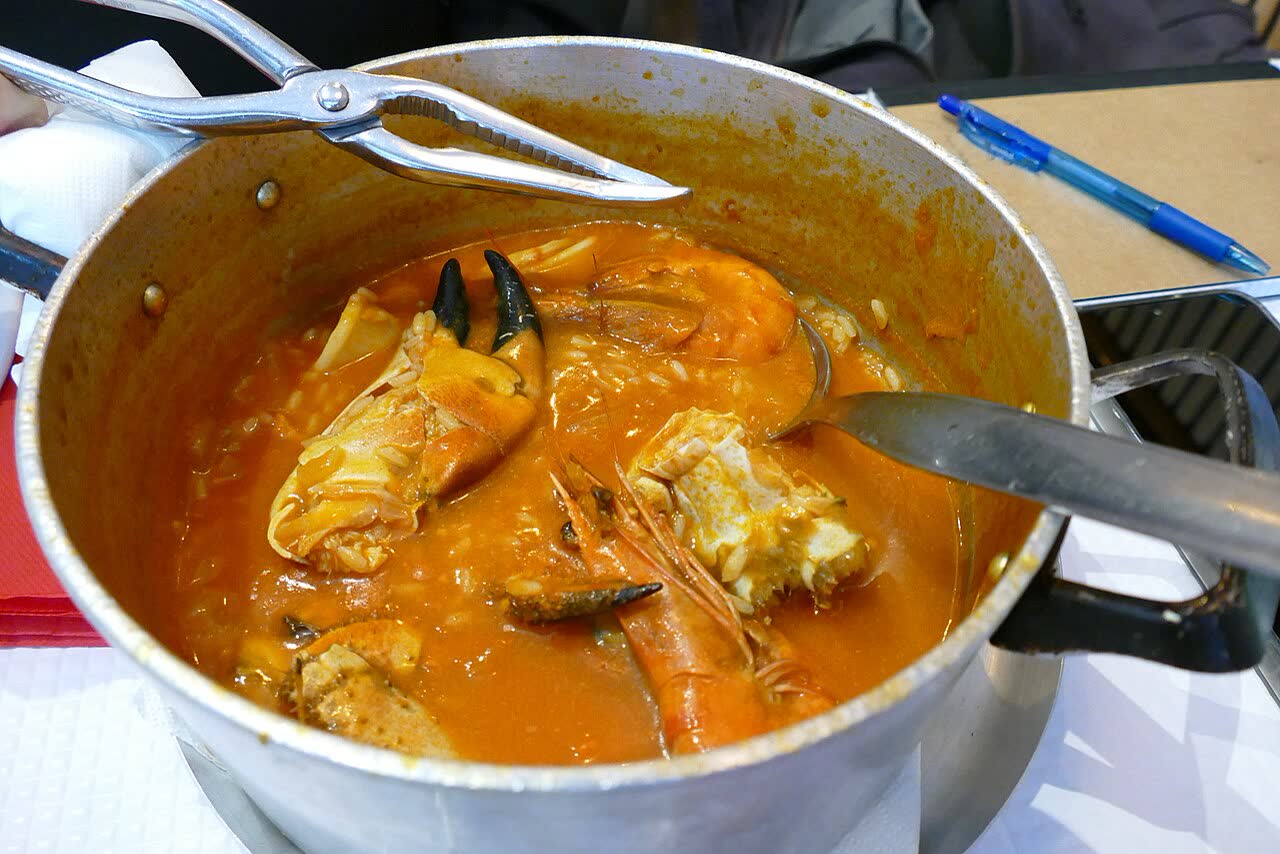
- Arroz de marisco: seafood rice, the classic. Prawns, clams, mussels and sometimes crab or lobster are cooked with carolino in plenty of broth until creamy. It comes in a steaming pot to share, usually sold for two or priced per person. See the Portuguese seafood guide.
- Arroz de tamboril: monkfish rice, which grew out of simple fishermen’s cooking. Seafood restaurants usually list it next to arroz de marisco.
- Arroz de polvo: octopus rice, usually made malandrinho, found from the Minho to the Algarve.
- Arroz de lingueirão: razor clam rice, a pot dish that started in the Algarve, with plenty of broth, tomato and coriander.
- Arroz de bacalhau: salt cod rice, a classic of Portuguese cod cooking. See the bacalhau guide.
Meat rice
- Arroz de pato: duck rice. The duck is cooked slowly and shredded, the rice is cooked in its broth, and the lot is layered in a dish, topped with slices of chouriço and baked until golden. The first recipe is usually traced to the seminary in Braga, but it’s now served all over the country, often as the dish of the day on Wednesdays or Fridays. See Portuguese sausages.
- Arroz de cabidela: chicken, traditionally a farmyard rooster, cooked with rice and finished with the bird’s own blood, mixed with vinegar and sometimes red wine. The rice comes out dark and brothy with a sharp tang. It’s widespread in the Minho and was once a treat for feast days.
- Arroz de sarrabulho: rice cooked in a broth of pork, beef and chicken, often with pig’s blood, and seasoned with cumin and bay. It’s served with rojões (small cubes of fried pork), sausages, and potatoes or chestnuts. Since January 2025, Arroz de Sarrabulho à moda de Ponte de Lima has been an EU Traditional Speciality Guaranteed. See Ponte de Lima.
A gentle warning: cabidela and sarrabulho are both traditionally made with blood, and the dark colour and tangy flavour aren’t for everyone. If you’re curious, try a spoonful from a friend’s plate first. Cabidela is sometimes listed simply as arroz de frango (chicken rice), so ask if a chicken rice looks unusually dark.
Tomato rice and rice pudding
- Arroz de tomate: tomato rice, cooked wet with onion, garlic, green pepper, bay leaf and carolino. It’s the classic partner for fried fish, especially jaquinzinhos (tiny fried horse mackerel). It’s an old fishing-family habit: take the smaller fish home, fry them and serve them with tomato rice made that day.
- Arroz doce: rice pudding, made with carolino and flavoured with lemon and cinnamon. It’s eaten all year and is a Christmas favourite. See Portuguese desserts.
Where Portugal’s rice is grown
Portugal is the EU’s fourth-biggest rice producer, after Italy, Spain and Greece. By area, about 55% of the paddies are along the Tejo and Sorraia estuaries, 25% on the Sado and 20% on the Mondego. Two kinds of carolino have EU protected status (IGP):
- Arroz Carolino das Lezírias Ribatejanas IGP: from the flat flood plains (lezírias) of the Tejo estuary, in parts of Azambuja, Benavente, Coruche, Salvaterra de Magos and Vila Franca de Xira. Protected since 2008, from land farmed for rice for more than two centuries.
- Arroz Carolino do Baixo Mondego IGP: from the lower Mondego valley around Coimbra, Montemor-o-Velho and Figueira da Foz.
On the Sado, rice fields surround Alcácer do Sal and Comporta, where an old rice mill is now the Museu do Arroz restaurant. See Comporta.
How to order rice in a restaurant
- Order early: at Uma in Lisbon, seafood rice takes 25 to 30 minutes, and other places warn it can take longer. Order when you sit down, or even when you ring to book.
- Read the price line: some menus price rice per person, others per pot for two. In 2026, seafood rice at Uma costs €19.90 per person, while Marisqueira Os Fialhos in the Algarve charges, for two, €35 for razor clam rice, €45 for seafood rice and €49 for monkfish rice.
- Lobster costs more: arroz de lavagante (lobster rice) is the luxury version. Uma’s, for two, costs €66.90.
Where to eat good seafood rice
- Lisbon: Uma, on Rua dos Sapateiros in the Baixa, opened in 1988 and now serves seafood rice as practically its only main dish, up to 400 portions on busy days. Arrive early.
- Matosinhos: Porto’s seaside neighbour has around 450 restaurants. Casa da Guripa in Angeiras is known for seafood rice, and Marisqueira dos Pobres serves monkfish rice. See Matosinhos.
- Eastern Algarve: the place for razor clam rice. It’s the house speciality at Marisqueira Os Fialhos in Luz de Tavira.
FAQ
Does Portugal eat the most rice in Europe?
Yes. Industry figures for 2023 put it at about 16 to 18 kg per person a year, the highest in Europe and around four times the EU average.
What does arroz malandrinho mean?
Rice cooked with plenty of liquid and served wet and soupy, not dry and fluffy. Malandro means “rascal”, and malandrinho is the affectionate diminutive.
What is arroz de cabidela made of?
Chicken or rooster, rice and the bird’s blood, mixed with vinegar and stirred in near the end of cooking. It’s dark, brothy and slightly sour.
What rice is used in Portuguese cooking?
Carolino, a rounded Portuguese-grown grain that absorbs broth and turns creamy, for soupy rice and rice pudding. Long-grain agulha sells more but isn’t the usual choice for the classic wet dishes.
How long does arroz de marisco take?
About 25 to 30 minutes, because it’s cooked to order. Order it as soon as you sit down.
More: what to eat in Portugal, cataplana in the Algarve and the best restaurants in Lisbon.
Prices and details change, so please double-check before you travel. Spotted something out of date? Tell us in the groups.
Still got questions?
Ask 305,000+ travellers and locals in our free Facebook groups.