
Trip guides / Planning
Portuguese Desserts: 20 Sweets to Try (and Where)
Portugal has one of the sweetest food cultures in Europe. Many of its desserts were invented in convents, where nuns used up leftover egg yolks (the whites were used to starch clothes and clarify wine). The result is a world of golden custards, sponges and almond sweets. Here are the Portuguese desserts you have to try, and where to find the best.
Quick answer: start with a warm pastel de nata, then try travesseiros and queijadas in Sintra, ovos moles in Aveiro, pão de ló (sponge cake), arroz doce (rice pudding), serradura and bolo de bolacha. On the beach, buy a bola de Berlim; in autumn, roasted chestnuts; at Christmas, bolo rei.
The classics
Pastel de nata
The famous custard tart: flaky pastry, caramelised custard, cinnamon on top. The original recipe has been baked in Belém since 1837, where the tarts are called pastéis de Belém. The recipe is said to come from the monks of the nearby Jerónimos Monastery, and the bakery still keeps it secret. Eat them warm, on the day they’re made. See the best pastel de nata in Lisbon.
Arroz doce
Creamy rice pudding flavoured with lemon and cinnamon, often decorated with cinnamon patterns. A family favourite at every celebration.
Pão de ló
Portuguese sponge cake. The version from Ovar is protected (IGP), and in Alfeizerão, near Óbidos, they make it gooey and half-baked in the middle.
Bolo de bolacha
Layers of Maria biscuits dipped in coffee and buttercream. Simple, homely and delicious.
Serradura
“Sawdust pudding”: whipped cream layered with crushed biscuits. A favourite in Portugal and Macau.
Toucinho do céu
“Bacon from heaven”: a rich almond and egg-yolk cake from the convents (traditionally made with lard, hence the name).
Leite-creme and pudim
Leite-creme is a lemony custard with a burnt sugar top, like crème brûlée. Pudim flan is a set caramel custard on almost every restaurant menu. Look out for pudim Abade de Priscos from near Braga, an old recipe made with egg yolks, port and a little bacon fat.
Mousse de chocolate and baba de camelo
Two everyday restaurant desserts. Baba de camelo (“camel’s drool”) is a sticky caramel mousse made from condensed milk and eggs. It tastes far better than it sounds.
At the pastry counter
Every pastelaria has a glass case of everyday cakes alongside the tarts. These are cheap, filling and eaten at any time of day.
- Pão de Deus: a soft sweet bun with a crunchy coconut topping. Locals often have it split and filled with ham and cheese.
- Bolo de arroz: a tall, plain muffin made partly with rice flour, sold in a paper wrapper. Good with a morning coffee.
- Mil-folhas: layers of puff pastry and custard with an iced top.
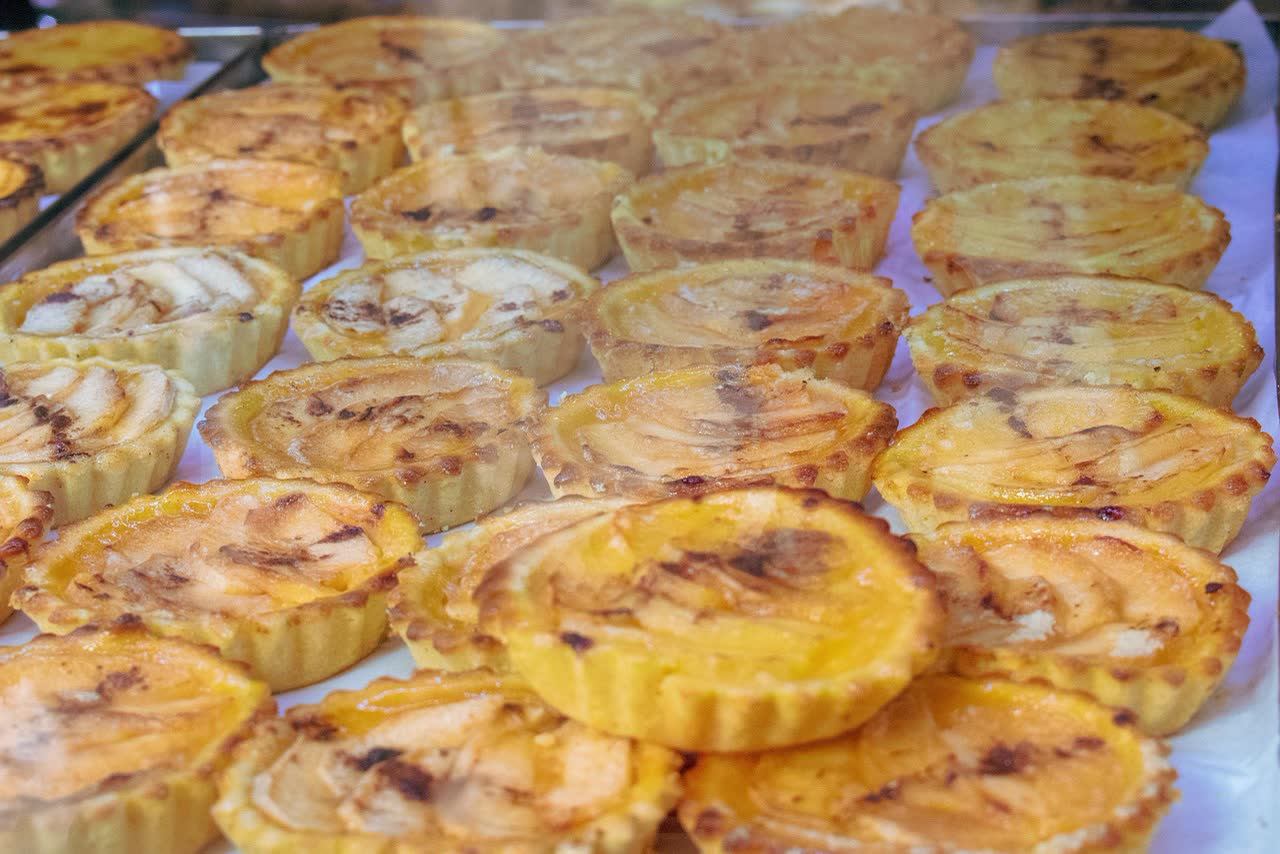
- Queijadas: small cheese or milk tarts, made differently in almost every region.
Regional specialities
- Travesseiros and queijadas (Sintra): puff pastry “pillows” filled with almond cream, and little cheese tarts. Piriquita, founded in 1862, is the place. See visiting Sintra.
- Ovos moles (Aveiro): sweet egg-yolk filling in wafer shells shaped like fish and shells, a protected local product. In 2008, they became the first Portuguese sweet to win EU protection. See Aveiro.
- Pastel de Tentúgal (near Coimbra): paper-thin pastry filled with egg cream, first made by Carmelite nuns in Tentúgal, between Coimbra and Figueira da Foz. See Coimbra.
- Pastel de Santa Clara (Coimbra): a half-moon pastry filled with egg and almond, from the city’s convents.
- Jesuítas (Santo Tirso, near Porto): flaky puff pastry triangles with a crisp sugar topping, made at Confeitaria Moura since the late 19th century.
- Pastéis de feijão (Torres Vedras): little tarts made with white beans, almonds and egg. You can’t taste the beans.
- Sericaia (Alentejo): a fluffy, cinnamon-dusted egg pudding, traditionally served with sugared Elvas plums. See Alentejo food.
- Dom Rodrigo (Algarve): golden threads of egg yolk and almond, wrapped in colourful foil.
- Doces de amêndoa (Algarve): marzipan shaped like fruits and animals, plus Morgado, a rich almond-paste cake with a sweet egg filling. See what to eat in the Algarve.
- Madeira: bolo de mel, a dark, spiced cake made with sugar-cane honey, which keeps for months and makes a good gift. The island also makes its own queijadas.
Seasonal treats
- Bola de Berlim: custard-filled doughnuts sold by beach vendors all summer.
- Castanhas assadas: roasted chestnuts from smoky street carts in autumn and winter.
- Bolo rei: the Christmas “king cake” with candied fruit. See Christmas in Portugal.
- Folar: the Easter bread, sweet or savoury depending on the region.
- Sonhos and rabanadas: fried doughs and Portuguese French toast at Christmas.
- Bolo rainha: the “queen cake”, a Christmas version of bolo rei with nuts and dried fruit but no candied fruit, for people who pick the green bits out.
- Malasadas (Madeira and the Azores): sugared fried doughnuts, eaten especially around Carnival.
- Convent sweets fair: every November, the monastery in Alcobaça hosts a big show of convent sweets and liqueurs from Portugal and abroad (19 to 22 November in 2026). See Alcobaça Monastery.
Where to try them
- Lisbon: Confeitaria Nacional (since 1829) and Pastelaria Versailles for classic pastry shops.
- Porto: Confeitaria do Bolhão, and Manteigaria by the Bolhão market.
- Anywhere: a local pastelaria with a bica (espresso) at the counter. See the Portuguese coffee guide.
Tips
- Morning and mid-afternoon are when pastry shops are busiest and the cakes freshest. Locals often stop for a lanche (afternoon snack) around 5pm.
- Stand at the counter: it’s usually cheaper than sitting at a table.
- Taking them home: egg-based sweets don’t keep long. Bolo de mel, boxed ovos moles and doces de amêndoa travel better. See Portugal souvenirs.
- Ask for the house dessert: doce da casa is often homemade and the best thing on the menu.
FAQ
What is the difference between a pastel de nata and a pastel de Belém?
They’re the same kind of custard tart. Pastéis de Belém is the name used only by the original Belém bakery, which has made them to its own secret recipe since 1837.
Why do so many Portuguese desserts use egg yolks?
Convents used egg whites to starch clothes and clarify wine, which left plenty of yolks. Nuns turned them into sweets, and many of those recipes are still made today.
What is the most famous Portuguese dessert?
The pastel de nata, by a long way. After that, ovos moles, pão de ló and arroz doce are the ones most Portuguese people would name.
Which Portuguese sweets can I take home?
Bolo de mel from Madeira, boxed ovos moles and Algarve almond sweets travel best. Custard tarts and cream cakes are best eaten on the day.
Want to bake your own? See pastel de nata classes, or try a Lisbon food tour. More: what to eat in Portugal, what to eat in Porto and our guide to nata classes.
See also: Pastéis de Belém.
Some links in this guide are affiliate or referral links (GetYourGuide, Booking.com, Discover Cars, Welcome Pickups, Airalo, Yesim, Saily, Tiqets, Radical Storage, EKTA, AirHelp, Uber). If you book or sign up through them we may earn a small commission or ride credit at no extra cost to you. It helps keep our groups and this site free.
Still got questions?
Ask 305,000+ travellers and locals in our free Facebook groups.