
Trip guides / Food and drink
Portuguese Sausages: Chourico, Alheira, Presunto and More
Portugal’s cured meats are some of the best things you’ll eat there: smoky chouriço, garlicky alheira, rich blood sausage and thin slices of presunto, the country’s cured ham. The most famous come from the cold north-east and the Alentejo. Here’s what each one is, how it’s eaten and how to order it.
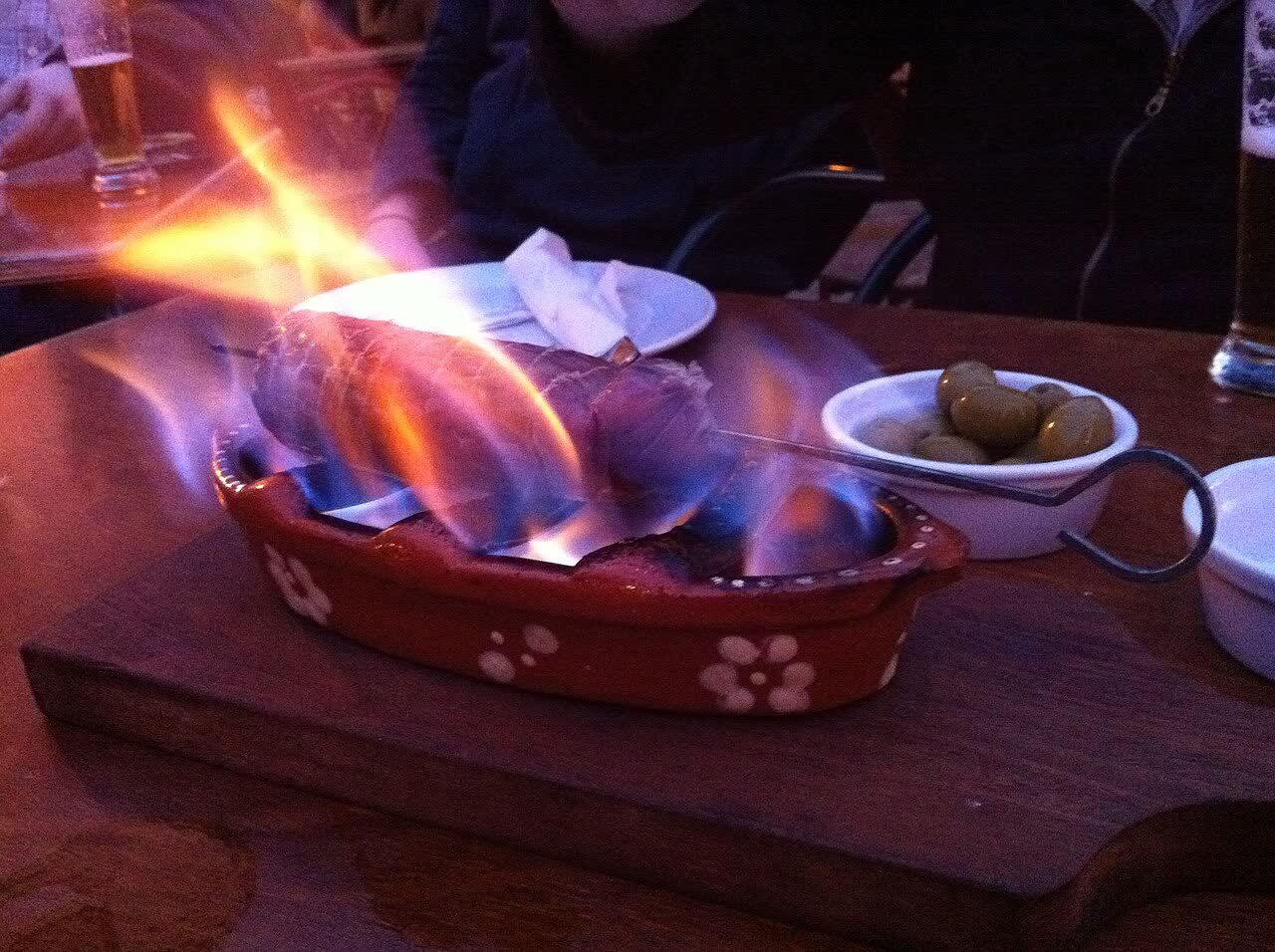
Quick answer: start with chouriço assado, a pork sausage flamed in a clay dish, and alheira, a smoked sausage of bread, garlic and meat, fried or baked and served with chips and a fried egg. Then try morcela (blood sausage), farinheira (flour and pork fat), salpicão (chunky smoked pork) and presunto (cured ham). Trás-os-Montes and the Alentejo make the best-known ones, and many have EU protected names, such as Alheira de Mirandela (PGI) and Presunto de Barrancos (PDO).

Words to know
- Enchidos: stuffed sausages of every kind, from chouriço to morcela.
- Fumeiro: the smokehouse, and the smoked meats made in it. Northern sausages are traditionally smoked over oak and chestnut, Alentejo ones over holm oak and cork oak.
- IGP and DOP: the Portuguese labels for the EU’s PGI and PDO protected names, made in a set area to a set method.
Chouriço
Chouriço is the everyday Portuguese sausage, and every region makes its own. A typical Alentejo chouriço de carne is fatty pork seasoned with garlic, salt, white wine and massa de pimentão (red pepper paste), stuffed into a thick casing and smoked for about a week to six weeks. It’s sliced with bread or used to season stews and broad beans (favas).
- Chouriço assado: the sausage is scored, laid on a clay dish called an assador and cooked over a little burning alcohol. In many restaurants the waiter lights it at the table. Eat it in slices with bread.
- Which one to flame: chouriço de porco preto (black pork) is a favourite. Very dry ones are better sliced.
Alheira
Alheira is a smoked sausage made with bread as well as meat, which gives it a soft, moist texture. Its name is linked to garlic, alho. It comes from Trás-os-Montes, where three versions are PGI: Mirandela, Vinhais and Barroso-Montalegre.
- Alheira de Mirandela IGP: an EU PGI since 2016, made only in the municipality of Mirandela. It’s a golden-brown horseshoe about 25 cm long, filled with pork of the local Bísara breed, poultry and sometimes game, plus wheat bread soaked in the cooking broth, lard, olive oil, garlic and paprika. It was named one of Portugal’s 7 Maravilhas da Gastronomia (seven wonders of food).
- Not pork-free: despite its reputation, the protected alheiras of Mirandela and Vinhais must contain Bísara pork.
The best-known story says alheira was invented by New Christians, Jews forced to convert at the end of the 15th century. Pork sausages in the smokehouse marked a Christian home, so, the story goes, families who still avoided pork made look-alikes from bread and poultry to fool the Inquisition. Food historians disagree: some accept it, others call it a legend, and there’s little hard evidence either way.
Farinheira, morcela and linguiça
- Farinheira: a pale, soft sausage of pork fat and wheat flour, seasoned with red pepper paste and garlic and smoked. A popular starter is ovos mexidos com farinheira, the filling squeezed out of its skin and cooked with scrambled eggs.
- Morcela: blood sausage, with recipes that change by region. In Estremoz and Borba it’s pork jowl, blood, fat, garlic and cloves. Around Guarda it’s blood with stale bread, onion and cumin, fried in rounds with boiled potatoes and greens.
- Linguiça: a slimmer relative of chouriço, in a narrower casing and usually more garlicky. The Baixo Alentejo and Portalegre versions are both PGI.
Paio, painho and salpicão
These chunky sausages are made from bigger pieces of meat and are usually sliced and eaten as they are.
- Paio: a lean Alentejo sausage. Paio de Beja IGP uses loin, leg and shoulder from Alentejano pigs, with red pepper paste, garlic and cumin.
- Painho: similar, in a wide, straight casing packed with pieces of meat and fat. Painho de Portalegre is PGI. It’s eaten raw, and cooking it is considered a waste.
- Salpicão: the north’s version, traditionally pork loin marinated in wine, garlic and salt, then smoked. Salpicão de Vinhais IGP is Bísara pork smoked for at least 40 days over oak and chestnut.
Presunto: Portuguese cured ham
- Presunto de Barrancos DOP: from the black Alentejano pig, the breed behind porco preto. It’s cured for 12 to 24 months but not smoked, which is unusual in Portugal. The pigs are raised across the Alentejo, but curing must happen in Barrancos, on the Spanish border.
- Presunto do Alentejo DOP: also from Alentejano pigs, raised in the montado, the cork and holm oak woodland, where acorns are an essential part of their diet. See Alentejo food.
- Chaves ham: a famous northern name, easy to spot by its round shape. Hams from the surrounding hills were traded in Chaves, and the protected version today is Presunto de Barroso IGP, made in Boticas, Chaves and Montalegre and smoked for up to three months. The Abade de Priscos pudding recipe even calls for Chaves ham fat. See Chaves.
How they’re eaten
- Alheira with egg and chips: fried or baked, with chips, a fried egg and often rice or salad.
- As petiscos: chouriço assado, plates of presunto and boards of sliced sausage with bread. See petiscos.
- Cozido à portuguesa: the big boiled dinner of meats and vegetables, where presunto, salpicão and chouriço are essential and morcela often goes in too.
- Caldo verde: a slice of chouriço tops the kale and potato soup. See caldo verde.
How to order in a tasca
- Uma tábua de enchidos: a board of sliced sausages to share. A tábua mista usually adds cheese.
- Alheira com batata frita e ovo: alheira with chips and a fried egg.
- É caseiro? “Is it homemade?”
Fumeiro fairs
Northern sausages are made after the winter pig killing (matança), when cold, dry weather helps the meat cure. From January to March, towns hold fairs where producers sell direct:
- Montalegre: the Feira do Fumeiro e Presunto de Barroso, held since 1992, usually in the second half of January.
- Vinhais: the self-styled Capital do Fumeiro holds what it bills as Portugal’s oldest smoked meat fair in early February (5 to 8 February in 2026). See Bragança.
- Mirandela: the Feira da Alheira, usually at the start of March (26 February to 1 March in 2026).
- Monchique: the Algarve hills have their own Feira dos Enchidos, usually over a weekend in early March.
Dates change, so check the town hall’s website first.
Where to try and buy them
- Trás-os-Montes: Bragança, Vinhais, Mirandela, Chaves and Montalegre for alheira, salpicão and smoked ham.
- The Alentejo: Estremoz, Borba, Portalegre and Beja for paio, painho, farinheira and morcela, and Barrancos for ham.
- Porto: the old salsicharias in Bolhão Market sell chouriço, alheira and presunto sliced to order. See Bolhão Market.
- Anywhere: supermarkets and delis stock IGP and DOP sausages and ham.
Taking them home
- Vacuum packs: ask for presunto or sausages embalado a vácuo (vacuum-packed), or buy them ready-packed.
- Customs at home: many countries restrict or ban meat products in travellers’ luggage, often because of animal disease, and a vacuum pack doesn’t change that. Check your own country’s rules before you buy.
FAQ
What is alheira made of?
Meat, bread, fat and garlic. Alheira de Mirandela uses pork, poultry and sometimes game, with wheat bread soaked in the broth, lard, olive oil and paprika, and is lightly smoked.
Is alheira made without pork?
Not usually. A popular story links it to Jewish converts avoiding pork, but historians disagree about that, and the protected alheiras of Mirandela and Vinhais must contain pork.
What is the difference between chouriço and linguiça?
Both are smoked pork sausages. Linguiça is usually slimmer and more garlicky, though names vary by region.
Can you bring chouriço home from Portugal?
It depends on where you live. Many countries restrict or ban meat in travellers’ luggage, vacuum-packed or not, so check your own country’s customs rules before you buy.
What is the best Portuguese ham?
There’s no single best. Try Presunto de Barrancos or Presunto do Alentejo, or a smoked northern ham such as Presunto de Barroso.
More: what to eat in Portugal, the Portuguese cheese guide and the best souvenirs from Portugal.
Prices and details change, so please double-check before you travel. Spotted something out of date? Tell us in the groups.
Still got questions?
Ask 305,000+ travellers and locals in our free Facebook groups.