
Cataplana: The Algarve's Signature Dish
Cataplana is the Algarve’s signature dish, named after the clam-shaped copper pan it’s cooked in. Seafood, or pork and clams, steams in a fragrant broth of tomato, onion, peppers, garlic and wine, and the pan is opened at the table in a puff of steam. Here’s what to know.
Quick answer: order a cataplana de marisco (seafood) or cataplana de peixe (fish) in a coastal restaurant, usually for two people. It takes 30 to 45 minutes to cook, so order early. Mop up the broth with bread. Copper cataplanas make a great souvenir.

Why try it
Plenty of Algarve dishes are simple grilled fish. Cataplana is the one that feels like an occasion. It arrives sealed at your table, the waiter lifts the lid, and you get a rush of steam that smells of the sea, garlic and herbs. It is made to share, it uses whatever is fresh that day, and it is one of the best ways to taste the local seafood in one go.
The pan
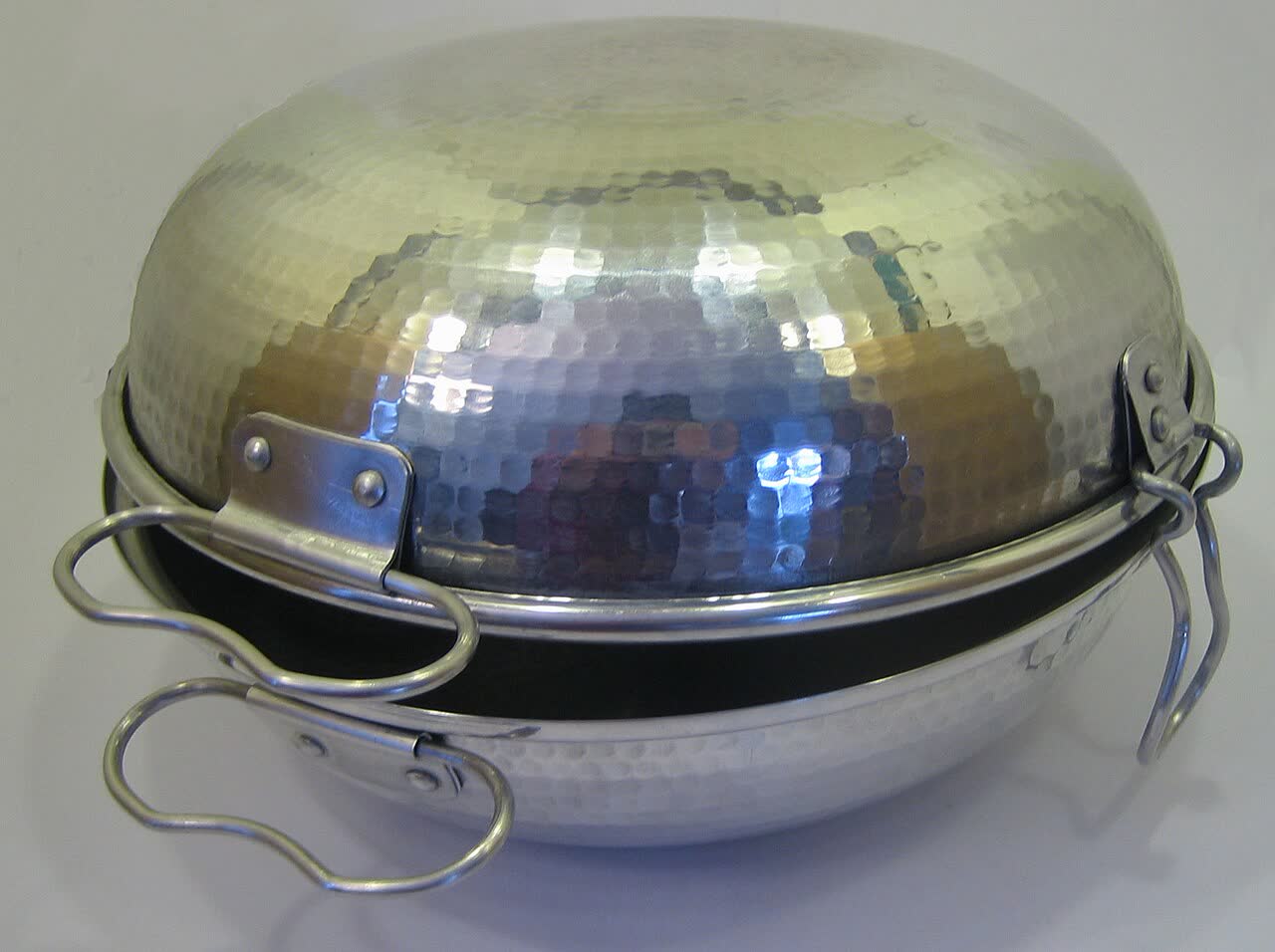
A cataplana is two hinged copper domes that clamp shut, a bit like a clam shell. It works like a pressure cooker, sealing in the steam and flavour. Its origins are often traced to the Moorish period in the Algarve, and it is sometimes compared to the North African tagine, another dish named after the pot it is cooked in. Today you see the pans in every Algarve kitchen and in plenty of shop windows.
Traditional pans are hammered copper, lined inside with tin so the food never touches bare copper. Modern versions come in stainless steel or aluminium, and some restaurants use those in the kitchen while keeping a shiny copper one for serving.
How it is made
The base is usually onion, garlic, peppers and tomato softened in olive oil, often with a little smoked sausage or cured ham for depth. White wine goes in, then the fish or shellfish. The lid is clamped shut and the pan cooks on the hob, so the seafood steams in its own juices. Fresh coriander is a common finishing touch in the south of Portugal.
Timing is everything. Firm fish and potatoes, if used, go in first. Prawns and clams go in near the end, so they cook just until the clams open. A good cook barely lifts the lid, as every peek lets the steam out.
Types of cataplana
- Seafood (marisco): clams, prawns, mussels and sometimes lobster.
- Fish (peixe): monkfish and other firm white fish.
- Pork and clams: a surf-and-turf version. It is related to carne de porco à alentejana, a pork and clam dish from the neighbouring Alentejo, which is usually pan-fried with potatoes rather than steamed.
- Mixed: fish and shellfish together.
- Clams only (amêijoas na cataplana): a lighter option, sometimes served as a starter.
How to order
- Size: menus usually list it for two, and sometimes for three or four. One portion for two is a lot of food, especially with bread and potatoes or rice.
- Price: it is one of the pricier dishes on the menu because of the seafood. Check whether the price shown is per person or for the whole pan.
- Timing: call ahead or order it as soon as you sit down. Some restaurants ask you to book it in advance.
- What is in it: ask the waiter. The mix often depends on the day’s catch.
- Useful words: amêijoas (clams), camarão (prawns), mexilhão (mussels), tamboril (monkfish) and lagosta (lobster).
Where to eat it
You will find cataplana all along the Algarve coast, from Sagres to Tavira. Look for busy, family-run seafood restaurants near the harbour in fishing towns like Olhão, Portimão, Ferragudo and Tavira. See Olhão and Ferragudo. Beach restaurants also serve it, often with a view. Inland and in the rest of Portugal it is less common.
The eastern Algarve is a good place to try a clam-heavy version, as clams are farmed and dug in the lagoon around Faro, Olhão and Tavira. See the Ria Formosa. A good sign of a fresh cataplana is clams that have all opened and a broth that tastes of the sea rather than of stock.
Making it at home
You don’t need a cataplana to try it. A wide pan or casserole with a tight lid works. Soften onion, garlic and peppers in olive oil, add tomato, a little chouriço, a glass of white wine and a bay leaf, then lay the seafood on top, cover and steam for about 10 minutes until the clams open. Finish with lots of chopped coriander and serve straight from the pan.
Tips
- For two: most restaurants only serve it for two or more people, and it’s priced per person or per pan.
- Time: it’s cooked to order, so expect a wait.
- Sides: bread or rice to soak up the sauce.
- Wine: a crisp white or vinho verde. See the vinho verde guide. The Algarve also makes its own wines, so ask for a local white.
- Souvenir: copper cataplanas are sold in Algarve markets. See Portugal souvenirs.
- Buying one to cook with: some copper pans are made for decoration. Check the inside is lined for cooking, or buy a stainless steel one, which is easier to look after.
- Caring for copper: wash it by hand, never in a dishwasher, and dry it well. Don’t heat it empty, as that can damage the tin lining.
- No meat: the broth often contains pork sausage or ham, so ask if you don’t eat meat.
- Allergies: shellfish is the main ingredient in most versions, so a fish-only cataplana is the one to ask about if you avoid shellfish.
FAQ
What is a cataplana?
It’s both a hinged, clam-shaped pan, usually copper, and the dish cooked in it: seafood, fish or pork and clams steamed in a tomato, pepper, garlic and wine broth. It’s the best-known dish of the Algarve.
Can you order cataplana for one person?
Usually not. Most restaurants make it for a minimum of two. Some offer a small clam cataplana as a starter, which is the closest thing to a single portion.
Why does cataplana take so long?
It’s cooked to order with fresh seafood and needs to steam in the sealed pan, so 30 to 45 minutes is normal. Order it as soon as you sit down, or ask when you book.
Is cataplana the same as caldeirada?
No. Caldeirada is a layered fish stew cooked in an open pot, found all over Portugal. Cataplana is steamed in a sealed pan and is mainly an Algarve dish.
More: the Portuguese seafood guide, the best Algarve beach restaurants and piri-piri chicken.
See also: what to eat in the Algarve.
Prices and details change, so please double-check before you travel. Spotted something out of date? Tell us in the groups.
Still got questions?
Ask 305,000+ travellers and locals in our free Facebook groups.