
Trip guides / Planning
Portugal's UNESCO World Heritage Sites
Portugal has a remarkable number of UNESCO World Heritage Sites for its size: historic city centres, monasteries, palaces, a wine region carved into terraces, prehistoric rock art and an ancient forest on Madeira. Here’s a guide to Portugal’s UNESCO sites and how to visit them.
Quick answer: the easiest to visit are Sintra, Jerónimos and Belém Tower in Lisbon, Porto’s historic centre, the Douro Valley, Évora, Guimarães, the monasteries of Batalha and Alcobaça, Tomar’s Convent of Christ, Mafra, Bom Jesus in Braga and the University of Coimbra. On the islands: Angra do Heroísmo, Pico’s vineyards and Madeira’s laurel forest.
Why they are worth planning around
Portugal has 17 World Heritage Sites: 16 cultural and one natural. Most of them sit on or near the main Lisbon to Porto route, so you can see several without long detours. They also cover almost every period of Portuguese history, from Stone Age rock art to the royal palaces of the 18th and 19th centuries. The year after each name below is when UNESCO listed it.
Lisbon and around
- Jerónimos Monastery and Belém Tower (1983): Manueline masterpieces of the Age of Discoveries. Allow half a day for both. The monastery church is free, but the cloister is paid, and both sites close on Mondays. The tower reopened on 27 May 2026 after restoration, with timed entry, so book ahead. See Belém and the Jerónimos guide.
- The Cultural Landscape of Sintra (1995): palaces, castles and gardens spread across a forested hill, 40 minutes from Lisbon by train. Pena Palace tickets are for a set date and time (the Essential Visit is €20), and private cars can’t drive up to Pena, so use the bus or walk. See visiting Sintra.
- Royal Building of Mafra (2019): the palace, basilica, convent, garden and hunting park, with a famous library. The palace closes on Tuesdays. The basilica has been closed for restoration since January 2025, so check whether it has reopened. See Mafra and the Mafra Palace guide.
Central Portugal
- Batalha Monastery (1983) and Alcobaça Monastery (1989): Gothic masterpieces near Fátima. Batalha has the roofless Unfinished Chapels; Alcobaça holds the carved tombs of King Pedro I and Inês de Castro. One day by car covers both, plus Óbidos or Fátima. See Fátima and the monasteries and Batalha.
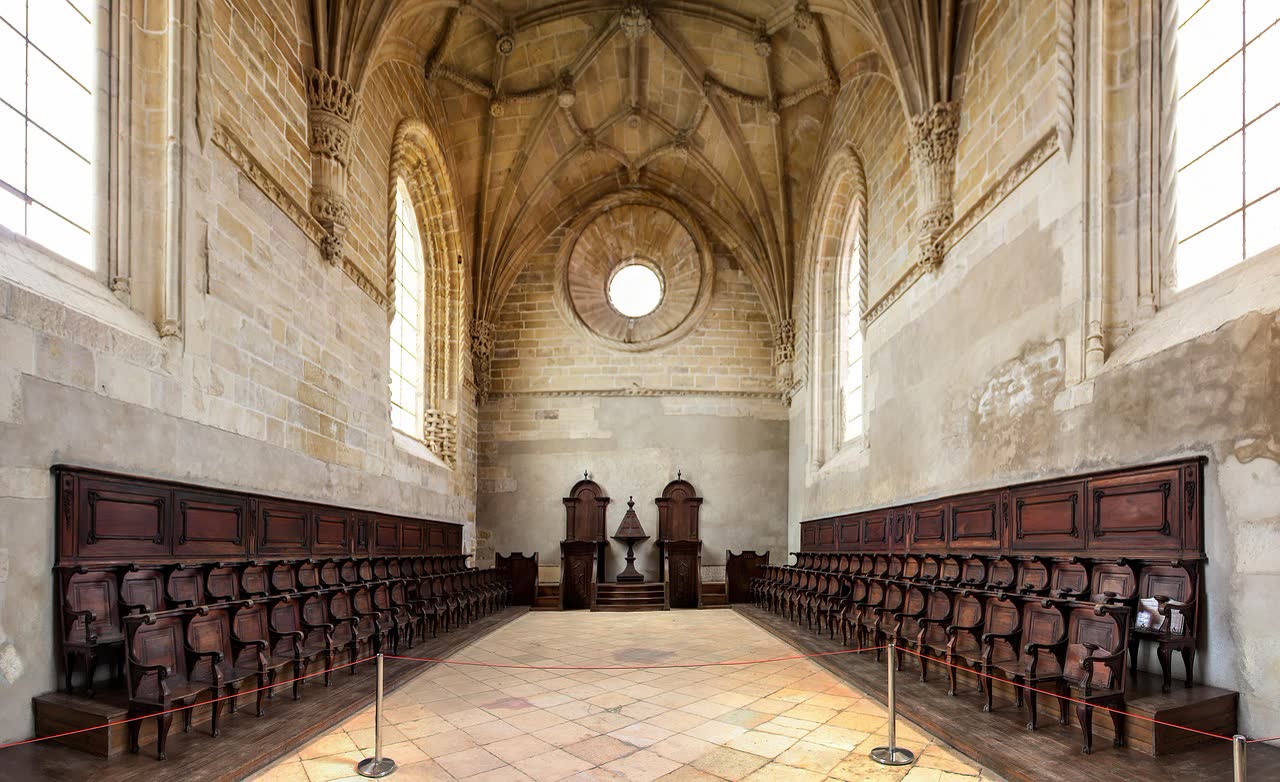
- Convent of Christ, Tomar (1983): the Templar stronghold, with a round church and a famous Manueline window. Tomar is about two hours from Lisbon by train. See Tomar.
- University of Coimbra (2013): one of Europe’s oldest universities, including the baroque Joanina Library, which you visit on a timed ticket. Fast trains stop at Coimbra-B, so take the bus link or the Metrobus into the centre. See Coimbra.
The north
- Historic Centre of Porto (1996): the Ribeira, the old town, the Dom Luís I Bridge and the Serra do Pilar monastery across the river. See Porto.
- Alto Douro Wine Region (2001): terraced vineyards along the river, where port wine comes from. Reach it by train from Porto to Régua or Pinhão, by river cruise or by car. See the Douro itinerary.
- Historic Centre of Guimarães (2001), extended in 2023 to include the old tanneries of the Couros zone, and Bom Jesus do Monte, Braga (2019), with its zigzag baroque stairway. Both make an easy day trip from Porto by train. See Braga and Guimarães.
- Côa Valley rock art (1998): open-air prehistoric engravings in the northeast, shared with Siega Verde in Spain. You can only see the main rock art sites on guided visits run by the Côa Park, so book ahead. See the Côa Valley guide.
The Alentejo
- Historic Centre of Évora (1986): the Roman temple, the cathedral and the walled town. About 1.5 hours from Lisbon by train or bus. See Évora.
- Elvas (2012): the border town with its huge star-shaped fortifications and aqueduct, near Badajoz in Spain.
The islands
- Angra do Heroísmo, Terceira (1983): a historic Atlantic port town with colourful streets, rebuilt after a 1980 earthquake. See Terceira.
- Pico Island vineyards (2004): vines in lava-walled plots by the sea. See Pico.
- Laurisilva of Madeira (1999): the ancient laurel forest, Portugal’s only natural World Heritage Site, walked along the levadas. Official trails must be booked on the SIMplifica platform, usually €4.50 per walk (€10.50 for the PR1 peak trail). See levada walks.
Seeing several on one trip
- From Lisbon: Belém one morning, Sintra on another day, and Mafra on the way to Ericeira.
- Central loop by car: Alcobaça and Batalha in a morning, then Tomar in the afternoon, with Óbidos as an extra stop.
- From Porto: the historic centre on foot, Guimarães and Braga on one day, and the Douro on another.
Also recognised by UNESCO
- Fado (intangible cultural heritage, 2011). See fado in Lisbon.
- Cante Alentejano, the Alentejo’s slow choral singing (intangible heritage, 2014).
- More intangible heritage: the Mediterranean diet (2013, shared with other countries), the clay figures of Estremoz (2017), the masked Caretos of the Podence carnival (2019) and the paper-flower street festivals of Campo Maior (2021).
- Óbidos, a UNESCO City of Literature. See Óbidos.
- The Berlengas, a UNESCO Biosphere Reserve. See Berlengas.
- Geoparks: Portugal also has several UNESCO Global Geoparks, including Arouca, Estrela and the Azores. The newest, Algarvensis, covering Loulé, Silves and Albufeira, was recognised in April 2026.
Portugal also put forward a group of buildings by the architect Álvaro Siza, including the tidal swimming pools at Leça da Palmeira, but in 2025 UNESCO deferred the nomination and asked for it to be reworked.
Practical tips
- Closing days: many state-run monuments close on Mondays (Mafra on Tuesdays), so check before you go.
- Book ahead for Sintra’s palaces, the Belém Tower, the Joanina Library and the Côa rock art visits.
- A car helps for Batalha, Alcobaça, the Côa Valley and Elvas. The rest are easy by train.
FAQ
How many UNESCO World Heritage Sites does Portugal have?
Seventeen: 16 cultural sites and one natural site, the Laurisilva of Madeira. The most recent were Mafra and Bom Jesus in Braga, both listed in 2019.
Which UNESCO sites are closest to Lisbon?
Jerónimos and the Belém Tower are in the city itself. Sintra is about 40 minutes away by train, and Mafra is a short drive north.
Can you see Batalha and Alcobaça in one day?
Yes. They are a short drive apart, so a car lets you see both and add Óbidos, Fátima or Tomar on the same day.
Do you need to book UNESCO sites in advance?
For some, yes. Book Pena Palace and the other Sintra sites, the Belém Tower, the Joanina Library and the Côa Valley tours ahead.
More: castles, palaces and a quick history of Portugal.
See also: Elvas, the Coa Valley rock art, Angra do Heroismo, Guimarães and Belém Tower.
Prices and details change, so please double-check before you travel. Spotted something out of date? Tell us in the groups.
Still got questions?
Ask 305,000+ travellers and locals in our free Facebook groups.