
Trip guides / Central Portugal
Batalha Monastery: Tickets, Highlights and How to Visit
The Batalha Monastery is one of the masterpieces of Gothic architecture in Europe, a vast lacy stone church and cloisters built to celebrate a battle that secured Portugal’s independence. It’s a UNESCO World Heritage site, and an easy stop between Lisbon and Porto or on a Fátima day trip.
Quick answer: Batalha is about 1.5 hours north of Lisbon, 20 minutes from Fátima. The church is free, and a ticket covers the Royal Cloister, the Chapter House and the roofless Unfinished Chapels. Allow 1.5 hours. Many day tours combine it with Fátima, Nazaré and Óbidos. See day tours.
Why go
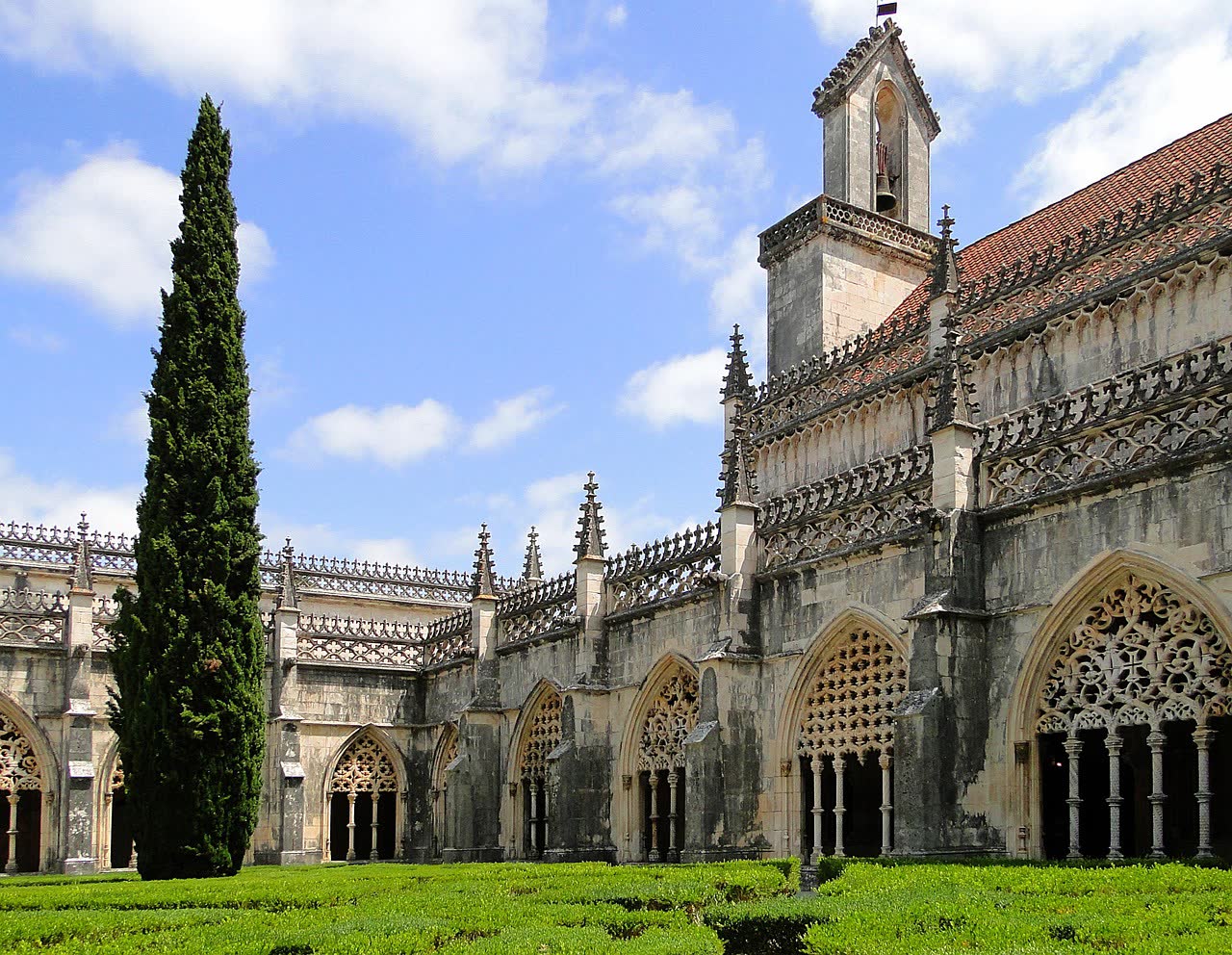
Batalha is a small town with one enormous building. The golden limestone church rises straight out of the main square, covered in pinnacles and carved tracery. Inside, the stonework is some of the finest in Portugal, and the roofless Unfinished Chapels are unlike anything else in the country. It sits just off the A1 motorway, so it’s easy to add to a drive between Lisbon and Porto.
About the monastery
King João I vowed to build the monastery if he won the Battle of Aljubarrota against Castile, fought on 14 August 1385. He won, and work began in 1386. Building went on for over a century, through seven reigns and about 15 master builders, and ended around 1517. The result is a showcase of Portuguese Gothic and early Manueline stonework. It was given to the Dominican friars and became the burial place of the Avis royal family. UNESCO listed it in 1983.
The nave is about 32 metres high but only 22 metres wide, which is why it feels so tall when you walk in.
What to see
- The church: a soaring, light-filled Gothic nave with stained glass. Look back at the west window as you leave.
- The main doorway: rows of carved kings, prophets and angels around the arch on the west front.
- The Founder’s Chapel: the joint tomb of João I and Philippa of Lancaster, lying hand in hand, and the tomb of their son Henry the Navigator.
- The Royal Cloister: Gothic arches filled with intricate Manueline tracery.
- The Chapter House: a vast star-shaped vault about 19 metres across with no central support. It holds the tomb of the Unknown Soldiers from the First World War, with a guard of honour.
- The Unfinished Chapels: an octagonal pantheon open to the sky, started for King Duarte and never completed, with an astonishing carved Manueline doorway about 15 metres high.
The church takes about 20 minutes. Give the cloisters and Chapter House 40 minutes, and the Unfinished Chapels another 20. A slow visit with time on the square takes around two hours.
Getting there
- By car: about 1.5 hours from Lisbon on the A1 motorway, and around 2 hours from Porto. There’s paid parking beside the monastery.
- By bus: Rede Expressos runs several direct buses a day from Lisbon’s Sete Rios terminal, taking about 2 hours. Check times on the Rede Expressos site, and book your return seat, as some buses fill up.
- By train: there’s no convenient train station. Leiria is the nearest big town, about 15 minutes by car.
- On a tour: the easiest option without a car, usually combined with Fátima, Nazaré and Óbidos.
Tickets and opening hours
The church is free to enter. A ticket is needed for the cloisters, Chapter House and Unfinished Chapels. In 2026 the adult ticket costs about €15, and children under 12 usually go free. You can buy it online or at the ticket desk.
- 1 April to 15 October: usually 9am to 6.30pm, with last entry at 6pm.
- 16 October to 31 March: usually 9am to 6pm, with last entry at 5.30pm.
- Closed: 1 January, Easter Sunday, 1 May and 25 December.
Check the Museus e Monumentos de Portugal site for current times and prices before you go.
Storm damage in 2026
Storm Kristin damaged roofs, windows and parts of the façade in late January 2026, and trees fell around the monastery. It closed for repairs and reopened on 27 February 2026, at first with some areas still restricted. Conservation work may go on for a while, so you may find a section fenced off.
A one-day route from Lisbon
- Morning: drive to Óbidos and walk the walled town.
- Late morning: continue to Alcobaça to see the Cistercian abbey.
- Afternoon: visit Batalha when the light hits the façade.
- Evening: stop in Fátima, or stay overnight nearby.
Nearby
- Fátima: see Fátima day trip.
- Alcobaça: another UNESCO monastery 30 minutes away. See Alcobaça.
- Nazaré and Óbidos on the coast. See the Silver Coast.
- Tomar: the Convent of Christ. See Tomar.
What to eat
The cafés around the square serve simple Portuguese food: soups, grilled meat and bacalhau. For more choice, Nazaré is about 30 minutes away and known for grilled fish and seafood. In Alcobaça, try the convent sweets made with eggs and sugar.
When to go
The monastery is good all year, as most of it is indoors or under cover. Spring and autumn are pleasant for combining it with the coast. Tour groups tend to arrive late morning, so come early or later in the afternoon for a quieter visit.
Tips
- Combined tickets: if you plan to visit Alcobaça and Tomar too, ask about a combined ticket.
- Light: the façade glows golden in the late afternoon.
- Stay nearby: see places to stay in Batalha.
- Battlefield: the site of the Battle of Aljubarrota, with an interpretation centre, is a short drive south. Check it’s open before you go.
FAQ
How much does it cost to visit Batalha Monastery?
The church is free. In 2026 the ticket for the cloisters, Chapter House and Unfinished Chapels costs about €15 for adults, and children under 12 usually go free.
How long do you need at Batalha?
About 1.5 hours covers the church, cloisters, Chapter House and Unfinished Chapels. Allow two hours if you want to linger or have a coffee on the square.
Can you visit Batalha from Lisbon without a car?
Yes. Rede Expressos buses from Sete Rios take about 2 hours. A day tour that adds Fátima, Nazaré and Óbidos is the easier option.
Why were the Unfinished Chapels never finished?
King Duarte, who began them in 1437, died a year later, and work went on slowly under later kings. It finally stopped in the 16th century, when King Manuel I put his money into the Jerónimos Monastery in Lisbon.
More: UNESCO sites in Portugal and the best day trips from Lisbon.
See also: Leiria.
Some links in this guide are affiliate or referral links (GetYourGuide, Booking.com, Discover Cars, Welcome Pickups, Airalo, Yesim, Saily, Tiqets, Radical Storage, EKTA, AirHelp, Uber). If you book or sign up through them we may earn a small commission or ride credit at no extra cost to you. It helps keep our groups and this site free.
Still got questions?
Ask 305,000+ travellers and locals in our free Facebook groups.