
Trip guides / North Portugal
Things to Do in Braga: 16 Best Sights and Day Trips
Braga is one of the oldest cities in Portugal, founded by the Romans as Bracara Augusta and later the seat of the country’s archbishops, which is why there are churches on almost every corner. Today it’s a young university city with a flat, mostly pedestrian centre, about an hour from Porto by train. Here are the best things to do in Braga.
Quick answer: ride the 1882 water-powered funicular up to Bom Jesus do Monte (€2.50 one way in 2026) and walk down the stairway, then see the cathedral (Sé), the Jardim de Santa Bárbara, the Arco da Porta Nova and the Roman remains. Eat bacalhau à Braga and pudim Abade de Priscos. Urban trains from Porto São Bento take about an hour and cost about €3.60. One full day covers the highlights; two nights lets you add Guimarães.

Bom Jesus and the hills
1. Climb the Bom Jesus stairway
Bom Jesus do Monte, about 5km east of the centre, is Braga’s big sight and a UNESCO World Heritage Site since 2019. A zigzag baroque stairway of 583 steps by the usual count climbs about 116 metres, past chapels and fountains of the Five Senses and the Three Virtues, to a basilica with a wooded park and boating lake behind it. The stairway, park and basilica are free, and TUB city bus 2 runs from the centre to the foot of the hill in 15 to 20 minutes. Allow 1.5 to 2 hours; see the Bom Jesus do Monte guide.
2. Ride the water-powered funicular
Opened in 1882, it’s the oldest funicular in the world still running on a water counterweight. In 2026 it costs €2.50 one way or €4 return, and runs daily from 8:55am to 7:55pm in summer, and in winter from 8:55am to 5:55pm with a lunch break. While works on the stops continue, regular departures leave at a quarter past and a quarter to each hour. Ride up, then walk down slowly so you see every fountain.
3. Walk on to the Sameiro sanctuary
Higher up the same hill, the Sanctuary of Our Lady of Sameiro is a large Marian church begun in 1863, with even wider views over Braga. It’s about 1.5km by road from the top of Bom Jesus, or around 20 minutes on foot through the pine woods. Entry is free; allow an extra hour.
The cathedral and the old centre
4. Braga Cathedral and its treasury
The Sé is the oldest cathedral in Portugal, and its Kings’ Chapel holds the tombs of Count Henrique and Teresa, the parents of Portugal’s first king. Visits are split into three routes at €3 each in 2026 (the treasury museum, the chapels and high choir with its twin organs, and the cathedral itself), or €7 for all three; children up to 12 go free. It’s open from 8am to 1pm and 2:30pm to 6pm (the treasury from 9:30am), with no tourist visits during services. Allow 1 to 1.5 hours for the full ticket.
5. Wander the historic centre
Walk Rua do Souto, the main shopping street, to Praça da República and the Avenida Central, counting churches as you go: there are so many that Braga is called the “Rome of Portugal”. Allow two hours, and come back in the evening, when locals fill the café terraces.
6. Arco da Porta Nova
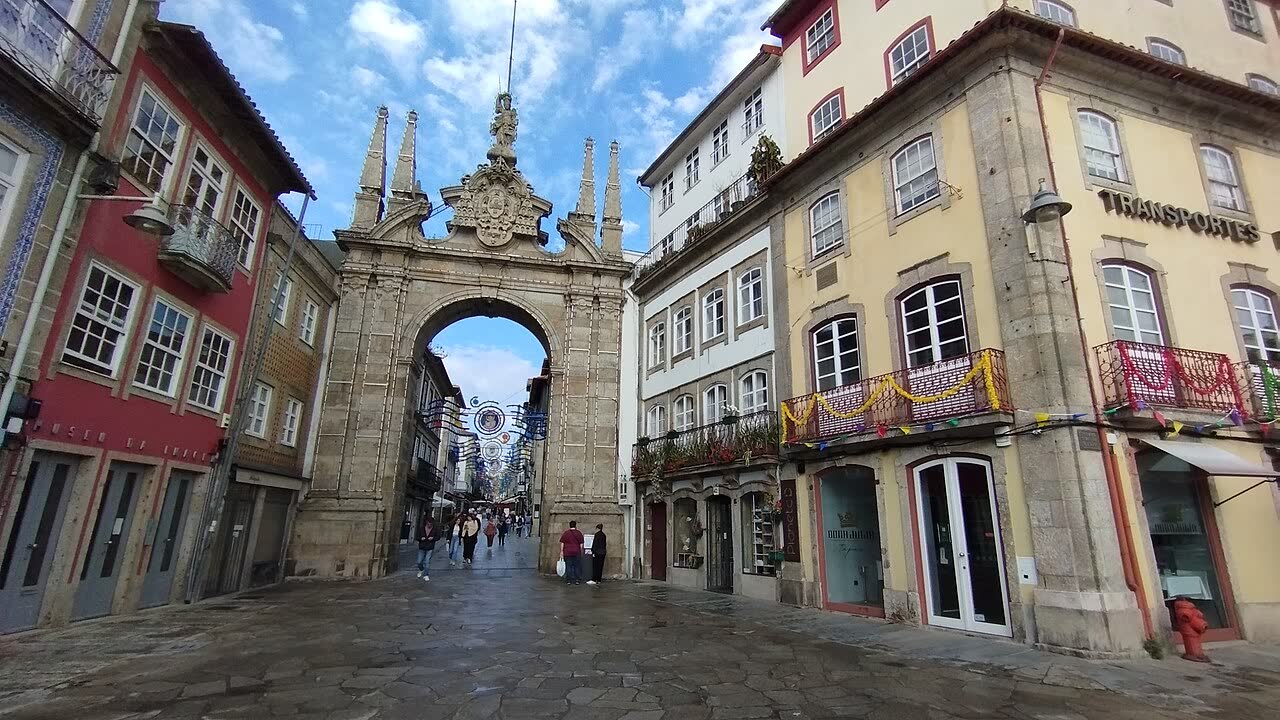
This grand arch was the western gate of the walled city, rebuilt in the 18th century to designs by the Braga architect André Soares. Walk through it and follow Rua D. Diogo de Sousa straight to the cathedral, the classic way into the old town. It’s free and takes a few minutes.
7. Jardim de Santa Bárbara
A small formal flower garden beside the medieval wing of the old archbishop’s palace, with a fountain topped by a statue of Saint Barbara. It’s free and takes 15 minutes. Come in spring, when the beds are in full flower.
8. Palácio do Raio
Built in 1754 to 1755 and attributed to André Soares, this town house has a rococo facade of blue tiles framed in carved granite. Since 2015 it has housed an interpretation centre on the history of Braga’s Misericórdia charity, so check opening times. The Fonte do Ídolo is on the same street, Rua do Raio.
9. Theatro Circo
Braga’s grand theatre opened in 1915 on Avenida da Liberdade and reopened in 2006 after a remodelling, with room for about 1,500 people. The best way to see inside is to book a concert, play or film from its programme.
Roman Braga
10. Termas Romanas do Alto da Cividade
Near the archaeology museum are the excavated public baths of Roman Bracara Augusta, with the remains of a Roman theatre beside them. Tickets have long cost about €2, or about €3.60 combined with the Fonte do Ídolo, and the site has usually closed on Sundays and public holidays, so check current hours with the city council. Allow 30 to 45 minutes.
11. Fonte do Ídolo
This rock sanctuary from the early 1st century is one of Braga’s oddest sights: a spring flowing from a granite outcrop carved with a figure and Latin inscriptions, now a national monument. Entry is about €2; allow 20 minutes.
12. D. Diogo de Sousa Archaeology Museum
Founded in 1918 and in its purpose-built home since 2007, Braga’s archaeology museum stands in the middle of the old Roman city. The collection runs from the Palaeolithic to the Middle Ages, including Roman mosaics and the remains of a Roman house in situ. A ticket costs €5, and residents of Portugal get free entry on up to 52 days a year. Allow an hour, and go before the Roman baths so they make more sense.
Festivals and food
13. Holy Week (Semana Santa)
Braga’s Holy Week is the most famous in Portugal, with candlelit processions and decorated streets that draw more than 100,000 visitors. The highlight is the Ecce Homo procession on the night of Holy Thursday (25 March in 2027), led by the farricocos, hooded penitents who carry torches and shake wooden rattles. Easter Sunday 2027 falls on 28 March, so book a room months ahead. See Easter in Portugal.
14. São João
Braga holds one of the biggest São João festivals in the country, with about a week of concerts, religious events and stalls leading up to 24 June, a local holiday. The main night is 23 June, with concerts on the Avenida Central and fairground rides at Parque da Ponte. Expect crowds and higher room prices. For Porto’s version, see São João in Porto.
15. Eat Braga’s classics
Order bacalhau à Braga, fried salt cod with onions and potatoes, and try frigideiras, small puff pastries filled with meat. For dessert, pudim Abade de Priscos is a rich caramel pudding made with egg yolks, port and a little bacon fat. Take a coffee at Café A Brasileira, open since 1907 in the old centre. See the bacalhau guide and Portuguese desserts.
Beyond the city
16. Take a day trip
Guimarães, the birthplace of Portugal, is 25 to 40 minutes away by bus (there’s no direct train). Ponte de Lima, about 30 minutes by car, has a long medieval bridge and a riverside market every other Monday. Peneda-Gerês National Park is 45 minutes to an hour’s drive, and buses are limited, so you really need a car. See Guimarães, Ponte de Lima, Peneda-Gerês and Barcelos.
Getting there from Porto
- Train: urban trains run from Porto São Bento, calling at Campanhã, in about 55 to 70 minutes, usually about once an hour. A single costs about €3.60 at CP’s 2026 fares; buy it at the station, as Andante doesn’t cover Braga. Braga station is 10 to 15 minutes’ walk from the centre.
- Bus: coaches also run from Porto, but rarely beat the train on price. Getbus shuttles link Porto airport with Braga in about 50 minutes.
- Car: about 50 minutes on the tolled A3.
See day trips from Porto by train and the Portugal train guide.
How long to stay
One full day covers Bom Jesus, the cathedral and the old centre, which is why most people visit from Porto. Two nights is better: a day for Braga and a day for Guimarães, with quiet evenings after the tour groups leave. Add a third night for Peneda-Gerês. See where to stay in Braga.
When to go
Spring and autumn are best for walking and the Bom Jesus stairs. Summers are hot inland, and winters are cool and rainy, with shorter funicular hours. Besides Holy Week and São João, look out for Braga Romana, a Roman-themed street festival in late May, and the Noite Branca, a weekend of free concerts in early September. See the Portugal festivals calendar.
FAQ
Is Braga worth visiting?
Yes. Bom Jesus is one of the finest baroque sights in Portugal, the centre is compact and easy to walk, and it’s a cheap day trip from Porto by train.
How do you get from Porto to Braga?
Take the urban train from São Bento or Campanhã: about 55 to 70 minutes and about €3.60 one way in 2026.
How much is the Bom Jesus funicular?
€2.50 one way and €4 return in 2026. The stairway, park and basilica are free, so many people ride up and walk down.
Can you do Braga and Guimarães in one day?
Yes, but it’s busy. By public transport, take the train to Guimarães early, the bus to Braga at lunch, then the train back to Porto. See Braga and Guimarães.
More: the best day trips from Porto, things to do in Porto, UNESCO sites in Portugal and the vinho verde guide.
Prices and details change, so please double-check before you travel. Spotted something out of date? Tell us in the groups.
Still got questions?
Ask 305,000+ travellers and locals in our free Facebook groups.