
Things to Do in Olhao, Algarve
Olhão is the Algarve’s biggest fishing port and one of its most authentic towns. It’s a maze of cube-shaped houses with roof terraces, twin red-brick market halls on the waterfront, and ferries out to car-free islands in the Ria Formosa. Here are the best things to do in Olhão.
Quick answer: visit the waterfront markets (best on a Saturday morning), wander the old fishermen’s quarter, take the ferry to Armona or Culatra for empty beaches, and eat seafood by the water. Olhão is about 15 minutes from Faro by train or car. See places to stay in Olhão.
Why go
Olhão feels like a real town rather than a resort. Fishing boats unload in the harbour, locals shop at the market, and the beaches are a short boat ride away on sandy islands with no cars. It is also one of the easiest places to explore the Ria Formosa lagoon.
Things to do
- The markets: two red-brick halls on the seafront, opened in 1916, one for fish and one for fruit and vegetables. They are busiest in the morning. On Saturdays, a big farmers’ market spills outside with local produce, cheese, honey and dried fruit. Allow an hour. The halls usually open early and wind down by early afternoon, and they are closed on Sundays, so check current times locally.
- The old town: narrow lanes of whitewashed cube houses with flat roof terraces, giving Olhão a North African feel. Walk the old fishermen’s quarters near the waterfront, and look up for the lookout towers on some rooftops. Allow an hour or two.
- The islands: ferries cross the lagoon to Armona and Culatra, with long sandy beaches and simple seafood restaurants. See ferries in Portugal.
- Ria Formosa boat trips: birdwatching, oyster farms and island hopping. See Ria Formosa tours.
- Seafood: clams, oysters, octopus and cataplana in the waterfront restaurants. See the seafood guide.
- The waterfront gardens and the marina promenade, good for an evening stroll when the heat drops.
- Quinta de Marim: the Ria Formosa Natural Park’s environmental centre, about 2.5 km east of town. A trail of around 3 km leads through pine woods, dunes and salt marsh to an old tide mill by the lagoon. Look out for chameleons in the pines. Check opening times before you go.
A little history
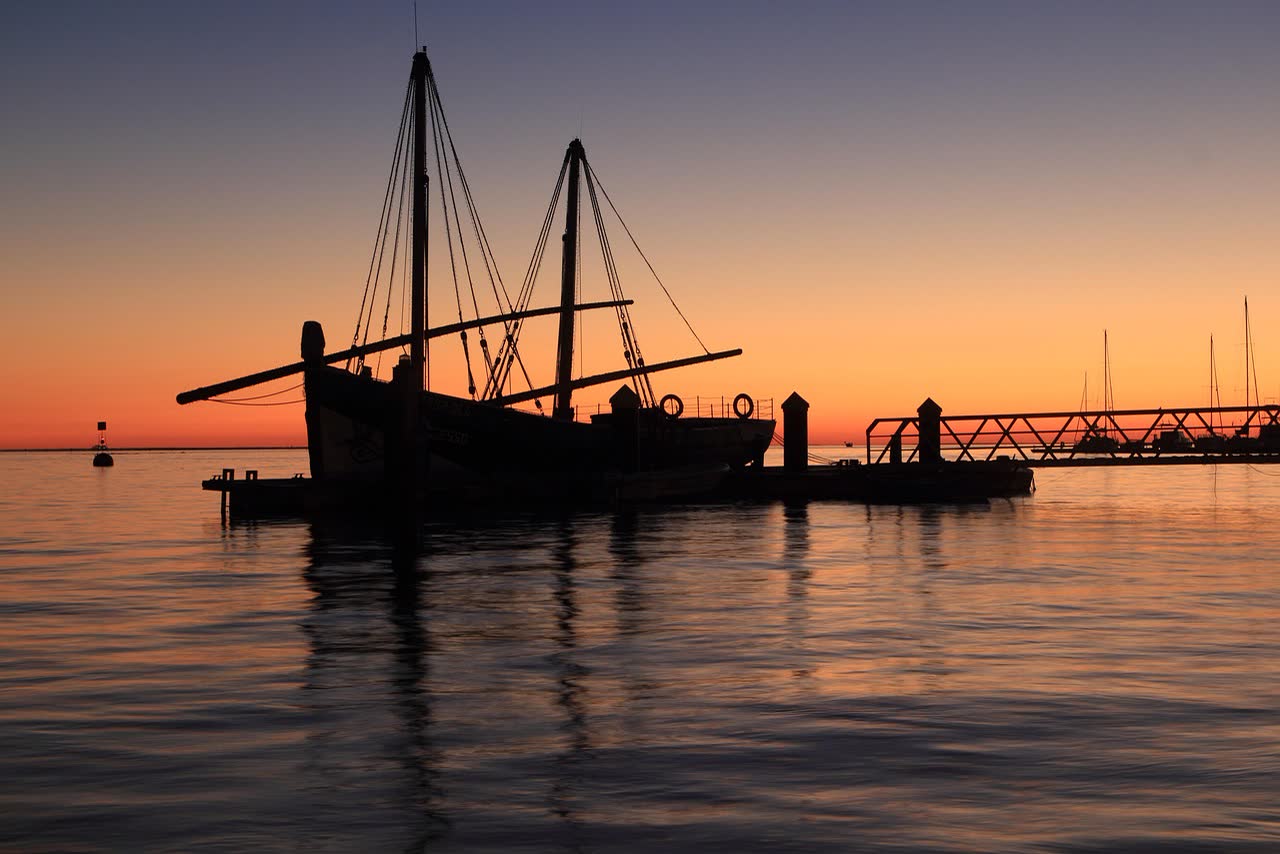
Olhão grew from a cluster of fishermen’s huts. The parish church of Nossa Senhora do Rosário, finished in 1698, was paid for by the town’s seafarers, as an inscription on it still records. In June 1808 the people of Olhão rose up against Napoleon’s occupying troops, and the revolt quickly spread across the Algarve. Seventeen fishermen then sailed a small boat, the Bom Sucesso, all the way to Rio de Janeiro to take the news to the royal court, then based in Brazil. As a reward, Olhão was made a town that November. A replica of the boat is moored by the marina, close to the markets.
The islands in more detail
Armona
The nearest island, about 15 minutes by ferry. A path leads from the jetty past holiday cottages to a long ocean beach. It is the easiest choice for a half day.
Culatra and Farol
Culatra is a fishing village on a sandy island, about 35 minutes by ferry. Many boats continue for about 10 more minutes to Farol, at the other end of the island, with its lighthouse and holiday homes. You can walk between the two along the beach. Plan a full day.
Ferries are frequent in summer and much less frequent in winter, so check the return times at the ferry pier before you go. Public ferry fares are low, usually a few euros each way. In winter the last boat back from Armona can leave as early as late afternoon. Water taxis also run to the islands, at a higher price.
Getting there
- By train: Olhão is on the Algarve regional line, about 10 minutes from Faro and usually 25 to 30 minutes from Tavira. The station is a short walk from the centre. Since July 2026 the line has run electric trains, roughly hourly towards Faro and Vila Real de Santo António, with some direct trains through to Lagos.
- By car: about 15 minutes from Faro and 20 to 25 minutes from Faro airport. Parking near the waterfront fills up on Saturday mornings.
- From further away: see getting around the Algarve.
How long to spend
A half day covers the markets and the old town. A full day lets you add an island. A suggested day: the market at 9am, coffee and a walk through the old town, a morning ferry to Armona for a swim, then a seafood lunch back on the waterfront and a stroll along the gardens at sunset.
Food
Olhão is known for clams, oysters and other shellfish from the lagoon, grilled fish straight off the boats, octopus and cataplana. The fish market is the best place to see what is in season. See cataplana in the Algarve.
When to go
- Summer: the best time for the islands, with frequent ferries.
- Festival do Marisco: Olhão’s big seafood festival, held each August by the waterfront, with seafood stalls and concerts. The 2026 edition ran from 10 to 15 August, with ticketed evening entry. Check the dates before you go. See Portugal’s festival calendar.
- Spring and autumn: warm, quieter, and good for walking and birdwatching.
- Winter: the town and markets stay lively, but island ferries are limited.
Why stay in Olhão?
Olhão is a real working town, with fewer resorts than the central Algarve. It’s well connected by train to Faro and Tavira, so it makes a good base for the eastern Algarve. See where to stay in the Algarve.
Nearby
- Faro: see things to do in Faro.
- Tavira: see Tavira and the eastern Algarve.
- Ria Formosa Natural Park: see wildlife in Portugal and the Ria Formosa guide.
- Other markets: see Algarve markets.
FAQ
What day is the market in Olhão?
The fish and vegetable halls open most mornings except Sunday. Saturday is the big day, when farmers set up stalls outside the halls.
Which island should I visit from Olhão?
Armona is the quickest, at about 15 minutes, and suits a half day. Culatra and Farol take longer to reach and are better for a full day.
How do you get from Faro to Olhão?
The train takes about 10 minutes and runs roughly every hour. By car it is about 15 minutes.
From our sister blog: Olhão, the hidden gem of the Algarve on Sunset Travellers.
See also: Culatra Island and what to eat in the Algarve.
Some links in this guide are affiliate or referral links (GetYourGuide, Booking.com, Discover Cars, Welcome Pickups, Airalo, Yesim, Saily, Tiqets, Radical Storage, EKTA, AirHelp, Uber). If you book or sign up through them we may earn a small commission or ride credit at no extra cost to you. It helps keep our groups and this site free.
Still got questions?
Ask 305,000+ travellers and locals in our free Facebook groups.