
Trip guides / Planning
Portuguese Cheese: Serra da Estrela, Azeitao and More
Portugal makes some superb cheeses, mostly from sheep’s and goat’s milk, and most visitors never hear about them. From the spoonable Serra da Estrela to the peppery São Jorge from the Azores, here’s a guide to Portuguese cheese and where to try it.
Quick answer: try Queijo Serra da Estrela (a soft, buttery sheep’s cheese you eat with a spoon), Azeitão (a creamy cheese from near Setúbal), São Jorge (a sharp, firm cow’s cheese from the Azores), Nisa and Évora from the Alentejo, and fresh queijo fresco. Order a tábua de queijos (cheese board) with a glass of wine.
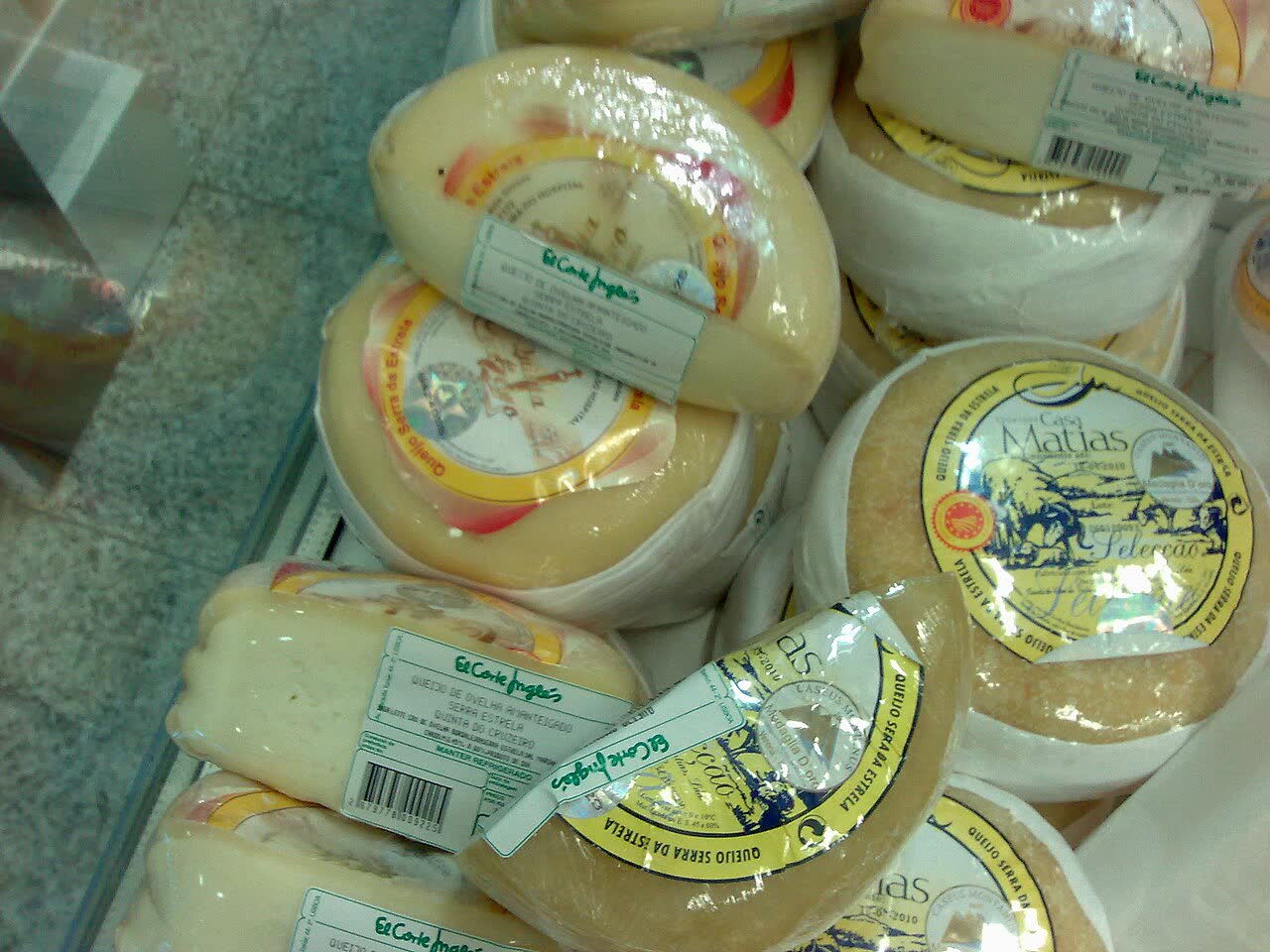

Why Portuguese cheese is different
Much of Portugal’s best cheese comes from sheep grazing on dry hills and mountain pastures. Many traditional cheeses are curdled with the flower of the wild cardoon thistle (cardo) rather than animal rennet. This gives them a soft, almost runny centre and a gentle bitter, grassy edge you won’t find in French or Spanish cheeses. Around a dozen Portuguese cheeses carry the EU’s protected designation of origin (DOP), which ties each one to its region and traditional method. Look for “DOP” on the label.
Words on the label
- Amanteigado: “buttery”, the soft, spoonable stage of a young sheep’s cheese.
- Curado or velho: cured or aged, so firmer and stronger.
- Ovelha, cabra, vaca: sheep, goat and cow.
- Leite cru: raw (unpasteurised) milk, worth knowing if you’re pregnant.
The famous cheeses
Queijo Serra da Estrela
Portugal’s most famous cheese, made from raw sheep’s milk in and around the Serra da Estrela mountains and curdled with thistle flower instead of animal rennet. The DOP rules name the local Bordaleira and Churra Mondegueira breeds, and the cheese is matured for at least 30 days. When ripe, it’s so soft you cut off the top and scoop it out with a spoon. An older, firmer version (velho) is sliced and has a stronger flavour. Most is made between about November and March, so it’s best in winter and spring. See Serra da Estrela.
Azeitão
A small, creamy sheep’s cheese from the Arrábida area, also made with raw milk and thistle, and matured for a few weeks. Rich and slightly tangy. Like Serra da Estrela, a ripe one can be eaten with a spoon. See Setúbal and Arrábida.
São Jorge
A firm, spicy cow’s milk cheese from the Azores island of São Jorge, aged for at least three months. You’ll also find seven-month, 12-month and older versions, and the longer it ages, the sharper and more crumbly it gets. Great with a glass of red. See Azores island hopping and São Jorge island.
Nisa
A semi-hard sheep’s cheese from the northern Alentejo, made with thistle, with small holes and a full, slightly acidic flavour.
Queijo de Évora
Small, hard, intensely flavoured sheep’s cheeses from the Alentejo, often eaten as a snack with bread and wine. See Alentejo food.
Serpa
Another thistle-curdled sheep’s cheese, from the south of the Alentejo. It’s larger than Évora and soft and pungent when young. See Serpa.
Queijo da Ilha and the Azores
The Azores produce lots of excellent cow’s milk cheeses, thanks to their green pastures. Look out for the soft, small Queijo do Pico too.
Queijo fresco and requeijão
Fresh, mild cheeses, often served as a starter with salt and olive oil, or with pumpkin jam for dessert. Requeijão is a soft, ricotta-like cheese made from whey, often sold in little baskets.
More regional cheeses to look for
- Rabaçal: a mix of sheep’s and goat’s milk, from the village of the same name south of Coimbra. Small and firm.
- Beira Baixa cheeses: Castelo Branco, Amarelo da Beira Baixa and the strong Picante da Beira Baixa, from the area around Castelo Branco.
- Terrincho: a mild sheep’s cheese from Trás-os-Montes in the far north-east.
- Cabra Transmontano: a hard goat’s cheese from the same region.
How to eat it
- As a starter: often part of the couvert (remember it isn’t free).
- On a cheese board with bread, olives and charcuterie.
- With jam: try cheese with pumpkin or quince jam (marmelada).
- Oven-baked: some restaurants warm a whole small cheese and serve it with toast for dipping.
- In a sandwich: Serra da Estrela cheese melting into a pork sandwich at Casa Guedes in Porto. See what to eat in Porto.
- With wine: a red from the Dão or Alentejo, or a tawny port. See Portugal’s wine regions.
How to open a soft cheese
Let a ripe Serra da Estrela or Azeitão sit at room temperature for an hour. Cut a lid in the top rind with a sharp knife, lift it off, and scoop the centre out with a spoon onto bread. Put the lid back on to store it.
Where to buy and taste
- Markets: Mercado do Bolhão in Porto and the neighbourhood markets in Lisbon. See Lisbon food markets and Porto food markets.
- Delis and wine bars in Lisbon and Porto.
- In the regions: buying from a farm shop or market in the Serra da Estrela, the Alentejo or the Azores is cheaper and fresher.
- Food tours usually include a cheese tasting. See food tours.
- Taking it home: vacuum-packed cheeses travel well; check your country’s rules on dairy before you buy. Several countries, including the UK, the US and Australia, restrict travellers bringing in cheese, and the rules change.
Cheese fairs
The Serra da Estrela towns hold cheese fairs in late winter, when the new cheeses are at their best. Celorico da Beira usually opens the season in February, Seia’s fair runs around Carnival (14 to 17 February in 2026), and Gouveia holds a cheese market in March. Producers sell straight from their stalls, and you can taste before you buy. Dates change each year, so check the town council websites. See the Portugal festivals calendar.
FAQ
What is Portugal’s most famous cheese?
Queijo Serra da Estrela, a raw sheep’s milk cheese from the central mountains. Ripe ones are so soft you eat them with a spoon.
When is Serra da Estrela cheese in season?
Most is made between about November and March, so winter and spring are the best times to find it soft and freshly ripened. Aged versions are sold all year.
Is Portuguese cheese made with raw milk?
Many traditional ones are, including Serra da Estrela and Azeitão. Look for “leite cru” on the label if you need to avoid it.
More: what to eat in Portugal and the best souvenirs.
Some links in this guide are affiliate or referral links (GetYourGuide, Booking.com, Discover Cars, Welcome Pickups, Airalo, Yesim, Saily, Tiqets, Radical Storage, EKTA, AirHelp, Uber). If you book or sign up through them we may earn a small commission or ride credit at no extra cost to you. It helps keep our groups and this site free.
Still got questions?
Ask 305,000+ travellers and locals in our free Facebook groups.