
Trip guides / Food and drink
Portuguese Christmas Food: Bacalhau, Sweets and Traditions
In Portugal, the big Christmas meal happens on the night of 24 December, not the 25th. The Consoada gathers the family around boiled salt cod, followed by a table of fried sweets, egg desserts and Bolo Rei. Here’s what’s eaten, how it changes around the country and how to taste it as a visitor.
Quick answer: the main meal is the Consoada on Christmas Eve: boiled bacalhau (salt cod) with potatoes, cabbage and eggs, dressed with plenty of olive oil, or boiled octopus in parts of the north. On 25 December, lunch is usually a roast, such as turkey or kid, sometimes after roupa velha made from the leftovers. The classic sweets are Bolo Rei, rabanadas, sonhos, filhós, aletria and arroz doce. Supermarkets close early on the 24th and shut on the 25th, so shop and book ahead.
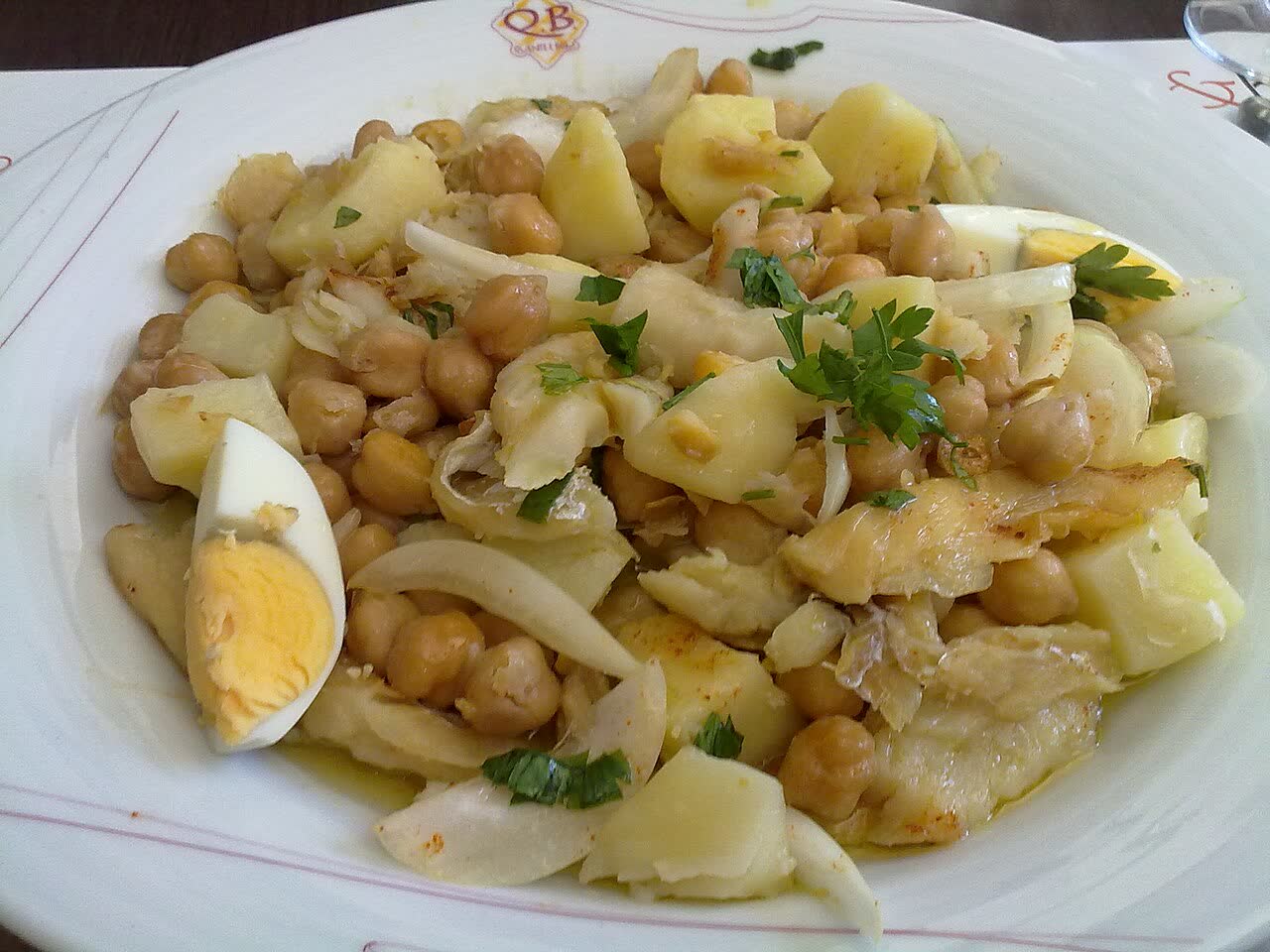

The Consoada on 24 December
Christmas Eve is the main event. The custom of eating fish that night comes from the old Church rule of no meat on the eve of Christmas, and salt cod won out because it was cheap and kept for months without refrigeration. Traditionally, families in the north ate before midnight Mass (Missa do Galo), while in the south many ate after it. See Christmas in Portugal for the wider traditions.
- Bacalhau com todos: “cod with everything”, the classic plate. Thick pieces of soaked salt cod are boiled and served with boiled potatoes, Portuguese cabbage (couve portuguesa) and hard-boiled eggs. In the centre of the country, chickpeas often join them.
- The dressing: a generous pour of olive oil at the table, and many cooks add garlic.
- Polvo cozido: in parts of the north, especially Trás-os-Montes and the Alto Douro, boiled octopus with potatoes and cabbage sits beside the cod or replaces it.
- Other fish: in Póvoa de Varzim and Vila do Conde some families serve ferreta, a local dried fish, soaked and boiled. In Olhão, Tavira and parts of Faro, it’s dried litão.
More on the fish itself is in our bacalhau guide.
Christmas Day: leftovers and roasts
The 25th is a long family lunch, and meat comes back to the table.
- Roupa velha: “old clothes”, made from the Christmas Eve leftovers. The cod is flaked off the bone and sautéed with the potatoes and cabbage in olive oil, garlic and onion, often with sliced egg. In the Minho, it’s eaten at Christmas lunch before the main course.
- Cabrito assado: roast kid with small potatoes, a Christmas Day favourite in the centre and in the Minho.
- Peru: turkey, often stuffed in the Lisbon area. In the Alentejo, the stuffing may include local cured meats.
- In the north: lunch may start with canja (chicken soup), followed by turkey, suckling pig, lamb or pork.
How it changes around the country
The cod supper is now eaten almost everywhere, but it wasn’t always the custom in the south, and each region keeps its own extras.
- Alentejo: cod wasn’t traditionally the Christmas Eve dish here, and some families still serve rooster instead. Local azevias are filled with sweet potato or chickpeas.
- Algarve: in Tavira, look for empanadilhas, fried sweet potato pastries cut into half-moons and coated in sugar or cinnamon.
- Madeira: Christmas brings carne de vinha d’alhos, meat marinated in wine and garlic, plus bolo de mel and broas de mel, a cake and biscuits made with sugar cane honey. On 23 December, Funchal’s Noite do Mercado runs on poncha.
- Azores: fish dishes come with pumpkin filhós, massa sovada (a sweet bread) and home-made biscuits, and bolo de fruta is the usual cake.
The sweets
Fried sweets have been part of Christmas for centuries, and their names change from region to region. These are the ones you’ll see most.
- Bolo Rei and Bolo Rainha: the crown-shaped sweet bread with candied fruit and nuts, and its “queen” version with nuts and dried fruit instead. Their story and the best bakeries are in our Bolo Rei guide.
- Rabanadas: thick slices of bread soaked in milk and egg, fried and dusted with sugar and cinnamon, also called fatias douradas. Some families soak the bread in red wine, or finish the slices in a syrup.
- Sonhos: “dreams”, light puffs of fried dough rolled in sugar and cinnamon.
- Filhós (filhoses): thin fried dough, shaped differently in every region. Around Guarda, filhós do joelho are stretched over the knee before frying.
- Coscorões: crisp sheets of fried dough with sugar and cinnamon.
- Azevias: fried half-moon pastries filled with chickpeas or sweet potato.
- Aletria: fine vermicelli cooked in milk with sugar and cinnamon.
- Arroz doce: rice pudding. It’s eaten all year, but it’s almost compulsory at Christmas.
- Lampreia de ovos: a convent sweet made with eggs, sugar and candied fruit, shaped like a lamprey. It probably comes from the Beira Litoral, and it’s very sweet: about 35g of sugar per 100g, according to DECO PROteste.
- Broas castelares: Lisbon’s Christmas biscuits, made with sweet potato, coconut and cornmeal. They’re said to be named after the Castelar brothers, owners of the old Confeitaria Francesa on Rua do Ouro.
For sweets you can find all year, see Portuguese desserts.
What to drink
- With the cod: red wine is the traditional choice, even with fish.
- With the sweets: a fortified wine, such as port, Madeira or Moscatel from Setúbal or Favaios. See the port wine guide.
- In the sweets: port also goes into some family recipes, including the syrup for rabanadas.
- Local customs: in Braga, people stop for a glass of moscatel and a banana at the Casa das Bananas before supper. In Madeira, it’s poncha and home-made liqueurs.
What’s open on 24 and 25 December
Christmas Day is one of Portugal’s 13 national public holidays. Christmas Eve isn’t, but the country winds down from the afternoon. See public holidays in Portugal.
- Supermarkets: in 2025, the big chains closed between 5pm and 7pm on the 24th (most at 6pm) and stayed shut on the 25th. Some shopping-centre stores kept different hours. See supermarkets in Portugal.
- Pastry shops: Christmas orders are usually collected on the 24th, often until mid or late afternoon.
- Restaurants: hotels and some restaurants serve set Christmas menus on the 24th or 25th. In 2025, Time Out Lisboa’s pick of places for Christmas Day had set menus from €50 to €185 a head. Book early.
Where to try it and how to order
- Pastry shops: the easiest way to taste the sweets. In December, pastelarias sell sonhos, rabanadas and azevias by the piece, and Bolo Rei whole or by the slice.
- Ordering Bolo Rei: it’s sold by weight. In December 2025, DECO PROteste found prices from about €8 per kg in supermarkets and €13 to €30 per kg in pastry shops. For the 24th, order a few days ahead, as pastry shops often stop taking Christmas orders around 20 to 22 December.
- Buying bacalhau: supermarkets sell it dry and salted, or already soaked and frozen (demolhado). Large cod (graúdo) averaged €20.04 per kg in September 2026, 26% more than a year earlier, according to DECO PROteste. Dry cod gains about a quarter of its weight when soaked, so compare the cost of what you’ll actually cook.
- Soaking: cooking in a rental? Soak dry cod in the fridge for 24 to 36 hours, changing the water two or three times a day.
- Supermarket sweets: hypermarkets also sell lampreia de ovos and other Christmas sweets.
FAQ
What do Portuguese people eat on Christmas Eve?
Boiled salt cod with potatoes, cabbage and eggs, dressed with olive oil, at the Consoada dinner. In parts of the north, boiled octopus is served as well, or instead.
What is bacalhau com todos?
“Cod with everything”: boiled salt cod with potatoes, cabbage and eggs, sometimes chickpeas, dressed with olive oil.
Why do the Portuguese eat cod at Christmas?
Christmas Eve was traditionally a day without meat, and salt cod was the cheapest fish that kept well. The habit stuck across most of the country.
What do Portuguese people eat on Christmas Day?
Usually a roast, such as turkey, kid, lamb or pork. Many families also fry up the Christmas Eve leftovers as roupa velha.
Are supermarkets open on Christmas Day in Portugal?
No. The main chains close on 25 December and close early on the 24th, at around 6pm in 2025. Buy what you need by Christmas Eve afternoon.
More: Portugal in December, Christmas markets in Portugal and New Year’s Eve in Portugal.
Prices and details change, so please double-check before you travel. Spotted something out of date? Tell us in the groups.
Still got questions?
Ask 305,000+ travellers and locals in our free Facebook groups.