
Trip guides / Food and drink
Bolo Rei: Portugal's King Cake, History and Where to Buy
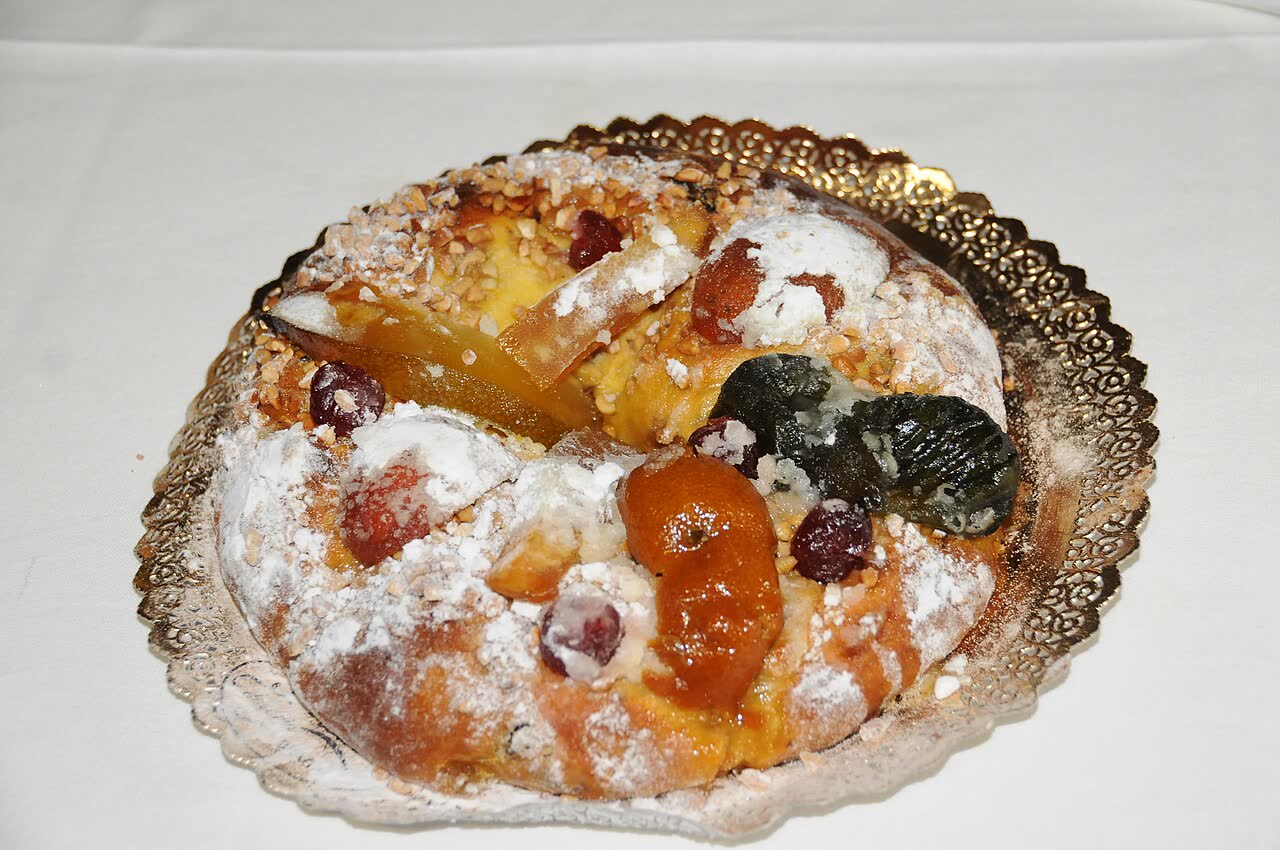
Bolo Rei, the “king cake”, is Portugal’s Christmas cake: a ring of soft, sweet bread studded with nuts and topped with candied fruit. From Christmas until Dia de Reis on 6 January, it’s on almost every family table. Here’s what it is, where it came from and where to buy a good one.
Quick answer: Bolo Rei is a crown-shaped sweet bread with raisins, nuts and candied fruit, eaten from Christmas to Dia de Reis (6 January). Confeitaria Nacional in Lisbon says it brought the recipe from France in the 1870s. A dried bean and a small trinket used to be hidden inside, but strict safety rules mean most cakes now have neither. Expect to pay from about €8 per kg in supermarkets and about €13 to €30 per kg in pastry shops.

What is Bolo Rei?
Bolo Rei is closer to a rich bread than a sponge cake. A soft, yeasted dough with eggs, sugar and orange and lemon zest is mixed with raisins, nuts and candied fruit, shaped into a ring and baked until golden. Recipes vary from bakery to bakery, and some add a splash of port or aguardente (a grape spirit).
- The shape: a ring with a large hole in the middle, meant to look like a crown.
- The topping: more candied fruit and nuts, with a dusting of sugar.
- The meaning: by tradition, the cake stands for the gifts of the Three Kings: the golden crust for gold, the candied fruit for myrrh and the aroma for frankincense.
- Sizes: whole cakes are sold by weight, often around a kilo, and many pastry shops also sell it by the slice.
A short history
The cake is based on the French gâteau des rois. In Portugal, the story starts at Confeitaria Nacional, which opened on Praça da Figueira in Lisbon in 1829. The shop says the founder’s son, Balthazar Castanheiro Júnior, brought the recipe back from France. Its own history gives the year as 1875, although some accounts say around 1870. See the Baixa guide.
- Porto: the city’s tourism office credits Confeitaria Portugueza (later Confeitaria Cascais) with bringing a “Bolo-Rei à Parisiense” to Porto in the late 1880s, although the exact year is uncertain.
- The Republic: after Portugal became a republic in 1910, a cake named after a king was awkward. Some bakers sold it as bolo presidente or bolo Arriaga, after the first president, but the old name stuck.
When and how it’s eaten
Bolo Rei belongs to the whole festive season, from Christmas until Dia de Reis (Epiphany, 6 January), which marks the end of it.
- Christmas Eve: it joins fried sweets such as rabanadas and sonhos at the consoada, the family dinner of salt cod. See Christmas in Portugal.
- Madeira: on the night of 5 January, groups go out to cantar os Reis, singing Epiphany songs at homes and in public places. See Madeira in winter.
- Leftovers: once it starts to dry out, slices are often toasted and buttered, or turned into a pudding.
The fava and the brinde
Traditionally, two things were baked into the cake: a dried broad bean (fava) and a small metal or ceramic trinket (brinde). Finding the brinde meant good luck. Finding the fava meant you had to pay for next year’s Bolo Rei. The bean custom is often linked to the Roman Saturnalia, when a bean was used to choose a “king” of the feast.
Why the trinket disappeared
A 1999 law (Decree-Law 158/99) banned selling food with trinkets mixed in, but made an exception for Bolo Rei because of its tradition, as long as the trinket was safe and easy to tell apart from the food. Later rules in 2001 and 2011 made the requirements so strict that most bakeries simply stopped. The food safety authority, ASAE, says the brinde isn’t banned, just tightly regulated.
- Not an EU rule: a story that Brussels had banned the brinde went round in 2007, but the European Commission’s office in Portugal calls it a myth. The rules are Portuguese.
- If there is one: it should be wrapped, and the packaging should warn that the cake contains a brinde or fava.
Bolo Rainha and other versions
- Bolo Rainha: the “queen cake” uses the same dough but no candied fruit, with more nuts and dried fruit instead. It usually costs a little more, up to about €4 per kg extra.
- Bolo-rei escangalhado: the “broken” king cake, often a filled plait or roll rather than a neat ring, with dried fruit, nuts and doce de chila (a sweet pumpkin jam). Several Porto pastry shops sell it alongside the classic. In 2024, an escangalhado from Pastelaria Moinho Novo in Tentúgal was named best of the best at the national traditional Bolo Rei contest.
- Other flavours: you’ll also see chocolate, chestnut and carob versions, and gluten-free cakes at about €22.50 to €25 per kg.
- Bolo de São João: Porto’s summer cousin, a lighter cake inspired by Bolo Rei and made for the São João festival in June, with less sugar and candied fruit and more nuts.
How much it costs in 2026
Prices are per kilo and vary a lot. The latest survey, by the consumer group DECO PROteste in December 2025, found:
- Supermarkets: from about €8 per kg.
- Bakeries and pastry shops: about €13 to €30 per kg.
- Bolo Rainha: about €13 to €33 per kg in pastry shops.
- Famous names: in December 2024, well-known Lisbon pastry shops charged roughly €22 to €29 per kg.
Treat these as a guide for the 2026 season, as prices change every year and from shop to shop. A single slice at a café usually costs a few euros.
Where to buy it in Lisbon
- Confeitaria Nacional: the historic shop on Praça da Figueira, in the Baixa, that says it introduced the cake to Portugal. Worth a visit for the story and the old interior.
- Pastelaria Aloma: founded in Campo de Ourique in 1943, it won the bakers’ association ACIP’s “O Melhor Bolo-Rei de Portugal” contest in 2024 and again in 2025. It’s also known for its prize-winning custard tarts. See the best pastel de nata in Lisbon.
- Pastelaria Versailles: a grand pastry shop on Avenida da República, near Saldanha, open since 1922 and often with a queue at the door.
For Christmas Eve and Dia de Reis, order ahead or go early, as the best-known shops get busy.
Where to buy it in Porto
- Confeitaria Petúlia: on Rua de Júlio Dinis, one of the most often recommended names for Bolo Rei in the city.
- Padaria Ribeiro: a bakery on Praça Guilherme Gomes Fernandes, in the centre, dating from 1878.
- Confeitaria Tavi: in the seaside Foz do Douro district, known for its Bolo Rei and for its Bolo de São João in June.
Porto’s tourism office lists all three among places to buy Bolo Rei all year round, and notes that some pastry shops ask you to order in advance. See Porto in winter.
FAQ
What is Bolo Rei made of?
A soft, yeasted dough with eggs, sugar and citrus zest, mixed with raisins, nuts and candied fruit. Some recipes add port or aguardente.
When do Portuguese people eat Bolo Rei?
Through the festive season, from Christmas until Dia de Reis on 6 January. Some pastry shops, especially in Porto, sell it for much of the year.
Is there still a prize inside Bolo Rei?
Rarely. The fava and brinde aren’t banned, but strict safety rules mean most bakeries leave them out. If a cake does contain one, the packaging should say so.
What is the difference between Bolo Rei and Bolo Rainha?
Bolo Rainha uses the same dough but has no candied fruit, just nuts and dried fruit. It usually costs a little more.
More: Portuguese desserts, Christmas markets in Portugal and Portugal in January.
Prices and details change, so please double-check before you travel. Spotted something out of date? Tell us in the groups.
Still got questions?
Ask 305,000+ travellers and locals in our free Facebook groups.