
Trip guides / Planning
Christmas in Portugal: Markets, Lights and Traditions
Christmas in Portugal is cosy, family-centred and full of food: twinkling streets, Christmas villages, salt cod on Christmas Eve and Bolo Rei on every table. It’s also a wonderful, quiet time to visit, with mild weather in the south and festive cities without the summer crowds. Here’s where to find the best Christmas markets and lights, and the traditions to know.
Quick answer: the big Christmas events are Óbidos Vila Natal (late November to early January), Wonderland Lisboa in Parque Eduardo VII, Perlim near Porto, the lights of Lisbon, Porto and Funchal, and New Year’s Eve fireworks in Lisbon and Madeira. Dates are usually announced in October or November, so check before you book.

Why go at Christmas
December is low season in most of Portugal, so outside the Christmas and New Year week you’ll find quieter sights and better hotel prices than in spring or autumn. The cities are lit up from late November, the cafés are full of seasonal cakes, and in the Algarve and Madeira you can still sit outside in the sun at lunchtime. It suits couples, families with young children and anyone who prefers festive streets to summer beaches.
Christmas villages and markets
Óbidos Vila Natal
The medieval walled town turns into a Christmas village, with an ice rink, rides, Santa’s house and shows for kids. It usually runs from late November to early January (in 2025/26, 28 November to 4 January). Busy at weekends, so go on a weekday. See our Óbidos guide.
Óbidos is about an hour’s drive north of Lisbon, and Rodotejo’s Rápida Verde express buses run there from Lisbon’s Campo Grande. Don’t plan on the train: the Oeste line has had no trains between Meleças and Caldas da Rainha since storm damage in January 2026, with replacement buses instead. Try a shot of ginjinha (cherry liqueur) in a chocolate cup while you walk the walls, and leave half a day for the whole visit. The 2026/27 edition should follow the same late November to early January pattern, but check the official dates first.
Wonderland Lisboa
Lisbon’s big Christmas fair in Parque Eduardo VII, at the top of Avenida da Liberdade, with a Ferris wheel, an ice rink, market stalls and food. Free to enter, and you pay per ride. It usually runs from late November to the start of January.
Take the metro to Marquês de Pombal or Parque. It’s at its best after dark, when you can look down the lit avenue towards the river. Lisbon usually has smaller Christmas markets too, such as the one in Rossio square in the Baixa.
Perlim (Santa Maria da Feira)
A magical Christmas theme park in the grounds of a castle about 30 minutes south of Porto, with elves, shows and Santa. Perfect for young children. The 2026 edition is listed from 28 November to 30 December, with day tickets about €7.50 to €9 and free entry for under-3s. It opens in the afternoons, so check the official calendar for open days before you go.
Porto
The lights are switched on at the end of November on Avenida dos Aliados, with a projection show on the City Hall. The Christmas market is usually in the Jardim da Cordoaria.
Walk from Aliados down Rua de Santa Catarina, the main shopping street, then on to the Ribeira for the river lights. December is rainy in Porto, so pack an umbrella. See Porto in winter.
Funchal, Madeira
Funchal goes all out, with lights across the city from early December into January and a festive market atmosphere. In 2026/27 the official festivities run from 1 December to 10 January. Madeira’s New Year’s Eve fireworks set a Guinness World Record in 2006 as the largest display ever, and the 2026 show is planned from 59 launch points around Funchal bay and on Porto Santo. See our things to do in Funchal.
Madeira has its own traditions too. The Missas do Parto are dawn masses held on the nine days before Christmas, followed by music and snacks outside the churches. On the night of 23 December, the Noite do Mercado fills the Mercado dos Lavradores and the streets around it with locals until the early hours. See New Year’s Eve on Madeira.
Lights in Lisbon
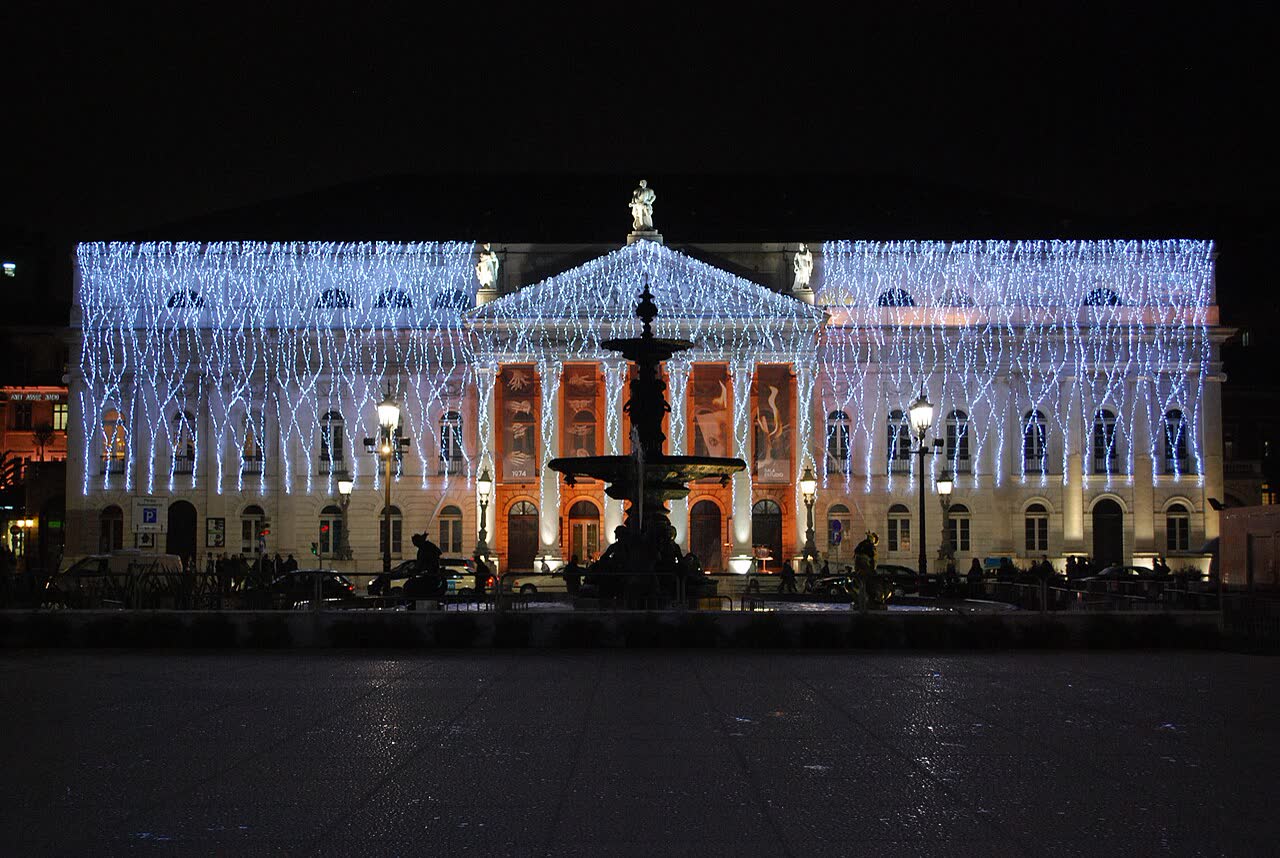
A giant Christmas tree goes up on Praça do Comércio (in 2025 it was 30 metres tall with 54,000 lights), and the streets of Baixa, Chiado and Avenida da Liberdade are lit from late November, typically from about 5:30pm until 11pm (midnight on Fridays and Saturdays). A tram or tuk-tuk ride through the lights is lovely. See Lisbon tuk-tuk tours.
A good evening walk starts at Marquês de Pombal, goes down Avenida da Liberdade to Restauradores and Rossio, then along Rua Augusta to the tree on Praça do Comércio. It’s about 2.5km and all downhill. The Glória, Bica and Lavra funiculars and the Santa Justa lift have been closed since the September 2025 accident (only the Graça funicular has reopened), so walk or take the metro up to Chiado instead. See Lisbon in winter.
Portuguese Christmas traditions
- Consoada (24 December): the main celebration is Christmas Eve, with a family dinner of boiled salt cod (bacalhau), potatoes, cabbage and eggs, drizzled with olive oil.
- Missa do Galo: midnight Mass on Christmas Eve.
- Bolo Rei: the “King Cake”, a ring of sweet bread with candied fruit and nuts, eaten from late November to early January.
- Christmas sweets: filhós and sonhos (fried doughs), rabanadas (Portuguese French toast) and aletria (sweet vermicelli).
- Presépios: nativity scenes are everywhere, some huge and elaborate.
- Presents are usually opened at midnight on Christmas Eve or on Christmas morning.
- Bolo Rainha: the “Queen Cake”, a version of Bolo Rei with nuts and no candied fruit, for people who don’t like the glacé cherries.
- Christmas Day lunch: often roast turkey, kid goat or lamb. In the north, leftover cod and cabbage are fried up as roupa velha (“old clothes”). Octopus is also popular on Christmas Eve in the north.
- Dia de Reis (6 January): Epiphany ends the season, and groups sing Janeiras (New Year songs) door to door in some villages in early January.
Learn more in what to eat in Portugal. Bolo Rei is sold in every pastry shop, by the slice or whole. See Portuguese desserts and our bacalhau guide.
New Year’s Eve
- Lisbon: a free concert on Praça do Comércio and fireworks over the Tagus at midnight.
- Porto: a big party and fireworks on Avenida dos Aliados.
- Madeira: spectacular fireworks over Funchal bay, best seen from the hills or a boat. Book hotels months ahead.
- Tradition: eat 12 raisins at midnight, making a wish with each one, and stand on a chair (to “rise” in the new year).
- Getting home: the Lisbon and Porto metros usually run late or through the night on 31 December, but check the operators’ plans that week. Taxis and ride apps are in heavy demand after midnight.
A festive long weekend
- Day 1: Lisbon. Wander the Baixa, see the tree on Praça do Comércio after dark and finish at Wonderland Lisboa.
- Day 2: Sintra by train in the morning (book your Pena Palace time slot), back to Lisbon for dinner. See Sintra in one day.
- Day 3: Óbidos Vila Natal, ideally on a weekday, by bus or hire car.
- Day 4: train to Porto (about 3 hours) for the lights on Aliados, or continue to Perlim with children.
Practical tips
- What’s closed: many museums, shops and restaurants close on 25 December and 1 January, and close early on the 24th and 31st. Book Christmas Eve and Christmas Day meals in advance.
- Public transport runs reduced services on the holidays.
- Weather: mild in Lisbon and the Algarve (often 12–17°C), colder and wetter in the north. See Portugal in winter.
- Prices: Christmas and New Year are peak weeks in Lisbon, Porto and Madeira, so book early.
- More holidays: 1 December (Restoration of Independence) and 8 December (Immaculate Conception) are public holidays too, so expect some closures and busier towns.
- Museum closures: Lisbon’s National Tile Museum and National Museum of Ancient Art are closed for restoration, so check before planning a rainy day around them.
- Shopping: many shops open on Sundays in December, and shopping centres stay open late in the run-up to Christmas. See Portuguese souvenirs.
FAQ
Is Christmas a good time to visit Portugal?
Yes, if you want festive cities rather than beaches. Outside the Christmas and New Year week it’s low season, the south is mild, and the lights are on from late November.
What do the Portuguese eat on Christmas Eve?
The consoada dinner of boiled salt cod with potatoes, cabbage, eggs and olive oil, followed by sweets such as rabanadas, sonhos and Bolo Rei.
Is everything closed on Christmas Day?
Many museums, shops and restaurants close on 25 December and 1 January, and public transport runs a reduced service. Book Christmas meals ahead and check opening times.
Where are the best New Year’s Eve fireworks in Portugal?
Funchal, on Madeira. The display on 31 December is the island’s biggest event of the year, so book a room with a view of the bay months ahead.
Rainy days? See Lisbon on a rainy day. Travelling with children? See Portugal with kids.
See also: Christmas markets in Portugal.
Prices and details change, so please double-check before you travel. Spotted something out of date? Tell us in the groups.
Still got questions?
Ask 305,000+ travellers and locals in our free Facebook groups.