
The Pico Vineyards: UNESCO Lava-Stone Landscape
On the island of Pico, vines grow in thousands of tiny plots enclosed by black lava-stone walls, called currais, which protect them from wind and sea spray. This extraordinary landscape is a UNESCO World Heritage site, and the wines it produces are increasingly celebrated.
Quick answer: explore the vineyard landscape around Madalena, Criação Velha and the Lajido area, visit a wine cooperative or small winery for a tasting, and see the wine museum in Madalena. Look out for wines made from Verdelho. See places to stay on Pico.
Why go
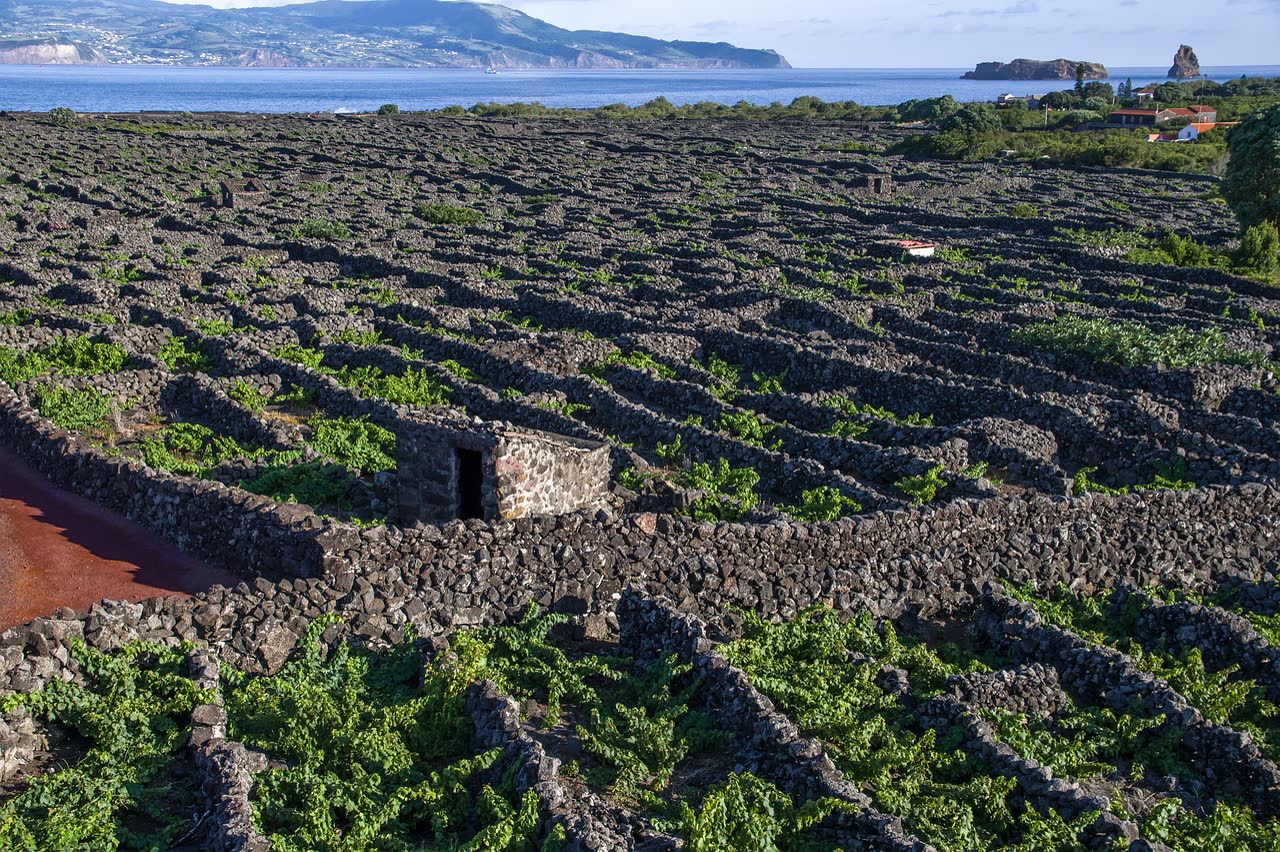
There is nowhere else in Portugal quite like it. Settlers began making wine here in the late 15th century, clearing loose lava by hand and stacking it into walls. The result is a grid of small black enclosures running down to the sea, with Mount Pico rising behind. UNESCO listed the “Landscape of the Pico Island Vineyard Culture” in 2004. The protected area covers about 987 hectares, mostly in the municipality of Madalena on the west coast, with a smaller part in São Roque do Pico to the north.
What to see
- The currais: a maze of black stone walls running down to the sea. The walls shelter the vines and soak up the sun’s heat, which helps the grapes ripen. Walking a short stretch takes 30 minutes to an hour.
- Lajido: a village of stone houses with red doors and windows, amid the vineyards. Lajido de Santa Luzia, on the north-west coast, has the vineyard landscape interpretation centre, set in an old winery. It shows a short film and runs guided visits to the vineyards, an old wine store and a traditional still that is still in use. Allow about an hour.
- Criação Velha: just south of Madalena, the most photographed part of the landscape, with a small red-roofed windmill, the Moinho do Frade, standing among the walls. The windmill once ground cereals and was rebuilt in 2003 to 2004.
- Tide pools and windmills along the coast. Look out for stone ramps and channels worn into the lava, used in the past to roll barrels down to boats.
- The Wine Museum (Museu do Vinho): in Madalena, set in a former Carmelite convent property surrounded by old dragon trees. You see the old presses, a still and the cellar. It is usually closed on Mondays, so check times before you go.
- Wineries: tastings of Pico’s mineral whites and fortified wines.
Walking the vineyards
The best way to understand the landscape is on foot. The PR5 PIC trail, Vinhas da Criação Velha, is a 7.1 km linear walk that takes about two hours. It starts by the tide pool at Porto do Calhau and ends at an old manor house, the Solar dos Salemas, at Areia Larga near Madalena, passing the windmill on the way. There is little climbing, but the lava underfoot is rough. As the trail is one-way, plan a taxi or a lift back to your car.
The wines
Pico is mostly white wine country. The main local grapes are Verdelho, Arinto dos Açores and Terrantez do Pico, which give dry, salty whites that go well with seafood. The island is also known for its sweet fortified wine, sold under the Lajido name and made in small amounts. In the 18th and 19th centuries Pico’s fortified wine was shipped abroad, until vine diseases wiped out most of the vineyards. Replanting in recent decades has brought the area back to life.
The island’s wine cooperative in Madalena is the biggest producer and a good first stop for a tasting. Several smaller family wineries also open for visits, often by appointment, so book ahead in summer.
Getting there
- Ferry from Faial: the Atlânticoline ferry between Horta and Madalena takes about 30 minutes, with several sailings a day. It’s the easiest way in if you’re flying to Faial.
- By air: Pico has a small airport with flights from other Azores islands. Check current routes, as they change by season.
- Getting around: buses are infrequent, so a hire car or a taxi tour makes life much easier. Madalena to Lajido de Santa Luzia is a short drive along the coast road.
How long to spend
Half a day covers the main vineyard areas and a tasting. A full day lets you add the wine museum, a coastal swim and a slow lunch.
Suggested one-day route
- Morning: start at Criação Velha and walk among the walls to the windmill, then visit the wine museum in Madalena.
- Lunch: eat in Madalena.
- Afternoon: drive north to Lajido de Santa Luzia and the interpretation centre, then finish with a winery tasting and sunset over Faial.
Food
Try Pico cheese (queijo do Pico), a soft, slightly tangy cow’s milk cheese, plus fresh fish, limpets and octopus cooked in wine. Local sausage (linguiça) and sweet bread are common too. A glass of the local white with grilled fish is the classic pairing.
When to go
- Summer: the warmest, driest weather and the best time for walking and swimming.
- Harvest: late summer is a lovely time to visit, with the grape harvest usually in August and September.
- Winter: quieter, greener and windier. Some wineries have shorter hours.
Tips
- Car: the easiest way to explore. See getting around the Azores.
- Combine with whale watching and Mount Pico. See climbing Mount Pico and Pico whale watching.
- Respect the walls: the currais are working vineyards. Stick to paths and don’t climb on or move the stones.
- Shoes: the lava is sharp and uneven, so wear sturdy footwear.
FAQ
Can you walk through the Pico vineyards?
Yes. The landscape is open, and the PR5 PIC trail at Criação Velha runs right through the walls. Stay on the paths, as the plots are private working vineyards.
What grapes grow on Pico?
Mainly Verdelho, Arinto dos Açores and Terrantez do Pico. They make dry, salty white wines, and the island also produces a small amount of sweet fortified wine.
How do you get to Pico from Faial?
Take the Atlânticoline ferry from Horta to Madalena. The crossing takes about 30 minutes, and Criação Velha is a short drive from the harbour.
When is the grape harvest on Pico?
Usually in August and September, depending on the weather that year. Some wineries are busier then, so book tastings ahead.
More: Pico, UNESCO sites in Portugal, Faial and Portugal’s wine regions.
See also: what to eat in the Azores.
Some links in this guide are affiliate or referral links (GetYourGuide, Booking.com, Discover Cars, Welcome Pickups, Airalo, Yesim, Saily, Tiqets, Radical Storage, EKTA, AirHelp, Uber). If you book or sign up through them we may earn a small commission or ride credit at no extra cost to you. It helps keep our groups and this site free.
Still got questions?
Ask 305,000+ travellers and locals in our free Facebook groups.