
The Capelinhos Volcano, Faial
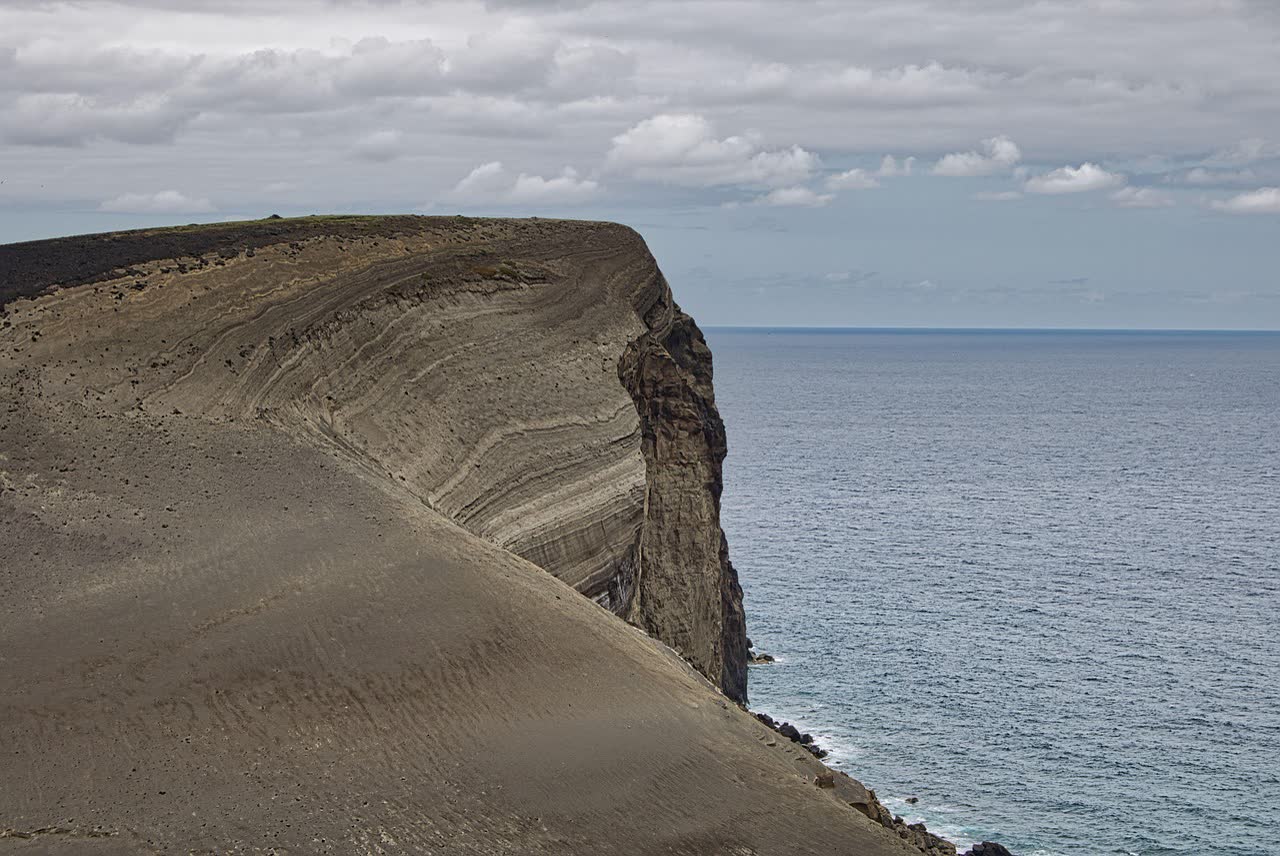
At the western tip of Faial, the Capelinhos volcano rose from the sea in 1957–58, burying a lighthouse and creating a lunar landscape of ash and cinders. Today it’s one of the most striking places in the Azores, with an excellent underground interpretation centre.
Quick answer: Capelinhos is about 30 to 40 minutes’ drive from Horta. Entry to the interpretation centre is about €10 for adults, with reduced prices for juniors and seniors and free entry for young children, and the visit usually ends with a climb up the old lighthouse. Allow 1.5 to 2 hours, plus time to walk across the ash landscape.
Why go
Faial is called the blue island for its hydrangeas, and most of it is soft and green. Then you reach the far west and the land turns grey and brown. Capelinhos is land made in your grandparents’ lifetime, and you can still see the old lighthouse sticking out of the ash. The interpretation centre, built into the ground so it doesn’t spoil the view, is one of the best museums in the Azores.
What to see
- The interpretation centre: built underground, explaining the eruption and volcanoes of the Azores. Exhibits cover how the islands formed, different types of eruption, and the history of Azorean lighthouses. Archive photos and film show the lighthouse slowly disappearing under the ash. It opened in 2008 and was nominated for European Museum of the Year in 2012. Allow about an hour.
- The lighthouse: first lit in 1903 and half-buried by ash in the eruption. The visit usually ends with a climb up the tower for views over the new land. Check on the day that it is open.
- The landscape: bare cinder slopes and cliffs, unlike anywhere else on the green island. Marked paths cross the ash plain and run along the cliffs. Stay on them, as the ground is loose and the cliffs crumble.
- Costado da Nau: the ridge just above the lighthouse, where whale spotters first saw the sea churning in September 1957 and raised the alarm.
- The coast: natural swimming spots nearby in summer. Porto do Comprido, an old whalers’ harbour right next to the volcano, has sheltered rock pools, steps into the sea and fresh-water showers.
The eruption
The eruption began under the sea on 27 September 1957 and ended on 24 October 1958, so it lasted about 13 months. It added about 2.4 square kilometres of new land to the island. Hundreds of homes were destroyed and around 2,000 people were evacuated from the parishes of Capelo and Praia do Norte. It was also the first undersea eruption documented by scientists from beginning to end. In 2022 Capelinhos was named one of the first IUGS Geological Heritage Sites, a list of the world’s most important places for earth science.
The disaster forced many people to emigrate, especially to the United States. The US passed the Azorean Refugee Act in 1958, backed by senators John Pastore and John F. Kennedy, which opened special visas for families affected by the eruption. It started a wave of Azorean emigration to North America that lasted for decades.
Opening hours
- April to October: usually open every day, about 9am to 6pm.
- November to March: usually Tuesday to Saturday, about 9am to 5pm.
- Last entry: usually an hour before closing. Guided tours run at set times and are best booked ahead. Check the Azores Natural Parks website for current times and prices.
- Weather: the centre can close at short notice in very bad weather.
Getting there
- By car: the easiest way. Capelinhos is at the western end of Faial, about 30 to 40 minutes from Horta along the coast road through Capelo. There is parking by the centre.
- Public transport: buses on Faial are limited and don’t serve the site well. Hire a car or join an island tour from Horta.
- On foot: the Ten Volcanoes trail (PR06 FAI) runs about 19 km from the rim of the Caldeira down to Capelinhos. It’s graded hard, takes about five hours and is one-way, so arrange a taxi back to Horta.
How long to spend
Allow 2 to 3 hours for the centre, the lighthouse and a walk on the ash. A good one-day loop of Faial: start at the Caldeira, the huge crater in the middle of the island, before cloud builds. Drive west to Capelinhos for late morning, have lunch and a swim nearby, then return to Horta along the south coast for a drink by the marina.
Food
There is little to eat right at the volcano, so plan lunch in Capelo or back towards Horta. Try fresh fish such as grilled wreckfish or tuna, limpets, octopus stew and the local cheese. Pico wine from across the channel goes well with all of it.
When to go
- Season: May to September has the best weather and longer opening hours.
- Festivals: Horta’s Semana do Mar (Sea Week) is held in early August, with sailing, concerts and food stalls.
- Weather: there is no shade on the ash, so bring water and a hat in summer. In wind, the cinders blow about, so sunglasses help.
Combine with
- The Caldeira: the huge central crater of Faial.
- Horta: the harbour and Peter Café Sport. See Faial.
- Pico: a ferry ride away. See Pico and climbing Mount Pico.
FAQ
Can you visit Capelinhos for free?
Yes, you can walk the marked paths across the ash and see the lighthouse from outside without paying. You only pay for the interpretation centre, which usually includes the climb up the lighthouse.
How long do you need at Capelinhos?
About 2 to 3 hours: an hour or so in the centre, time for the lighthouse and a walk on the ash. Add a swim at Porto do Comprido on a summer day.
Is the Capelinhos volcano still active?
It hasn’t erupted since October 1958. Faial is still a volcanic island and the Azores are closely monitored by scientists, but the site is safe to visit if you stay on the paths.
How do you get to Capelinhos without a car?
Buses on Faial are limited, so most people without a car take a taxi or join an island tour from Horta. Keen hikers can walk there on the Ten Volcanoes trail from the Caldeira.
More: Azores island hopping and where to stay in the Azores.
Prices and details change, so please double-check before you travel. Spotted something out of date? Tell us in the groups.
Still got questions?
Ask 305,000+ travellers and locals in our free Facebook groups.