
Trip guides / Food and drink
Ovos Moles de Aveiro: What They Are and Where to Buy
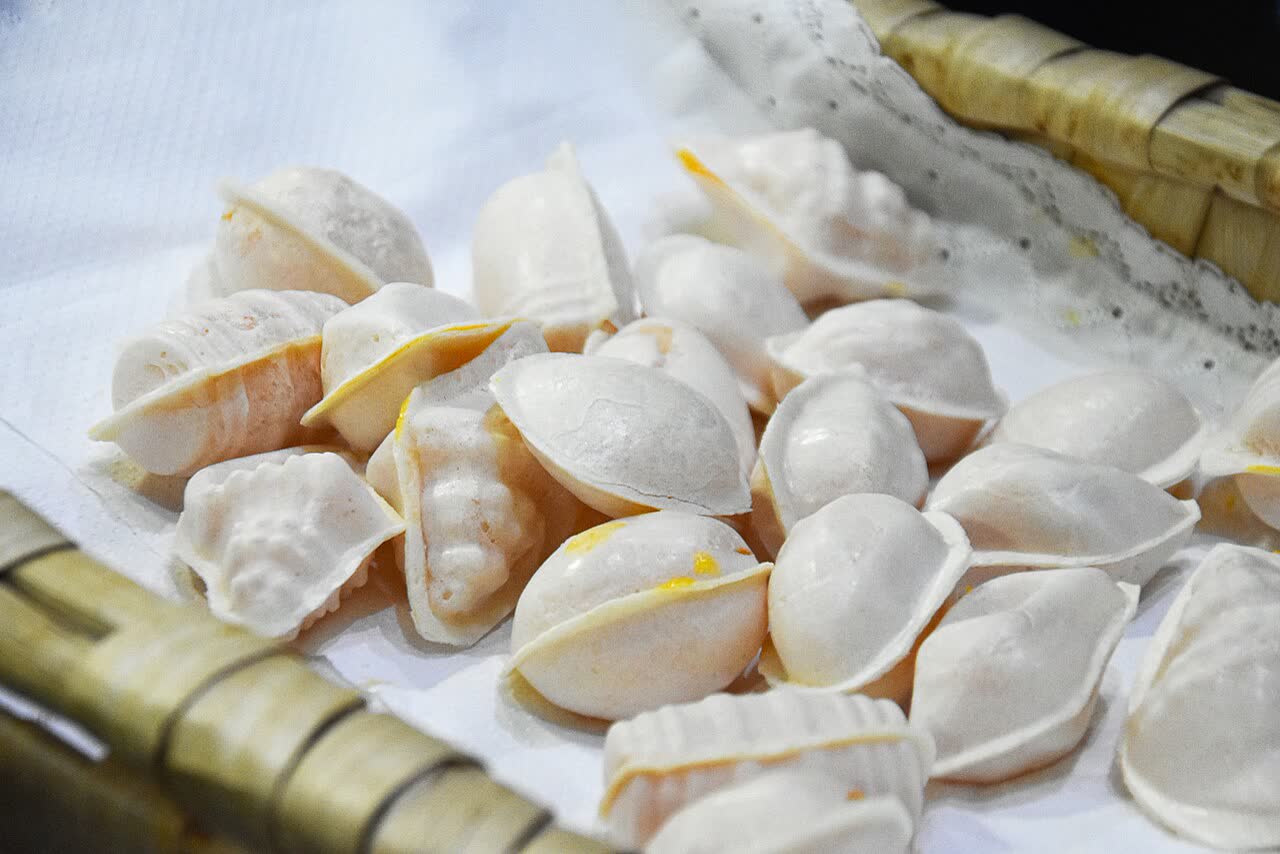
Ovos moles (“soft eggs”) are Aveiro’s signature sweet: a thick golden cream of egg yolk and sugar, sealed inside thin wafers shaped like fish and seashells, or packed into little painted barrels. Here’s what they are, where they come from, how long they keep and where to buy them.
Quick answer: ovos moles are a cream of egg yolk, sugar and water, sold in wafer shapes or painted wooden barrels. They have had EU protected (PGI) status since 2009 and can only be made around the Ria de Aveiro. They keep for about 15 to 21 days at room temperature, but not in the fridge. Expect to pay about €9 for a 250 g box. Confeitaria Peixinho, which dates itself to 1856, is the classic place to buy them.

What are ovos moles?
The filling is made by cooking raw egg yolks in a sugar syrup, then leaving it to cool and rest. The official description says the yolks are worked into the syrup with a motion that copies the rocking of Aveiro’s moliceiro boats.
- In wafer: thin white wafers (hóstia) are filled and cut into shapes linked to the lagoon: fish, shells, whelks, clams, cockles, barrels and even a moliceiro. A few, such as the walnut and chestnut, come from local trees instead.
- In barrels: small wooden barrels (barricas) hand-painted with moliceiros, salt pans and the Barra lighthouse, filled with the cream. There are blue-and-white porcelain ones too.
- Coated: wafers are often brushed with sugar syrup, which turns them opaque white. Chocolate-coated ones are called ovos moles pretos (“black ovos moles”).
Where they come from
Ovos moles are a convent sweet. The official product history traces them to the Convento de Jesus in Aveiro, now the Aveiro Museum. In 1502, King Manuel I granted the convent 10 arrobas (an old unit of weight) of Madeira sugar a year, and convent sweets were used partly to help the sick recover. No record names the nun who first made ovos moles, so treat any story that does as legend.
- Why so many yolks: the usual explanation is that convents used egg whites to starch clothes. The official history adds that convents were often paid rents in eggs, which don’t keep.
- Out of the convent: after Portugal’s convents were closed in the 19th century, women educated in them kept making the sweet and passed the recipe down.
- Famous fans: Eça de Queirós mentions them in his 1888 novel Os Maias, and they were served when King Manuel II had lunch in Aveiro in 1908.
- The painted barrels: turned wooden barrels replaced older stave barrels around 1910, and a local schoolboy, Edmundo Chaves, is credited with first painting them with lagoon scenes.
What the PGI label means
The European Commission registered Ovos Moles de Aveiro as a Protected Geographical Indication (IGP in Portuguese) in April 2009, the first Portuguese pastry or confectionery product to get EU protection. Makers follow an official specification and are checked by an independent certification body.
- Ingredients: only egg yolk, sugar and water in the filling. Starch, colourings and preservatives are not allowed.
- The wafer: made only from flour, water and vegetable fat, and cut straight, never with a zigzag edge.
- Where: making and packing are limited to ten municipalities around the Ria de Aveiro, including Aveiro, Ílhavo, Ovar and Vagos.
- The label: genuine boxes carry the EU PGI symbol, a certification mark and the Ovos Moles de Aveiro logo.
How they taste
Very sweet and rich, with a creamy but firm texture. The official description picks out hints of caramel, cinnamon and nuts, which come from the cooking, since nothing else goes in. The wafer is thin and dry, with little taste of its own. A few sugar crystals after some days are normal, and one or two with a coffee is plenty.
How long they keep
- Traditional boxes and barrels: about 15 days, somewhere dry, out of the sun and below 25°C.
- Sealed packs: up to 21 days at room temperature in modified-atmosphere or film packaging.
- Chocolate-coated: about two months.
- Frozen: some are sold deep-frozen and keep for six months.
- Not in the fridge: chilling makes the wafer soft and rubbery and the sugar glaze damp.
Check the date on the box, as it depends on the packaging.
Where to buy them in Aveiro
Most pastry shops in the centre sell them, especially around the Rossio and the Canal Central. Two good places to start:
- Confeitaria Peixinho: on Rua de Coimbra, a pedestrian street near the Canal Central. It says it was founded in 1856, and the regional tourism board calls it the oldest bakery in Aveiro. You can sit down with coffee or tea.
- Oficina do Doce: a shop and visitor space in the Galeria Rossio, on Rua João Mendonça, run by the local producer Fabridoce. You can fill your own ovos moles in a 30-minute workshop and buy boxes to take away.
Not going to Aveiro? Peixinho opened a shop on Rua das Flores in Porto in 2025, and has another at Lisbon airport.
What they cost in 2026
As a guide, Oficina do Doce’s online shop listed these in October 2026:
- Boxes: €8.90 for 250 g (9 to 11 pieces) and €16.90 for 500 g.
- Wooden barrels: €10.55 with 60 g of filling, or €15.55 with 155 g. You’re paying for the barrel too, which makes a nice keepsake. See Portugal souvenirs.
- Workshop: €5.50 for adults and €4.50 for children aged 4 to 12.
Other Aveiro sweets
- Mixed boxes: sold as doces de Aveiro, they can include ovos moles pretos and other little egg sweets such as castanhas de ovos.
- Raivas: thin, crisp biscuits. Peixinho says its version follows an old recipe and has a touch of salt.
- Tripas: made to order and filled with ovos moles, chocolate or other sweet fillings. Near Costa Nova, they’re a traditional alternative to the beach doughnut, the bola de Berlim.
- Pão de ló de Ovar: a soft sponge cake from Ovar, another lagoon town, also PGI protected. See Portuguese desserts.
Fitting them into a day trip
- Getting there: Aveiro is an easy train ride from Porto. See day trips from Porto by train.
- Start at the source: the Aveiro Museum fills the former Convento de Jesus, where the official history places the sweet’s origins. See the Aveiro day trip guide.
- Add a boat: Oficina do Doce sells tickets that pair its workshop with a moliceiro boat ride. English sessions were listed at 11:30am and 3:30pm, so check before you go.
- Buy last: pick up boxes on your way back to the station, perhaps after the striped houses of Costa Nova, and keep them out of the sun.
- Staying longer: see where to stay in Aveiro, or head south for leitão da Bairrada, roast suckling pig.
FAQ
What are ovos moles made of?
Egg yolks, sugar and water, cooked into a thick cream. The wafer is made from flour, water and vegetable fat.
Do you eat the wafer on ovos moles?
Yes. The thin wafer is part of the sweet. Ovos moles in barrels have no wafer: you scoop out the cream.
Do ovos moles need to be refrigerated?
No. Keep them somewhere dry and out of the sun, below 25°C. The fridge makes the wafer soft and rubbery.
How long do ovos moles last?
About 15 days in traditional boxes and barrels, up to 21 days in sealed packs and about two months if chocolate-coated.
Can you buy ovos moles in Porto or Lisbon?
Yes. Confeitaria Peixinho has a shop on Rua das Flores in Porto and one at Lisbon airport. Genuine ovos moles are always made around Aveiro, wherever you buy them.
More: Portuguese desserts, Sintra’s pastries and the best day trips from Porto.
Prices and details change, so please double-check before you travel. Spotted something out of date? Tell us in the groups.
Still got questions?
Ask 305,000+ travellers and locals in our free Facebook groups.