
Trip guides / Food and drink
Bifana and Prego: Portugal's Classic Sandwiches
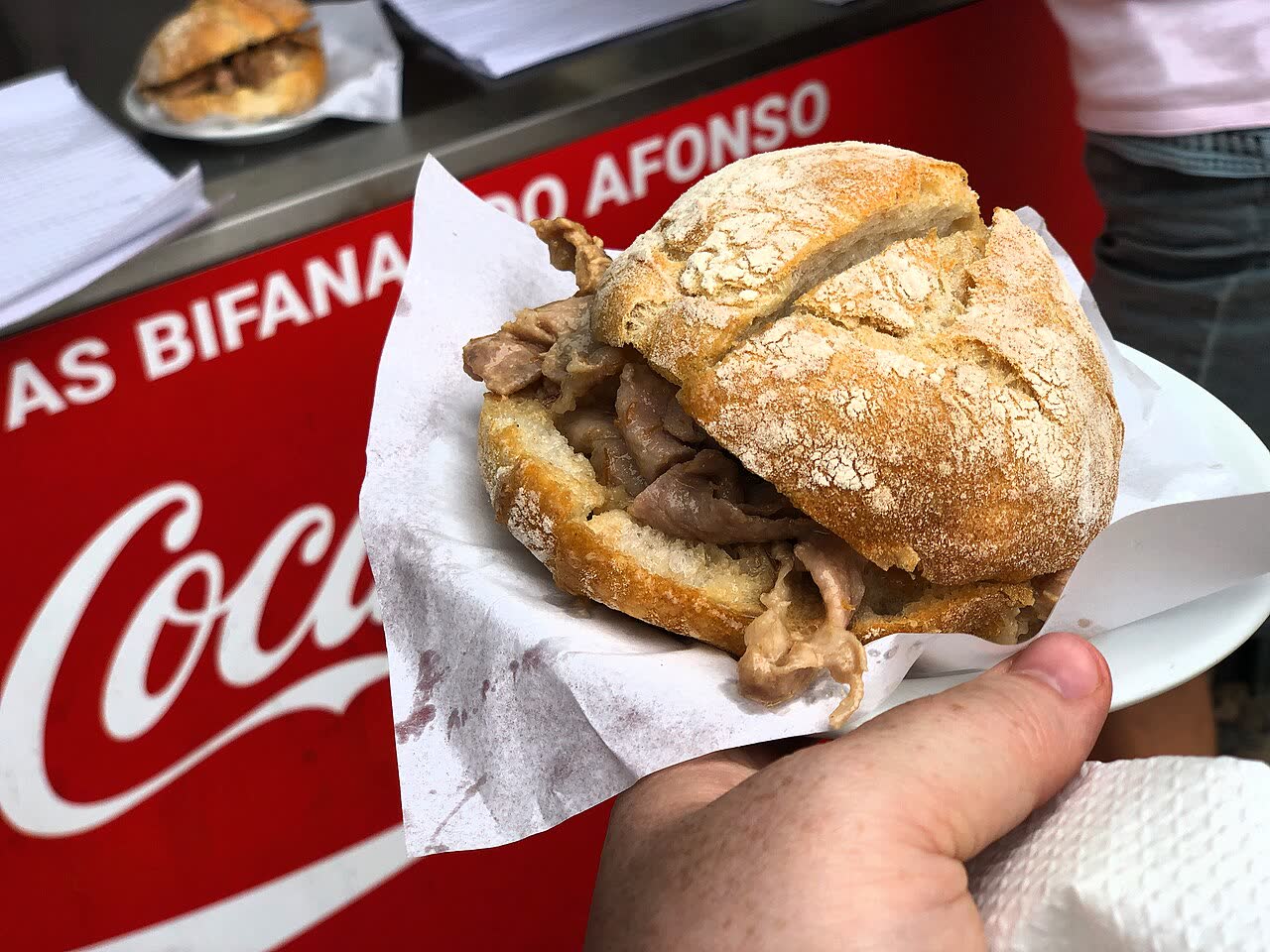
The bifana and the prego are Portugal’s classic sandwiches: cheap, quick and delicious, and eaten standing at the counter with a cold beer. The bifana is marinated pork and the prego is steak. Here’s what they are and how to order them.
Quick answer: a bifana is thin slices of pork cooked in a garlicky, wine-and-paprika sauce in a soft bread roll, with mustard. A prego is a thin steak with garlic in a roll. You can also have a prego no prato, a steak on a plate with egg and chips. Find them in snack bars and cafés everywhere.
.jpg)
Why try them
Portugal is famous for seafood and pastries, but ask a local for a quick lunch and you’ll often get a bifana or a prego. They cost a few euros, arrive in minutes and taste far better than they look. They are everyday food, eaten at the counter of a busy café, at football matches and at summer festivals.
They’re also a good way to eat cheaply in expensive tourist areas. A sandwich and a small beer at a local snack bar usually costs much less than a sit-down meal, and you’ll be eating what the people around you eat.
The bifana
The name means “little steak”. The sandwich is said to come from Vendas Novas in the Alentejo, but it’s now served all over the country.
- The meat: thin pork slices marinated in garlic, white wine and paprika, then simmered in the sauce. Some places keep a pot of sliced pork simmering all day.
- The bread: a soft papo-seco roll that soaks up the juices.
- Toppings: yellow mustard and piri-piri, to taste. Some places add fried onions.
- Regional styles: Vendas Novas, on the road from Lisbon to Évora, is still famous for its bifanas, usually a lighter style with less sauce. In Porto and the north, the pork is usually soaked in a richer, often spicier sauce.
Bifanas in Porto
In Porto, the bifana is a serious business. The pork is often cooked in a deep pot of dark, peppery sauce, and the roll is dipped or soaked so it arrives dripping. Many locals eat two or three standing up with a fino. If you want to taste the difference, try one in Lisbon and one in Porto on the same trip. See Porto on a budget.
The prego
Prego means “nail”. One story says the name comes from the way garlic is pounded into the steak, like a nail. Another links it to Manuel Dias Prego, who ran a tavern at Praia das Maçãs, near Sintra, in the late 19th century and served beef in bread.
- Prego no pão: a thin beef steak cooked with garlic in a roll, sometimes with ham or cheese.
- Prego no prato: the steak on a plate with a fried egg, chips and rice.
- Prego no bolo do caco: in Madeira, the steak comes in the island’s round flatbread, often with garlic butter. See the Madeira travel guide.
- The end of a meal: in seafood beer halls, locals often order a prego at the end of a shellfish feast, almost like a dessert.
Prego extras
Menus often list a few versions. A prego com queijo adds melted cheese, and a prego com fiambre adds ham. In some places, you can order a prego especial, which usually means a fried egg on top, but this varies from café to café, so ask what’s inside.
Bifana or prego?
- Bifana: pork, saucy and messy. Cheaper, and the classic quick snack.
- Prego: beef, drier and more garlicky. A little more filling.
- Can’t decide? Order one of each and share.
How to order
- Uma bifana, por favor: one bifana, please.
- Um prego no pão: a steak sandwich.
- Com mostarda: with mustard.
- And a drink: an imperial (in Lisbon) or fino (in Porto), both small draught beers. See the Portuguese beer guide.
Pay at the counter when you finish, as locals do. For more useful words, see Portuguese phrases.
If you’re sitting down, you may also be offered batatas fritas (chips) or a small salad on the side. Prices are usually a little higher at a table than at the counter.
What to drink with them
- Beer: the classic choice, a small, cold draught beer.
- Wine: a glass of house red or a chilled vinho verde.
- Soft drinks: a sumol (a fizzy fruit drink) or a coffee to finish.
Where to eat them
Look for busy snack bars, tascas and stalls at the Time Out Market or on food tours. A crowd of locals at the counter around lunchtime is the best sign. You’ll also find bifanas at festival stalls in June, during the Santo António and São João street parties. See the Time Out Market and food tours in Portugal.
Outside football stadiums on match days, food vans sell bifanas and pregos to fans on their way in. Motorway service stations and roadside cafés in the Alentejo, especially around Vendas Novas, are other good places to stop for one on a road trip.
Tips
- Napkins: a good bifana drips. Eat it over the plate.
- Timing: snack bars are busiest at lunch, and some close early in the evening.
- Vegetarians: there’s no traditional meat-free version. Try a tosta de queijo (cheese toastie) instead.
- Spice: piri-piri sauce is often on the counter. Try a drop first, as some homemade versions are very hot.
FAQ
What is the difference between a bifana and a prego?
A bifana is made with thin slices of pork cooked in a garlic, wine and paprika sauce. A prego is made with a thin beef steak and garlic, and it’s usually less saucy.
How much does a bifana cost?
Usually just a few euros at a local snack bar. Expect to pay more in tourist areas and at sit-down restaurants.
Where does the bifana come from?
It’s said to come from Vendas Novas in the Alentejo, which is still famous for it. Today you’ll find bifanas all over Portugal.
What is a prego no prato?
It’s the prego served as a plated meal rather than a sandwich: a steak with a fried egg, chips and rice.
More: the francesinha, Lisbon on a budget and what to eat in Portugal.
See also: what to eat in Lisbon.
Prices and details change, so please double-check before you travel. Spotted something out of date? Tell us in the groups.
Still got questions?
Ask 305,000+ travellers and locals in our free Facebook groups.