
Trip guides / Central Portugal
Guarda: Portugal's Highest City
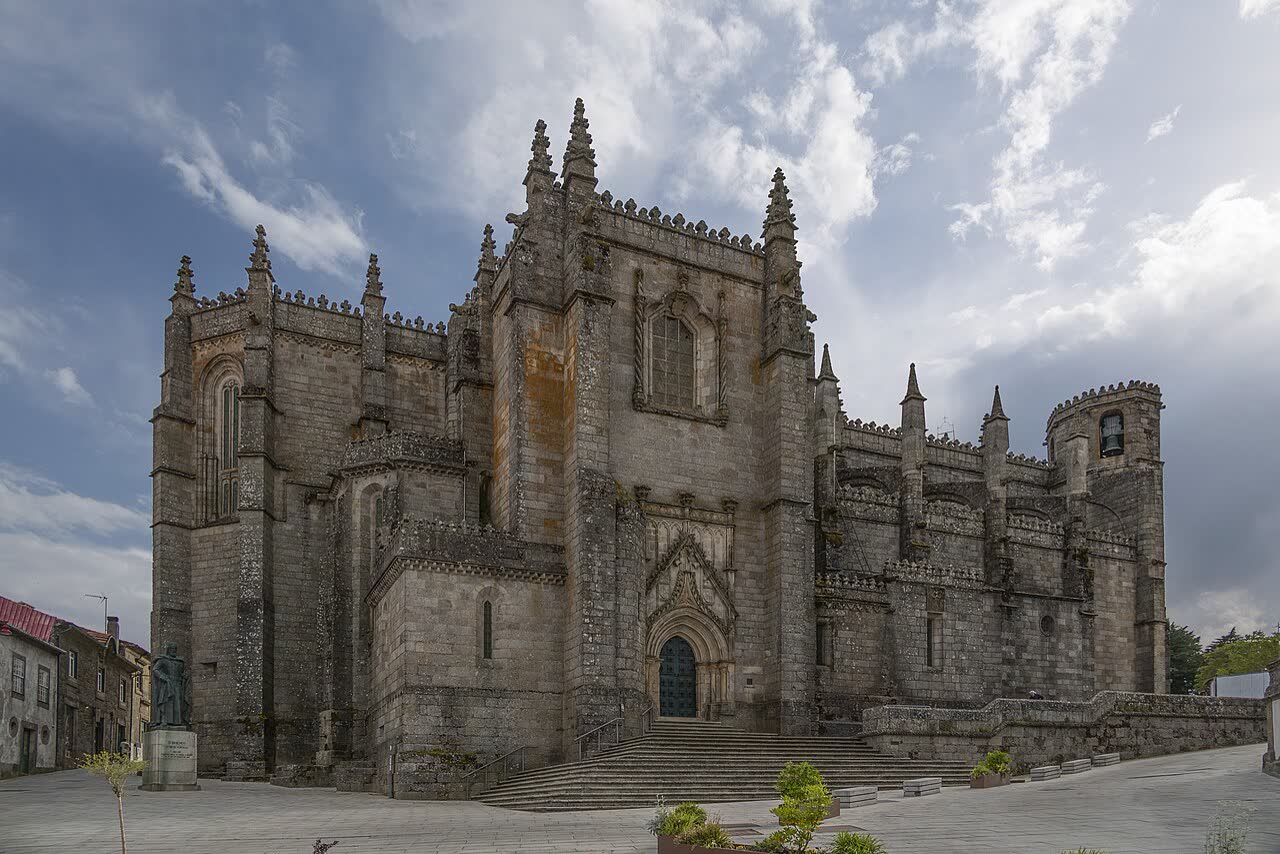
Guarda is Portugal’s highest city, perched on the edge of the Serra da Estrela at around 1,000 metres. It’s a granite city with a fortress-like cathedral, a medieval Jewish quarter and fresh mountain air. It’s a good base for Serra da Estrela and the historic villages.
Quick answer: Guarda is about 2.5 hours from Porto and 3 hours from Lisbon by car. See the Gothic cathedral (climb to the roof when open), wander the old Jewish quarter, and use the city as a base for Serra da Estrela, Belmonte, Sortelha and Castelo Rodrigo. See places to stay in Guarda.

Why go
At 1,056 metres, Guarda sits higher than any other Portuguese city. It was founded in 1199 by King Sancho I as a frontier stronghold against Castile, and its name means “guard”. The old centre is compact, built of grey granite and crowned by one of the country’s most striking cathedrals. Few foreign visitors make it this far inland, so prices are lower and the streets are calm. Use it as a base for mountains, castles and medieval villages in every direction.
Locals sum the city up with five words beginning with F: forte (strong), farta (plentiful), fria (cold), fiel (loyal) and formosa (beautiful). You will understand “fria” on any winter evening.
Things to do
- The cathedral: a massive granite cathedral mixing Gothic and Manueline styles. Building started in 1390 and went on until the mid 16th century, which explains the mix. Inside, look for the huge carved stone altarpiece. When roof visits run, you can walk among the pinnacles and gargoyles for views over the city. Allow 45 minutes to an hour.
- The Jewish quarter: narrow streets just north of the cathedral, running towards the Porta d’El Rei gate, with marks of the medieval community. Guarda had one of Portugal’s oldest Jewish communities, dating back at least to the 13th century, and it grew when Jews expelled from Spain arrived after 1492. Rua do Amparo was once the main street of the quarter, and you can still spot symbols carved into some doorways.
- The castle keep and the remains of the walls. The Torre de Menagem stands on the highest point of the old town, and the Torre dos Ferreiros and two old gates, Porta d’El Rei and Porta da Erva, survive from the walls.
- The museum in the former bishop’s seminary. The Museu da Guarda, founded in 1940 and housed in a 17th-century building, holds archaeology, sacred art, paintings and early books. Check opening hours before you go.
- Praça Luís de Camões: the main square in front of the cathedral, lined with old granite houses and cafés.
- Mountain food: Serra da Estrela cheese, sausages and hearty stews.
Getting there
- By car: Guarda is about 200 km from Porto on the A25 and about 3 hours from Lisbon via the A23. Both the A23 and the A25 have been toll-free since 1 January 2025, although the A1 from Lisbon or Porto is still tolled. See Portugal’s tolls explained. Parking is easiest just outside the old centre, which is hilly and has narrow streets.
- By train: CP trains serve Guarda on the Beira Alta line, which reopened in full in September 2025 after a long upgrade, and on the Beira Baixa line from Lisbon via Covilhã. Storm damage early in 2026 cut the Beira Baixa line for months; full services resumed on 20 September 2026, but check the current timetable on the CP website. The station is in the lower town, about 4 km by road from the centre and some 250 metres lower, so take a taxi or the local bus up the hill. See the Portugal train guide.
- By bus: Rede Expressos coaches link Guarda with Lisbon, Porto, Coimbra and other cities. Lisbon takes around 4 hours and Porto around 3 hours. See Portugal by bus.
How long to spend
Half a day is enough for the old town. Stay two or three nights if you want day trips. A simple day in town:
- Morning: the cathedral and, if running, the roof visit.
- Late morning: walk the Jewish quarter between the old gates, then climb to the castle keep.
- Lunch: a long mountain lunch with cheese and a stew.
- Afternoon: the Museu da Guarda, then a drink in the main square.
Day trips
- Serra da Estrela: mainland Portugal’s highest mountains, topped by Torre at 1,993 metres. Roads to the summit sometimes close after heavy snow. See Serra da Estrela.
- Historic villages: Belmonte, the birthplace of the navigator Pedro Álvares Cabral, with a Jewish museum; Sortelha inside its granite walls; Castelo Rodrigo and the star-shaped fortress of Almeida near the Spanish border; and Trancoso. See the historic villages.
- Monsanto: see Monsanto.
- The Côa Valley: open-air prehistoric rock engravings, a UNESCO World Heritage Site, to the north. See the Côa Valley rock art.
Food
- Queijo Serra da Estrela: a soft, creamy sheep’s cheese, made with thistle flower rather than animal rennet, and often eaten with a spoon at its best in winter.
- Enchidos: smoked mountain sausages, including morcela and farinheira.
- Stews and roasts: lamb, kid and bean dishes suited to cold weather.
- Wine: look for wines from the nearby Beira Interior region.
When to go
- Late spring and early autumn: mild days and clear mountain views.
- Summer: warm by day but cooler than the rest of inland Portugal, and evenings are fresh. The Guarda Blues festival fills the main square for several nights in August.
- September: the Feira Farta, a fair of local produce and crafts, is usually held in mid to late September.
- Winter: cold, sometimes with snow, and the best season for cheese and for snow in the Serra da Estrela. In December the city runs a Christmas programme with a market and an ice rink.
Tips
- Weather: cold in winter, with snow on around a dozen days a year on average. Pack layers.
- Car: essential for the villages.
- Shoes: the granite streets are steep and can be slippery when wet.
FAQ
Is Guarda worth visiting?
Yes, especially as a base. The old town fills half a day, and the mountains and historic villages are an easy drive away.
Does it snow in Guarda?
Often, for a city in Portugal. Guarda averages around 12 days of snow a year, mostly between December and March.
Can you get to Guarda by train?
Yes. CP trains arrive on the Beira Alta and Beira Baixa lines, but the station is about 4 km below the old town, so you need a bus or taxi for the last stretch.
More: Portugal’s hidden gems and Portuguese cheese.
See also: skiing in Portugal.
Some links in this guide are affiliate or referral links (GetYourGuide, Booking.com, Discover Cars, Welcome Pickups, Airalo, Yesim, Saily, Tiqets, Radical Storage, EKTA, AirHelp, Uber). If you book or sign up through them we may earn a small commission or ride credit at no extra cost to you. It helps keep our groups and this site free.
Still got questions?
Ask 305,000+ travellers and locals in our free Facebook groups.