
Trip guides / Central Portugal
Visiting the Alcobaca Monastery
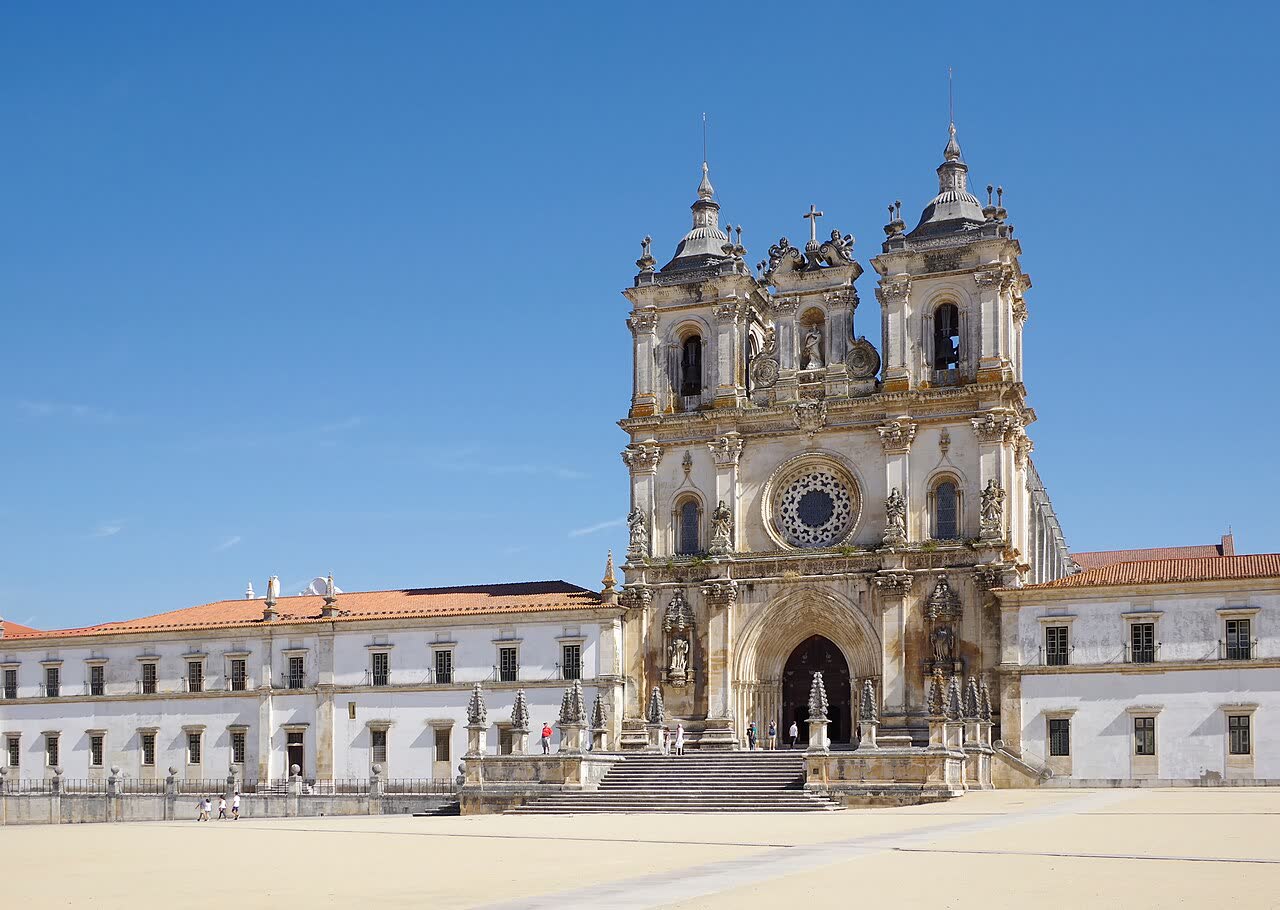
The Alcobaça Monastery is one of the largest and most important medieval abbeys in Europe. It’s a vast, austere Cistercian church that holds the tombs of Portugal’s most famous tragic lovers, Pedro and Inês. It’s a UNESCO World Heritage site, and close to Nazaré and Óbidos.
Quick answer: Alcobaça is about 1.5 hours north of Lisbon, 15 minutes from Nazaré. The church is free. A ticket covers the Cloister of Silence, the monks’ dormitory and the giant kitchen. Don’t miss the tombs of Pedro and Inês. Allow 1 to 1.5 hours. See places to stay in Alcobaça.

Why go
Alcobaça is quieter than Batalha or Jerónimos, yet it’s older and in some ways more moving. You walk into one of the tallest, plainest Gothic naves in the country, then find two of the finest medieval tombs in Europe and a love story every Portuguese child knows. It’s an easy stop on a drive up the Silver Coast.
About the monastery
Portugal’s first king, Afonso Henriques, gave the land to the Cistercian order in 1153. Building started in 1178 and the church was consecrated in 1252. It’s one of the first Gothic buildings in Portugal, impressive for its sheer height and simplicity: the Cistercians banned decoration, so the beauty is all in the light and the proportions. The monks also farmed the whole region, which is why the area is still famous for fruit. It became a UNESCO World Heritage Site in 1989.
The church is about 106 metres long, with a central nave about 20 metres high, and it is still the largest church in Portugal. The monastery suffered badly in 1810, when French troops looted its library and damaged the tombs. The last monks left in 1834, when Portugal dissolved its religious orders.
Pedro and Inês
Prince Pedro fell in love with Inês de Castro, a lady-in-waiting. His father, King Afonso IV, saw her as a political threat and had her killed in 1355. When Pedro became king two years later, he took revenge on her killers and, according to legend, had her body crowned queen. Their magnificently carved tombs face each other across the transept, so that on Judgement Day they’ll rise and see each other first. Look closely at the carved scenes around the sides; they’re full of detail.
What to see
- The church and the tombs. Entry to the church is free.
- The Cloister of Silence: a peaceful two-storey Gothic cloister, built around 1300 under King Dinis, with the upper floor added later.
- The kitchen: a huge tiled room with an enormous central chimney. A channel brings water from the River Alcoa straight into the room. The tiles date from the 18th century.
- The refectory and dormitory: long vaulted halls where the monks ate in silence and slept.
- The Kings’ Room: statues of Portuguese kings and 18th-century tile panels telling the story of the monastery’s founding.
- The chapter house: the room off the cloister where the monks met each day to discuss the abbey’s business.
More about the kitchen
The kitchen dates from the mid-18th century. The great chimney rests on eight iron columns, and the channel from the river once brought in fresh water and live fish. It’s the room most visitors remember.
A hotel in the monastery
One of the later cloisters, once used for workshops, archives and the library, has been turned into a five-star hotel designed by the architect Eduardo Souto de Moura. It isn’t part of the monument visit.
Tickets and hours
The monastery is usually open daily from 9am, closing at 6:30pm from April to October and 5:30pm from November to March, with last entry 30 minutes before. It closes on some public holidays. Ticket prices for national monuments have changed recently, so check the official Museus e Monumentos de Portugal site before you go. Children under 12 usually go free. A combined ticket has usually been offered with the Batalha Monastery and the Convent of Christ in Tomar, which saves money if you’re visiting all three.
Getting there
- By car: about 1 hour 15 minutes to 1.5 hours from Lisbon on the A8 toll motorway. There are car parks a short walk from the monastery square.
- By bus: Rede Expressos runs direct coaches from Lisbon (Sete Rios). The trip takes about 2 hours. There’s no useful train station in town.
- On a tour: some Fátima, Nazaré and Óbidos day trips stop here.
Don’t plan around the train: there have been no trains between Meleças and Caldas da Rainha since storm damage in January 2026, with replacement buses until the line reopens. The coach is simpler.
How long to spend
Allow 1 to 1.5 hours for the monastery and a coffee in the square. For a one-day loop by car from Lisbon, start in Óbidos, have lunch in Nazaré, visit Alcobaça in the afternoon and finish at Batalha, about 25 minutes away.
Food
- Frango na púcara: chicken slow-cooked in a clay pot with wine, the town’s classic dish.
- Convent sweets: egg-rich pastries based on old monastery recipes.
- Ginja: the local sour cherry liqueur. See our ginjinha guide.
- Fruit: the area is known for its apples and pears.
Nearby
- Nazaré: see Nazaré.
- Batalha: see the Batalha Monastery.
- Óbidos: see Óbidos.
Tips
- Sweets: try the convent pastries in the town’s cafés. See Portuguese desserts.
- November: the monastery hosts a big international fair of convent sweets and liqueurs each November. The 2026 edition runs from 19 to 22 November.
- Bring a layer: the stone halls stay cool even in summer.
- Mass: the church is still used for services, so be quiet and avoid touring during Mass.
- Tours: some Fátima, Nazaré and Óbidos tours stop here. See tours.
FAQ
Is the Alcobaça Monastery free?
The church, with the tombs of Pedro and Inês, is free. You pay to see the cloister, kitchen, dormitory and the other monastic rooms.
How long do you need at Alcobaça?
About 1 to 1.5 hours covers the church and the paid rooms at a relaxed pace.
Can you get to Alcobaça by train?
Not usefully. Take a Rede Expressos coach from Sete Rios in Lisbon, about 2 hours, or drive up the A8.
Where are Pedro and Inês buried?
In the transept of the monastery church, in two carved tombs that face each other, so they will see each other first when they rise.
More: UNESCO sites in Portugal and the Silver Coast.
Some links in this guide are affiliate or referral links (GetYourGuide, Booking.com, Discover Cars, Welcome Pickups, Airalo, Yesim, Saily, Tiqets, Radical Storage, EKTA, AirHelp, Uber). If you book or sign up through them we may earn a small commission or ride credit at no extra cost to you. It helps keep our groups and this site free.
Still got questions?
Ask 305,000+ travellers and locals in our free Facebook groups.