
Trip guides / Getting around
Travelling Portugal by Bus
Buses are often the cheapest way to travel between Portuguese cities, and they reach many towns the trains don’t. Here’s a guide to long-distance buses in Portugal: the main companies, stations and when the bus beats the train.
Quick answer: the main long-distance companies are Rede Expressos and FlixBus. In Lisbon, most buses leave from Sete Rios or Oriente. Buses are usually cheaper than the train and go direct to places like Fátima, Nazaré, Óbidos and many Algarve resorts. Book online for the best fares.

Why take the bus
Portugal’s rail network is good along the coast between Braga, Porto, Lisbon and the Algarve, but it misses many of the places visitors want to see. Coaches fill those gaps. They are modern and air-conditioned, and fares booked in advance are often lower than the train. Many inland towns, such as those in the Alentejo and the mountains of the centre and north, have no station at all, so the coach is the only public transport link.
The main bus companies
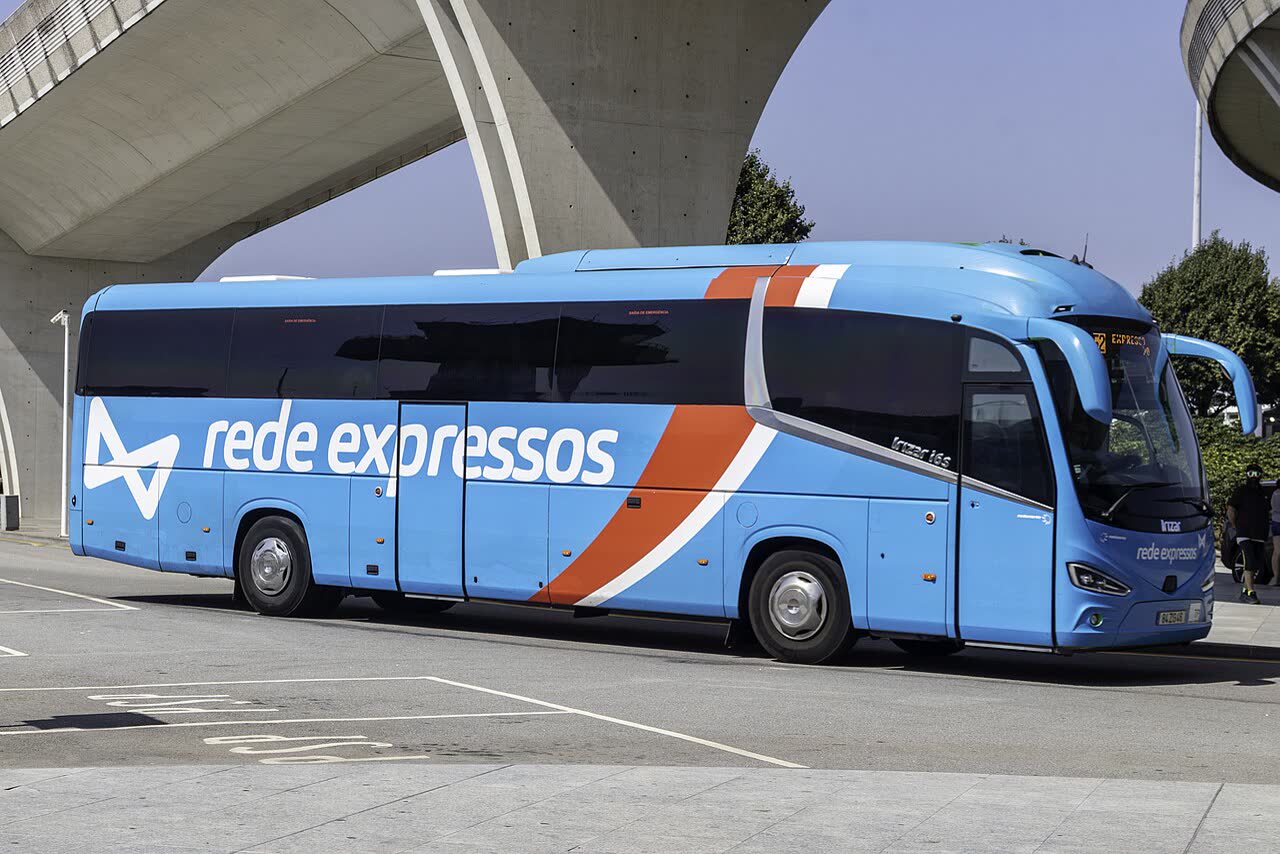
- Rede Expressos: the biggest national network, linking Lisbon and Porto with most cities and many smaller towns, including the Alentejo, the interior and the Algarve. Book on its website or app.
- FlixBus: cheap fares on the main routes, such as Lisbon to Porto, Coimbra and the Algarve, plus international buses to Spain.
- Rodotejo: the fast “Rápida Verde” buses run from Lisbon’s Campo Grande to Óbidos and Caldas da Rainha. Other regional companies cover the rest of the Silver Coast.
- Vamus Algarve: the regional network inside the Algarve, linking towns such as Faro, Albufeira, Portimão and Lagos. See getting around the Algarve.
The main bus stations
- Lisbon, Sete Rios: the main terminal for Rede Expressos. It’s next to the Jardim Zoológico metro station (blue line) and Sete Rios train station. FlixBus also started running some routes from here at the end of September 2026.
- Lisbon, Oriente: next to Oriente train and metro station in Parque das Nações. It’s FlixBus’s main Lisbon stop and handy if you’re coming from the airport, which is one metro line away.
- Lisbon, Campo Grande: for buses to Óbidos and the west coast.
- Porto, Campanhã: since 2022, most long-distance buses use the Terminal Intermodal de Campanhã, beside Campanhã train station.
See Lisbon public transport and Porto public transport.
When to take the bus
- Towns without good train links: Fátima, Nazaré, Óbidos, Peniche and many villages.
- Óbidos: about an hour from Campo Grande, much quicker than the train. Buses are frequent on weekdays and less so at weekends.
- Fátima and Nazaré: direct buses from Sete Rios, roughly 1.5 to 2 hours.
- Évora: regular coaches from Sete Rios take about an hour and a half. See the Évora day trip.
- The Algarve: direct buses to resorts like Albufeira (about 3 hours from Lisbon) and Lagos (about 4 hours). The train often needs a change. See Lisbon to the Algarve.
- The interior: many inland towns have no station at all, so the coach is often the only option without a car.
- Budget travel: often cheaper than the train, especially when booked early.
Crossing into Spain
FlixBus and other operators run coaches from Lisbon and the Algarve to Spanish cities such as Seville and Madrid. There is no direct passenger train between the Algarve and Seville, so the bus is the simplest public transport option. See Seville from the Algarve.
When the train is better
- Lisbon to Porto: the Alfa Pendular is faster and more comfortable, though the bus is often cheaper. See Lisbon to Porto by train.
- Short city hops: Sintra, Cascais and Braga are easiest by train. See the train guide.
- The Douro: the train along the river from Porto is a trip in itself.
- Along the Algarve: the coastal railway has been fully electric since July 2026, and trains between towns like Faro, Tavira and Lagos avoid summer traffic.
Tickets and fares
- Book online: Rede Expressos and FlixBus both sell tickets on their websites and apps. Early fares are cheapest, and popular summer and Friday buses can sell out.
- At the station: you can also buy at the ticket office, but fares may be higher and seats limited.
- Regional buses: on routes like the Óbidos express, you can usually buy a ticket from the driver.
- Seats: often assigned on your ticket.
- Prices: change with demand, so compare both companies for your date.
- Discounts: some operators offer reduced fares for young people, students and older travellers. Check the conditions when you book.
Practical tips
- Stations: check which station your bus leaves from, as cities can have several.
- Arrive early: get there 15 to 20 minutes before departure to find your bay.
- Luggage: large bags go in the hold.
- Comfort: coaches have air conditioning and often Wi-Fi and USB charging. Bring a layer, as the air conditioning can be cold.
- Regional buses serve villages, but services are less frequent on weekends and in school holidays.
- Timetables: check current times on the operator’s website before you travel, as routes change.
- Food: long journeys usually include a short stop, but bring water and a snack.
FAQ
Is the bus or the train better from Lisbon to Porto?
The Alfa Pendular train is faster, at about three hours, and more comfortable. The bus is often cheaper, especially if you book early, and takes a little longer.
How do you get from Lisbon to Óbidos by bus?
Take the Rápida Verde express from Campo Grande. It takes about an hour, and you can usually buy your ticket on board. Check the timetable first, as there are fewer buses at weekends.
Which Lisbon bus station does FlixBus use?
Mainly Oriente, beside the train and metro station. Since late September 2026 some FlixBus routes also use Sete Rios, so always check the stop on your ticket.
Do you need to print your bus ticket?
Usually not. Rede Expressos and FlixBus let you show the ticket on your phone, but keep a screenshot in case you lose signal.
More: Portugal without a car, day trips from Lisbon by train and Portugal on a budget.
See also: Lisbon to Madrid by bus and Lisbon to Porto by bus.
Prices and details change, so please double-check before you travel. Spotted something out of date? Tell us in the groups.
Still got questions?
Ask 305,000+ travellers and locals in our free Facebook groups.