
Aljezur: Castle and Wild West Coast Beaches
Aljezur is a laid-back town on the Algarve’s wild west coast, with a ruined Moorish castle above the river and some of the most spectacular surf beaches in Portugal nearby. It’s part of the Costa Vicentina Natural Park, a world away from the resorts of the south coast.
Quick answer: Aljezur is about 30 minutes north of Lagos. Climb to the castle, then head to the beaches: Arrifana (a cove below high cliffs), Monte Clérigo and Amoreira (where a river meets the sea). It’s a top area for surfing and hiking the Rota Vicentina. See places to stay in Aljezur.
Why go
The west coast of the Algarve has no high-rise hotels and no big resorts. Instead you get empty clifftops, wide beaches and a slower pace. Aljezur sits a few kilometres inland, so it is a handy base for surfing in the morning, walking in the afternoon and eating well in the evening. It is also cheaper and calmer than the south coast in summer.
Things to do
In town
- The castle: the walls date from the Moorish period, and the town itself is thought to have been founded in the 10th century. Knights led by Paio Peres Correia, Master of the Order of Santiago, took it from the Moors in the 1240s (sources differ on the exact year). Legend says a Moorish woman helped them by opening the way in. Today you see restored walls and towers, with views over the river valley and the white houses below. It is a short, steep walk up from the old town. Allow 30 to 45 minutes. It is an open ruin, and there is usually no charge to walk round it.
- The old town and Igreja Nova: the 1755 earthquake badly damaged Aljezur, and the local bishop then built a new church on the hill opposite to start a new town. That is why Aljezur has two halves: the old lanes below the castle and the “new church” side opposite. The bishop was Francisco Gomes do Avelar, and the church is dedicated to Nossa Senhora da Alva, the town’s patron saint.
- The small museums: the old town has a municipal museum with local archaeology and Islamic-era pottery, a museum of sacred art, a museum devoted to Saint Anthony in a former chapel, and the house-museum of the painter José Cercas. One ticket usually covers all of them. They tend to close on Sundays and Mondays, so check current hours.
Beaches
- Arrifana: a dramatic surf beach below the cliffs, with a viewpoint and fort ruins above. The fort was built in 1635 to protect the fishing grounds and was wrecked by the 1755 earthquake. The beach is a gentle surf spot for learners, and you reach it down a steep road.
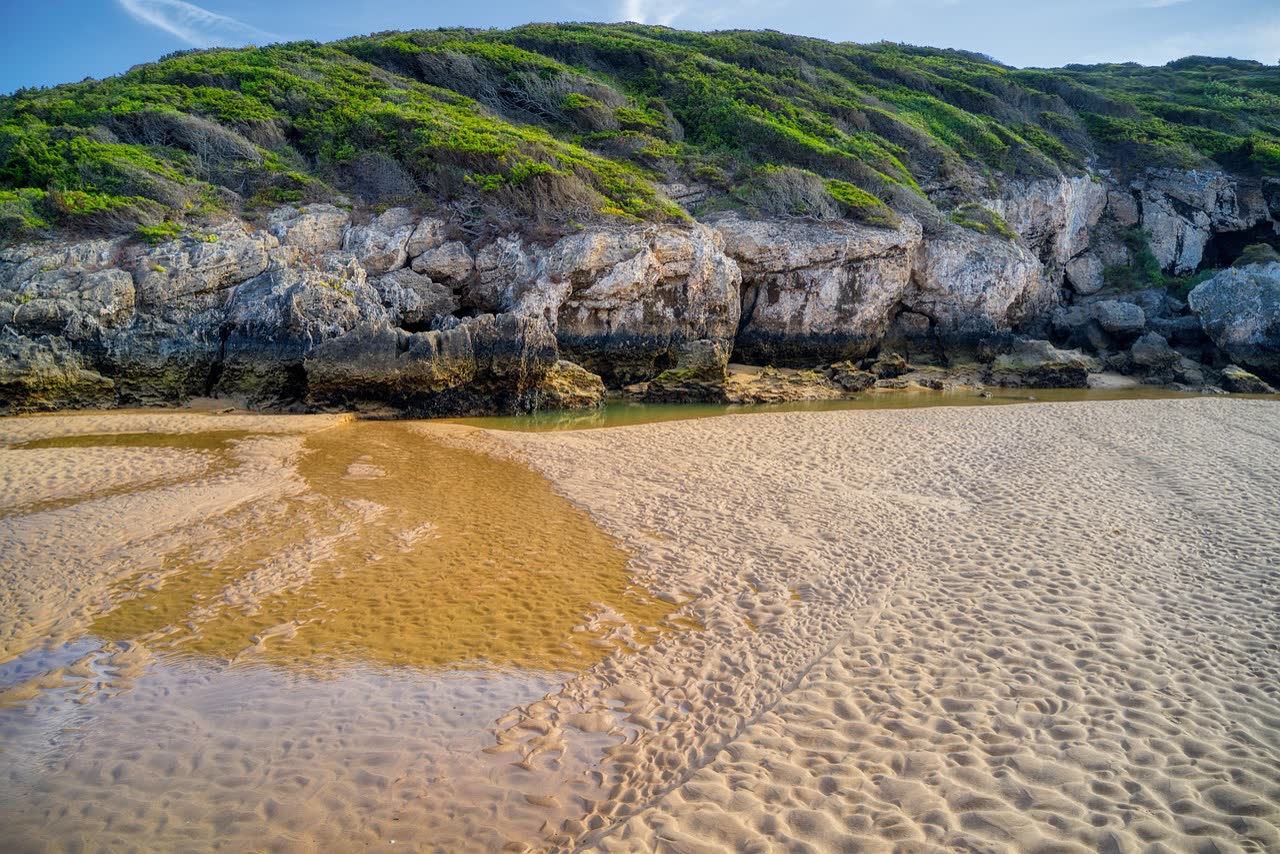
- Amoreira: a beach where the river meets the ocean, good for families at low tide. Children paddle in the river while surfers use the waves on the sea side.
- Monte Clérigo: a small beach village with a wide sandy beach and rock pools at low tide.
- Odeceixe: at the northern edge of the municipality, where the Algarve meets the Alentejo. See Odeceixe.
The Ribat of Arrifana
On the Ponta da Atalaia headland, about 1 km north of Arrifana beach, archaeologists have uncovered the remains of a ribat, a fortified Islamic religious retreat built around 1130. It is the only one identified in Portugal and has been excavated since 2001. You see the low stone foundations of several small mosques on a wild clifftop, with huge views. Wear sturdy shoes and keep away from the edge.
Outdoors
- Surfing: schools and surf camps for all levels. See Algarve surf lessons. For more spots, see surfing in Portugal.
- Hiking: the Fishermen’s Trail along the clifftops, plus the inland Historical Way. See Costa Vicentina.
- Sweet potatoes: the local speciality, celebrated with the Festival da Batata-Doce, usually held on the last weekend of November.
Getting there
- By car: about 30 minutes from Lagos, around an hour and a quarter from Faro airport and about 2.5 to 3 hours from Lisbon.
- By bus: Vamus Algarve regional buses run between Lagos and Aljezur, with fewer services at weekends. Rede Expressos coaches link Aljezur with Lisbon in about 3.5 to 4 hours. See Portugal by bus.
- Parking: free in town. The beach car parks fill up by late morning in July and August.
How long to spend
One day covers the town and two beaches. Stay two or three nights if you want to surf or walk part of the Rota Vicentina.
A one-day route: climb to the castle early, have coffee in the old town, then drive to Arrifana for the viewpoint and a swim. After lunch, move on to Monte Clérigo or Amoreira for the afternoon and stay for sunset over the Atlantic.
Food
- Sweet potato: Aljezur’s sweet potatoes turn up roasted, in soups and in cakes.
- Percebes: goose barnacles picked from the rocks of this coast, a prized local treat.
- Fish and seafood: grilled fish, octopus and clams in the beach restaurants.
When to go
July and August bring the warmest weather and the busiest beaches. Spring and autumn are best for walking, with wildflowers in spring. Autumn and winter bring the biggest swells for experienced surfers. Expect morning fog on some summer days.
The sweet potato festival usually runs over a long weekend in late November, with food stalls, cooking and music in the town’s multi-purpose hall, and entry has been free in recent years. It is a good reason to visit out of season.
Tips
- Sea: the Atlantic here is powerful. Swim only at guarded beaches.
- Car: essential for the beaches.
- Weather: windier and cooler than the south coast. Pack a jumper for the evenings.
- Water: the sea stays cool even in summer, so surfers wear wetsuits.
FAQ
Which beach near Aljezur is best for families?
Amoreira, at low tide, when children can paddle in the calm river. Monte Clérigo is also good, with a wide beach and rock pools.
Can you visit Aljezur castle for free?
Yes. It is an open ruin and there is usually no charge. Walk up from the old town or drive most of the way.
How do you get to Aljezur without a car?
Take a Vamus Algarve bus from Lagos or a Rede Expressos coach from Lisbon. You will still need a lift or a taxi to reach most beaches.
When is the Aljezur sweet potato festival?
Usually over a weekend in late November. Check the council’s dates for the current year.
More: Sagres, Algarve hikes and east vs west Algarve.
See also: Odeceixe and Arrifana Beach.
Some links in this guide are affiliate or referral links (GetYourGuide, Booking.com, Discover Cars, Welcome Pickups, Airalo, Yesim, Saily, Tiqets, Radical Storage, EKTA, AirHelp, Uber). If you book or sign up through them we may earn a small commission or ride credit at no extra cost to you. It helps keep our groups and this site free.
Still got questions?
Ask 305,000+ travellers and locals in our free Facebook groups.