
The Best Pastel de Nata in Lisbon
Flaky, caramelised, still warm, with a dusting of cinnamon: the pastel de nata is Portugal’s most famous treat, and Lisbon is where to eat it. You’ll find them in every café, but some are much better than others. Here’s where to find the best in Lisbon, from the 1837 original to this year’s award winner.
Quick answer: Manteigaria for the best all-rounder in the centre, Pastéis de Belém for the historic original (go inside, skip the takeaway queue), and Aloma, which won Lisbon’s official Best Pastel de Nata contest again in September 2026, for its third year in a row. Expect to pay about €1.30–1.60 each.
,_Rua_Dr._Fern%C3%A3o_de_Ornelas,_Nata_7_-_Fern%C3%A3o_Ornelas_--_2025_--_1205.jpg)
Pastel de nata or pastel de Belém?
Same idea, different recipe. The custard tart was created by monks at the Jerónimos Monastery in Belém. When the monasteries closed in the 1830s, the recipe was sold to the bakery next door, which has made pastéis de Belém since 1837 to a secret recipe. Only they can use that name. Everywhere else they’re called pastéis de nata.
What makes a great one?
- The pastry: thin, crisp layers that shatter when you bite, never soggy or chewy at the base.
- The custard: just set and creamy, not rubbery, and not too sweet.
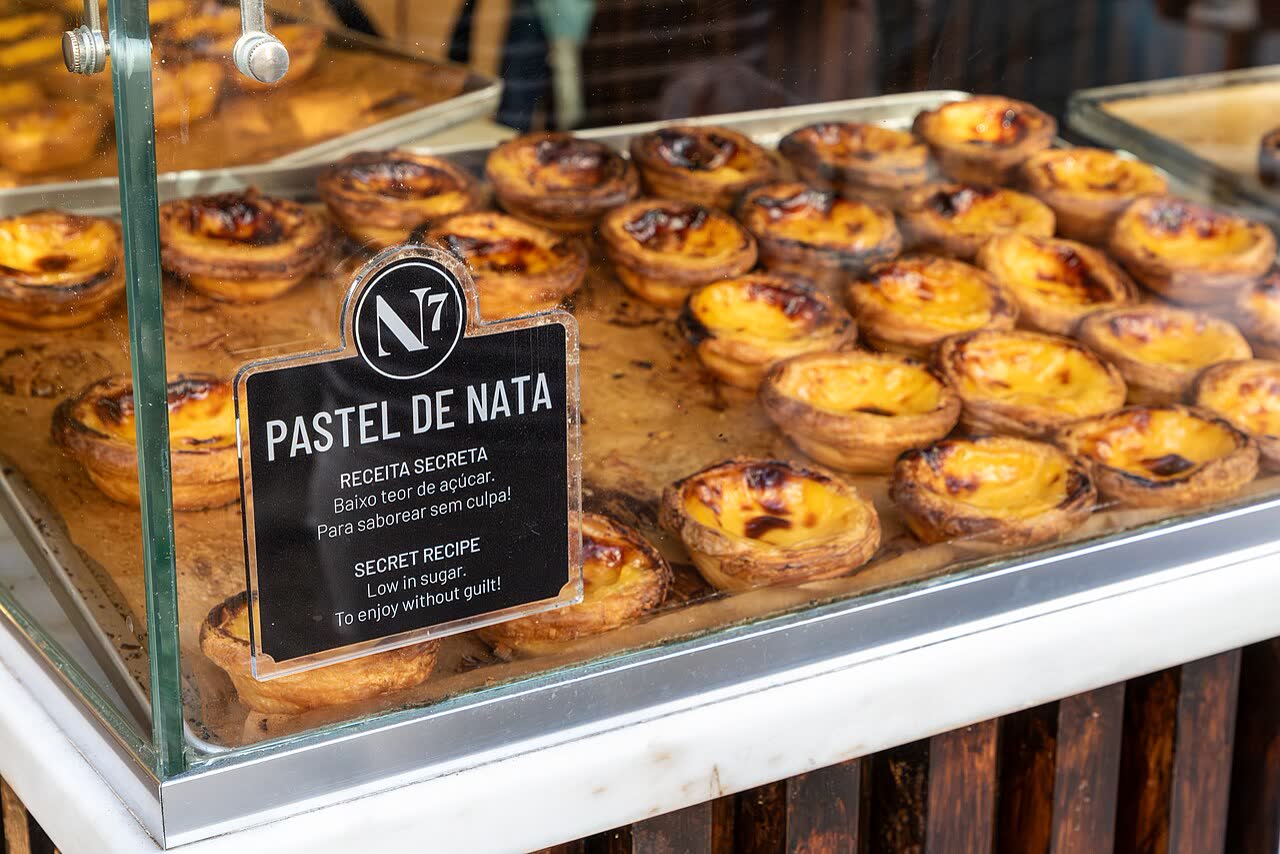
- The top: dark, blistered spots from a very hot oven. A pale top usually means a dull tart.
- Freshness: a nata is at its best within a few hours of baking, ideally still warm.
If a café has a tray that looks like it has been sitting since breakfast, walk on. In Lisbon, there’s always another bakery round the corner.
The best pastel de nata in Lisbon
Manteigaria
Many locals’ favourite, and ours. Crisp, buttery pastry and a just-set custard, straight from the oven all day. There’s only one thing on the menu, and a bell rings when a fresh batch comes out. The original opened in Chiado (Rua do Loreto) in 2014, and there are now branches across the city, including Rossio, Belém and the Time Out Market. About €1.30. You can watch the bakers through the window rolling and filling the cases.
Pastéis de Belém
The original, since 1837, and a must at least once. Huge, tiled, open every day and baking thousands a day. The trick: skip the long takeaway queue outside and walk in to find a table in the rooms at the back, where service is usually quick. Add cinnamon and icing sugar from the shakers on the table. About €1.60. Combine it with the Jerónimos Monastery and Belém Tower, which reopened in May 2026 with timed entry. See our Belém guide.
Aloma
The award winner. Aloma won Lisbon’s “O Melhor Pastel de Nata” contest in 2024, 2025 and 2026, and six times in total. The 2026 tarts were judged blind, and 7 Desejos came second and Casa do Padeiro third. The main shop, open since 1943, is on Rua Francisco Metrass in Campo de Ourique, a lovely, local neighbourhood to wander, and you’ll find it in a few other spots around town. Pair it with a visit to the Mercado de Campo de Ourique nearby. See our Campo de Ourique guide.
Pastelaria Santo António
A former contest winner (it took the title in 2019), tucked into the lanes of Alfama on Rua do Milagre de Santo António, near the Santo António church. A perfect stop on the way up to the castle.
Confeitaria Nacional
Not just natas: this grand old pastry shop on Praça da Figueira has been going since 1829, with a beautiful interior and a counter full of traditional cakes. It’s still run by the founding family, and it claims to have brought the bolo rei, Portugal’s Christmas king cake, to the country from France. Great for trying more Portuguese sweets.
A nata walk through the centre
Want to compare? This easy route takes about two hours with stops:
- Start: Confeitaria Nacional on Praça da Figueira.
- Then: walk up to Manteigaria in Chiado, about 15 minutes away.
- Then: cross the Baixa and climb to Pastelaria Santo António in Alfama.
- Finish: at the castle or a viewpoint to walk it all off.
Save Pastéis de Belém and Aloma for the days you visit Belém and Campo de Ourique.
How to eat it like a local
- Warm, if possible. Ask if there are fresh ones (“Tem quentinhos?”).
- Cinnamon (canela) and icing sugar on top, or plain. Your choice.
- With a bica: Lisbon’s name for an espresso. Standing at the counter is cheaper than sitting.
- Morning or afternoon (around 4pm, the lanche snack time) are the classic times.
- One is never enough. Order two.
Want something else with your coffee? Ask for a galão (a milky coffee in a tall glass) or a meia de leite (half coffee, half milk).
Other pastries to try
- Travesseiro: a puff pastry “pillow” filled with almond cream, from Sintra.
- Queijada: a small, sweet cheese tart, also a Sintra speciality.
- Bola de Berlim: a doughnut filled with egg custard, sold on beaches in summer.
- Pão de Deus: a soft bun with a sweet coconut topping.
- Pastel de feijão: a bean and almond tart from Torres Vedras.
See all of them in our guide to Portuguese desserts.
Taking them home
Most shops sell boxes of six. They’re best eaten the same day, but survive a short flight. Reheat for a few minutes in a hot oven, not the microwave.
Learn to make them
A pastel de nata baking class is one of the most fun things to do in Lisbon, especially with kids or on a rainy day. You make the pastry, fill the cases and eat your own warm natas. See pastel de nata classes. Or try a Lisbon food tour, which usually includes a nata stop along with cheese, wine, ginjinha and more.
FAQ
How much is a pastel de nata in Lisbon?
At the famous bakeries, about €1.30 to €1.60 each: around €1.30 at Manteigaria and €1.60 at Pastéis de Belém. Ordinary cafés are often a little cheaper.
Who won the Best Pastel de Nata in Lisbon in 2026?
Aloma, for the third year in a row and the sixth time overall. 7 Desejos was second and Casa do Padeiro third.
Is the queue at Pastéis de Belém worth it?
Skip the takeaway queue outside. Walk in and find a table in the back rooms, where service is usually quicker.
More Portuguese food
Read our guide to what to eat in Portugal, plan your days with our 3-day Lisbon itinerary, and find a base in where to stay in Lisbon.
See also: pastel de nata cooking classes, what Portuguese people eat for breakfast, what to eat in Lisbon and Pastéis de Belém.
Some links in this guide are affiliate or referral links (GetYourGuide, Booking.com, Discover Cars, Welcome Pickups, Airalo, Yesim, Saily, Tiqets, Radical Storage, EKTA, AirHelp, Uber). If you book or sign up through them we may earn a small commission or ride credit at no extra cost to you. It helps keep our groups and this site free.
Still got questions?
Ask 305,000+ travellers and locals in our free Facebook groups.