
Trip guides / Planning
Portugal in January: Weather, Prices and Where to Go
January is Portugal’s quietest month: the Christmas decorations come down, prices drop to their lowest, and you’ll have viewpoints, palaces and beaches almost to yourself. It’s cool and can be wet, but there are plenty of crisp, sunny days, especially in the south. Here’s what to expect.
Quick answer: expect highs of about 14–15°C in Lisbon, 16°C in the Algarve and around 19°C in Madeira. Rain comes in spells, especially in the north, so pack a waterproof. It’s ideal for city breaks, museums, food, golf and winter sun in Madeira. Late in the month, the almond blossom begins in the Algarve.

Why go in January
If you don’t need a beach tan, January is one of the best-value months to see Portugal. Queues at Sintra, Belém and Porto’s big sights are short or gone. Hotels that cost a fortune in August drop their rates. Locals are back at work, so cafés and markets feel more everyday and less touristy. The light is low and golden, which suits photos of tiled facades and river views.
The trade-off is the weather. You might get three blue-sky days in a row, then two days of steady rain. Build some flexibility into your plans: keep indoor sights and long lunches for the wet days, and save viewpoints, coastal walks and day trips for the dry ones.
Weather
- Lisbon: highs around 14–15°C, nights around 8°C. Sunny days are common between rainy fronts.
- Porto: around 14°C, often rainy. The north is the wettest part of the mainland in winter.
- The Algarve: around 16°C, with sunny spells between showers. January is usually drier than December here.
- Madeira: around 19°C by day on the south coast, but cooler and wetter in the mountains.
- The Azores: mild but changeable, with frequent rain and wind.
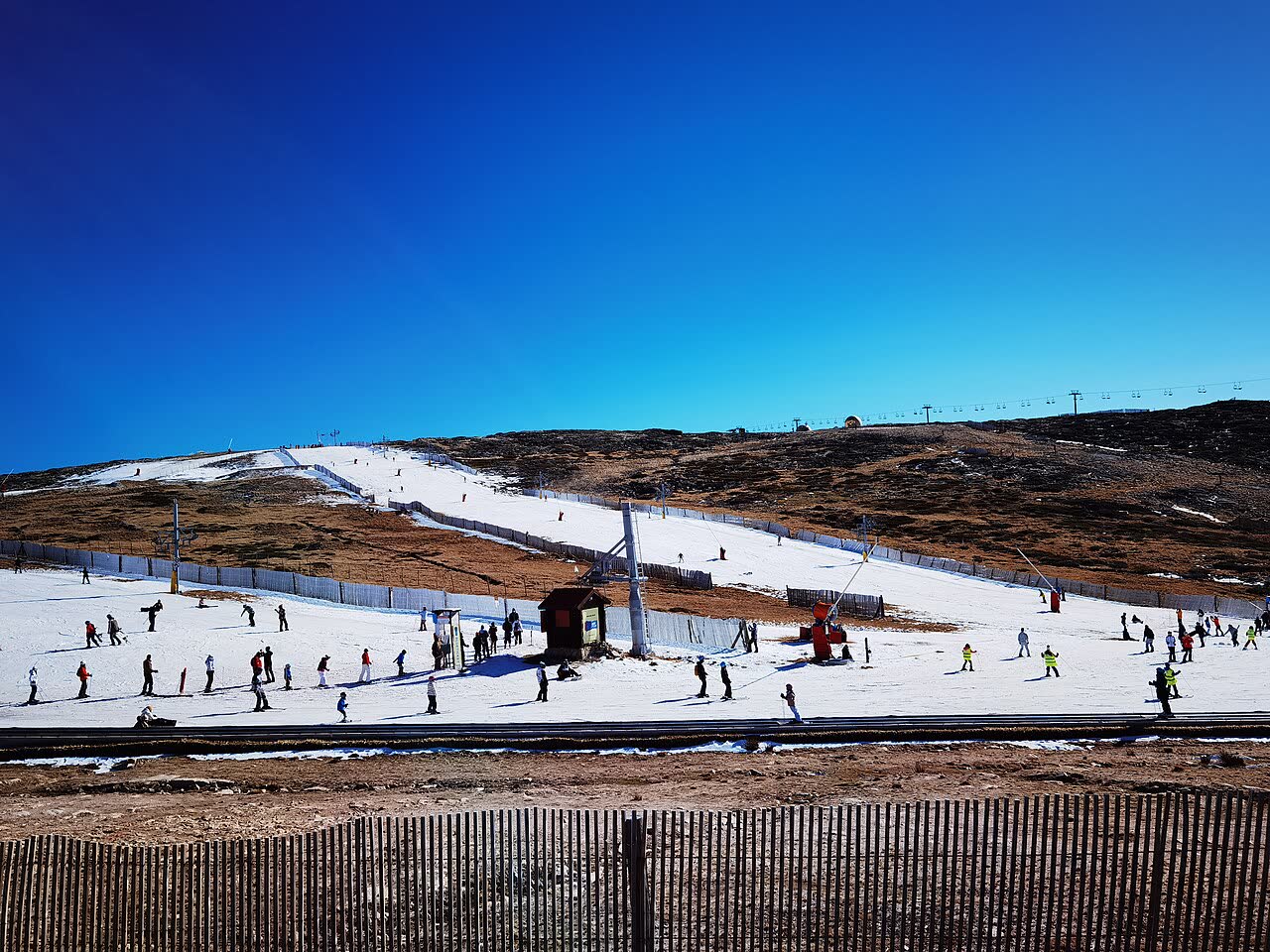
- Serra da Estrela: snow and skiing. See Serra da Estrela.
The sea is cold everywhere on the mainland, at about 15–16°C. Swimming is for the brave.
Winter storms can bring strong wind and heavy rain for a day or two at a time. Portugal’s weather service, IPMA, issues yellow, orange and red warnings on its website, and it’s worth a look before a coastal walk or a drive into the mountains.
What’s on
- New Year celebrations on 1 January, with fireworks in Lisbon, Porto and, most famously, Funchal on New Year’s Eve. See Madeira on New Year’s Eve.
- Dia de Reis (6 January): Epiphany, when bakeries sell bolo-rei, the ring-shaped king cake with candied fruit. Groups sing traditional “Janeiras” songs door to door in some towns in early January.
- Christmas villages close in early January.
- Winter sales: shops run their sales through January.
- Almond blossom starts late in the month in the Algarve hills.
- Nazaré’s big waves are at their peak. See Nazaré.
- Skiing in Serra da Estrela, snow permitting.
Where to go
- Madeira: the warmest and sunniest option, and great for levada walks. See the Madeira itinerary.
- Lisbon and Porto: museums, cafés and fado. See Lisbon on a rainy day.
- The Algarve: golf and cliff walks on sunny days. See the Algarve in winter.
- Sintra: misty, magical and empty. It can be damp and chilly, so dress warmly.
- The Alentejo: Évora and the plains are quiet and cheap, with hearty food and wine. Nights can be close to freezing.
Lisbon in January
Lisbon is a good base for a winter week. The Gulbenkian Museum and the Oceanário are ideal rainy-day sights, and Belém’s monastery and monuments are far quieter than in summer. Note that some big museums are closed for work: the National Tile Museum has been shut for restoration since November 2025, and the National Museum of Ancient Art closed in September 2025, with reopenings planned for late 2026. Check before you go. See Lisbon in winter.
Sintra in January
Sintra is often wrapped in fog in winter, which looks lovely in the gardens but can hide the views. Pena Palace tickets are sold for a set date and time slot, and private cars can’t drive up to the palace, so take the shuttle bus or walk. Go on a clear morning if you can.
What to eat
Winter is the season for comfort food. Try cozido à portuguesa (a big boiled meat and vegetable stew), caldo verde soup, roast chestnuts from street sellers and bolo-rei with coffee. In the north, look for rojões and other pork dishes. See caldo verde and what to eat in Portugal.
January is also a good month for citrus. Algarve oranges are in season, and you’ll see bags of them sold by the roadside and at markets. In Lisbon, a glass of ginjinha from a hole-in-the-wall bar is a warming way to end a cold walk.
Tips
- Cheapest month for hotels and flights, apart from the New Year holiday itself.
- Pack: a warm jacket, waterproof and warm sleepwear. Many older buildings have no central heating.
- Closures: water parks, Zoomarine and some beach restaurants are closed. Some small Algarve hotels close for the winter too.
- Daylight: about 10 hours, so plan sightseeing earlier.
- Opening hours: monuments usually keep shorter winter hours, and many close on 1 January. Check before you go.
- Driving: the Algarve’s A22 motorway has been toll-free since January 2025, which makes winter road trips along the south coast cheaper. See driving in Portugal.
- Shoes: Lisbon and Porto’s polished stone pavements get slippery in the rain, so bring shoes with good grip.
FAQ
Is January a good time to visit Portugal?
Yes, if you want low prices and few crowds. It’s too cold for beach holidays on the mainland, but it’s a good month for city breaks, food, walking and winter sun in Madeira.
How cold is Portugal in January?
Lisbon usually reaches about 14–15°C by day and drops to around 8°C at night. The Algarve is a little warmer, and inland areas such as the Alentejo can get close to freezing at night.
Can you swim in Portugal in January?
Only if you like cold water. The sea on the mainland is about 15–16°C, and most beaches have no lifeguards in winter.
Where is warmest in Portugal in January?
Madeira, with daytime highs of around 19°C on the south coast. On the mainland, the Algarve is usually the mildest and sunniest region.
More: December, February and Portugal in winter.
See also: skiing in Portugal.
Prices and details change, so please double-check before you travel. Spotted something out of date? Tell us in the groups.
Still got questions?
Ask 305,000+ travellers and locals in our free Facebook groups.