
Trip guides / Planning
The Best Beaches in Portugal (2026)
Portugal has over 800km of Atlantic coastline, and in 2026 almost 400 of its beaches earned a Blue Flag for clean water and facilities. From the golden cliffs of the Algarve to wild surf beaches, river beaches and island sands, here are the best beaches in Portugal, region by region, with the 2026 updates you need to know.
Quick answer: the stars are Praia da Marinha and Falésia in the Algarve, Odeceixe and Arrifana on the wild west coast, Galapinhos in Arrábida, Comporta’s empty sands, Adraga near Sintra, São Martinho do Porto’s shell-shaped bay, and Porto Santo’s 9km of golden sand off Madeira. Note: Praia do Camilo’s stairs are closed in 2026.
Which coast is right for you?
Portugal’s beaches fall into a few clear types. The Algarve on the south coast has the warmest water, golden cliffs and sheltered coves, and the most facilities. The west coast, from the Costa Vicentina up to the Minho, faces the open Atlantic: bigger waves, cooler water, fewer people and great surf. The coast around Lisbon mixes easy train beaches with wilder coves near Sintra and calm, clear water in Arrábida. The islands are a different world again, with volcanic sand and sea pools.
The official 2026 Blue Flag list counts 396 beaches, including 46 inland ones, and the Algarve and the North lead with 86 each.
The Algarve
- Praia da Marinha: sea stacks, arches and golden cliffs; often called one of the world’s most beautiful beaches. Arrive early, as the access road can be closed when the car park fills.
- Praia da Falésia: kilometres of sand under red and white cliffs.
- Praia Dona Ana (Lagos): a postcard cove with rock stacks. (Nearby Praia do Camilo’s wooden stairs have been closed since storm damage.)
- Benagil: famous for its sea cave, seen only from licensed boats or guided kayaks. See Benagil Cave.
- Ilha Deserta and Praia do Barril: island beaches in the Ria Formosa, reached by ferry or footbridge.
The Algarve’s cliff beaches are often reached by steep steps or paths, and many have just one or two beach restaurants. Praia da Falésia, between Olhos de Água and Vilamoura, is the exception: it runs for kilometres, so you can always find space. See our Praia da Falésia guide. In the east, beaches sit on sandbank islands, so you swap cliffs for dunes and calm water.
More: the best Algarve beaches and the Algarve’s best photo spots.
The wild west coast
- Odeceixe: where a river loops into the sea, with calm water on one side and waves on the other.
- Arrifana: a curved surf bay under high cliffs with a ruined fort on top.
- Praia do Amado and Bordeira: big surf beaches backed by dunes.
This stretch is protected as a natural park, so there are no high-rise hotels, just small villages, dunes and cliffs. The sea is rougher and colder than on the south coast, so watch the flags and swim only where there are lifeguards. Odeceixe sits right on the border between the Algarve and the Alentejo, and its river side is one of the best spots in the country for young children. See Odeceixe and Costa Vicentina.
Near Lisbon
- Galapinhos (Arrábida): white sand and turquoise water under green hills, once voted Europe’s best beach. Cars are restricted in summer; use the shuttle.
- Comporta: endless, empty beaches and a chic, barefoot vibe. See Comporta.
- Praia da Adraga (Sintra): a dramatic cove with rock arches and a great fish restaurant.
- Carcavelos and Cascais: easy by train. See the best beaches near Lisbon.
For Arrábida in summer 2026 (4 June to 15 September), Setúbal council’s Arrábida Sem Carros scheme kept private cars off the beach roads from 7am to 8pm. Buses ran from Setúbal instead (line 4470 via Azeitão to Creiro, and 4474 from the Alegro shopping centre to Figueirinha), with the 4477 shuttle linking Creiro and Galapos, next door to Galapinhos. The coast road between the Figueirinha tunnel and Galapos has been closed since February 2023 after rockfalls, so you can’t drive along the shore from Setúbal. Expect a similar set-up in future summers, and check the council’s rules before you drive. Carcavelos is about 20 to 25 minutes from Cais do Sodré by train, and its wide sand is a popular surf spot for beginners. Works on the Cascais line in 2026 have meant replacement buses between Caxias and Cascais in the evenings, so check before a late trip back.
The Silver Coast and the north
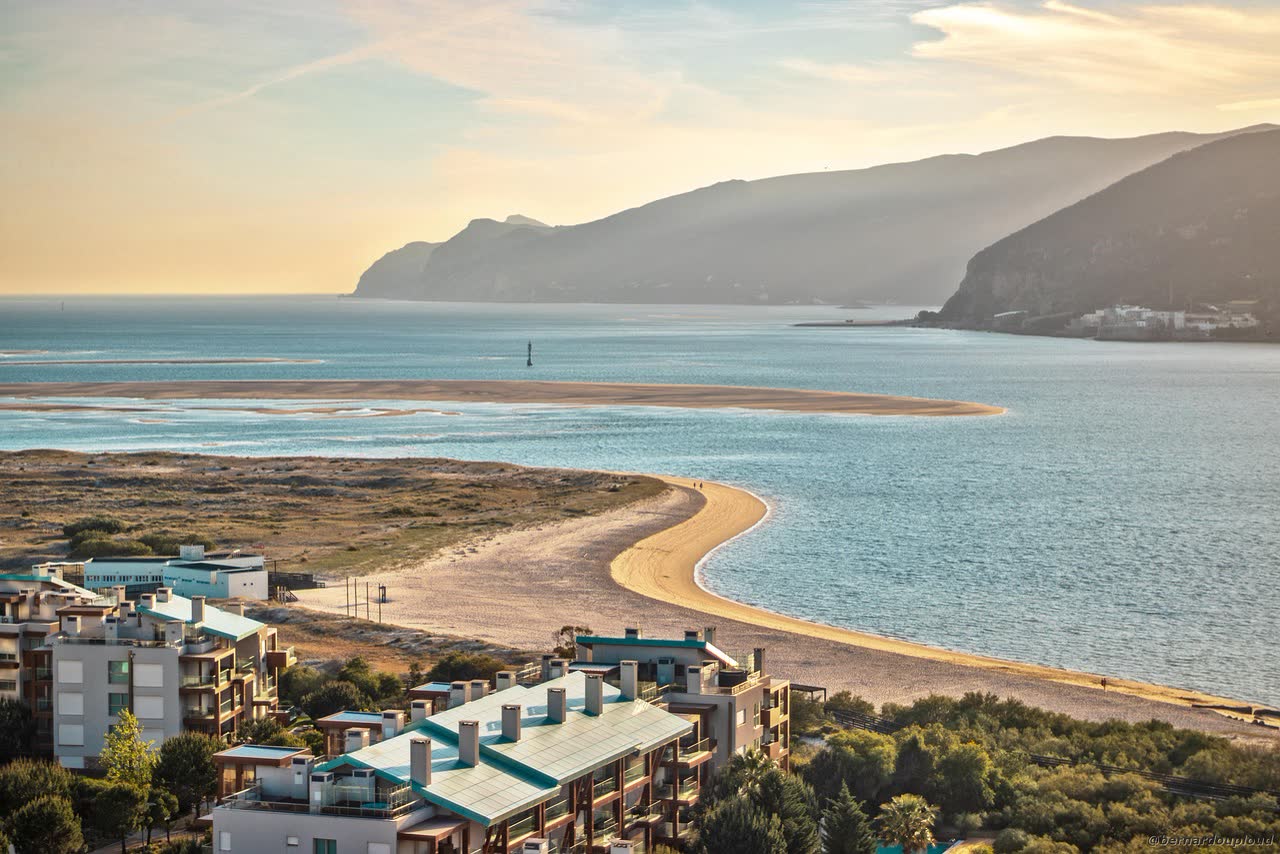
- São Martinho do Porto: an almost perfectly round bay with calm water, ideal for families.
- Nazaré: a huge town beach, with a wheelchair-accessible path, and the giant waves of Praia do Norte in winter.
- Costa Nova: striped beach houses and a long Atlantic beach near Aveiro.
- The Minho beaches near Viana do Castelo, cooler and greener.
The water in the north is the coldest in mainland Portugal, and mornings can be misty even in summer, so this coast suits walkers and surfers as much as sunbathers. Nazaré’s big waves are a winter show, usually from about October to March, best watched from the lighthouse at the fort above Praia do Norte. See the Silver Coast and Aveiro.
The islands
- Porto Santo (Madeira): 9km of golden sand and calm, warm water. A short flight or ferry from Madeira.
- Calheta (Madeira): a sheltered golden beach.
- The Azores: black sand beaches and natural lava pools. See São Miguel.
Madeira itself has few natural sandy beaches, which is why Porto Santo is so special: its long golden beach runs down most of the island’s south coast. See Porto Santo. Calheta’s beach is man-made, with imported golden sand behind a breakwater. On Madeira and in the Azores, swimming in natural rock pools is often better than the beaches. Porto Moniz on Madeira and Ponta da Ferraria on São Miguel, where hot springs warm the sea, are the best known.
River beaches
Inland, Portugal has dozens of praias fluviais (river beaches), many with Blue Flags, from the Alqueva lake to the mountain rivers of the centre and north. Perfect on hot summer days. See Monsaraz and Alqueva.
Beach safety in 2026
- Cliffs: Algarve and west coast cliffs collapse regularly. Never sit directly beneath them, and respect barriers. Some beaches (like Praia da Calada near Mafra) are closed for safety this year.
- Swim at lifeguarded beaches (usually June to mid-September) and respect the flags.
- The Atlantic is cold: about 17–19°C on the west coast in summer and 21–23°C in the Algarve.
A 10-day beach itinerary
Days 1 to 3: Lisbon with Cascais, Carcavelos and the Sintra coast. Day 4: Arrábida and Sesimbra. Days 5 and 6: the Alentejo coast (Comporta, Milfontes). Days 7 to 10: the Algarve (Lagos, Benagil and the eastern islands). Go between June and September.
Days 1 to 3: Lisbon’s beaches
Cascais, Carcavelos, Guincho and the Sintra coast. See the best beaches near Lisbon and beaches near Cascais.
Day 4: Arrábida
Turquoise water at Galapinhos and Portinho. See the Arrábida beaches.
Days 5 and 6: The Alentejo coast
Endless sand at Comporta and the river beaches of Milfontes. See Comporta and Milfontes.
Days 7 to 10: The Algarve
- Lagos: see the best beaches in Lagos.
- Benagil and Marinha: see Praia da Marinha.
- The east: see Ilha Deserta.
Tips
- Car: essential for the coast. See car rental.
- Water: the Atlantic is cool; the eastern Algarve is warmest.
FAQ
How many Blue Flag beaches does Portugal have?
396 in 2026, including 46 inland river and lake beaches. The Algarve and the North lead with 86 each.
Where is the warmest sea in mainland Portugal?
The eastern Algarve, around Tavira and the Ria Formosa islands, at about 21 to 23°C in late summer. The west coast and the north are several degrees colder.
When is the beach season in Portugal?
The official bathing season, with lifeguards, usually runs from June to mid-September, though dates vary by beach, and some west-coast beaches have lifeguards until the end of September. July and August are the busiest months; June and September are quieter and still warm.
Can you reach Portugal’s best beaches without a car?
Some of them. Carcavelos and Cascais are on the train line from Lisbon, and in the Algarve trains and buses reach Lagos, Portimão and the Tavira ferries. For the west coast, Comporta and most coves, you’ll need a car.
More: surfing in Portugal and the best time to visit Portugal.
From our sister blog: The 7 most beautiful beaches in the Algarve, with map on Sunset Travellers.
See also: the best beach towns, the best beaches in Madeira, Zambujeira do Mar, the best Alentejo beaches and the best beaches in the Azores.
Prices and details change, so please double-check before you travel. Spotted something out of date? Tell us in the groups.
Still got questions?
Ask 305,000+ travellers and locals in our free Facebook groups.