
The Best Markets in the Algarve
Markets are a big part of Algarve life, from covered fish and produce halls to sprawling Saturday markets and monthly country fairs selling everything from cheese to ceramics. Here are the best markets in the Algarve, what to buy and tips for visiting.
Quick answer: the best-known is Loulé, with its Moorish-style market hall and a big Saturday market. Olhão’s twin waterfront halls and Saturday market are a close second. Most towns have a covered municipal market for fish and produce (best in the morning, Monday to Saturday), plus monthly or weekly street markets.
Why go
A market morning is one of the easiest ways to see everyday Algarve life. Farmers come down from the hills with oranges, honey and goat’s cheese, fishermen sell the night’s catch, and you can stock up for a picnic or a self-catering kitchen for much less than in a supermarket. Allow an hour or two for a covered market and half a morning for a big Saturday market.
Markets are also a good rainy-day plan, and a chance to try things you won’t find in a supermarket, such as fresh figs in late summer, just-picked oranges in winter or a slice of local cheese offered from the counter.
Types of market
- Municipal markets: covered halls for fish, meat, fruit and vegetables. They usually open early and close by early afternoon, Monday to Saturday.
- Saturday farmers’ markets: local growers set up stalls next to the main halls in several towns.
- Monthly fairs: big open-air markets, sometimes called gypsy markets, with clothes, shoes, tools, plants, pottery and snacks.
- Seasonal and craft markets: some towns add evening craft markets in summer and Christmas markets in December. Ask at the local tourist office.
The best markets
- Loulé: the red-domed market hall and a huge Saturday market. The hall opened in 1908 and is built in a revival Moorish style with domes and arched gates. It usually opens Monday to Saturday from about 7am to mid-afternoon. On Saturday mornings farmers spread out around it, and a separate large open-air market sells clothes and household goods on the edge of town. Loulé is about 20 minutes inland from Faro. See Loulé.
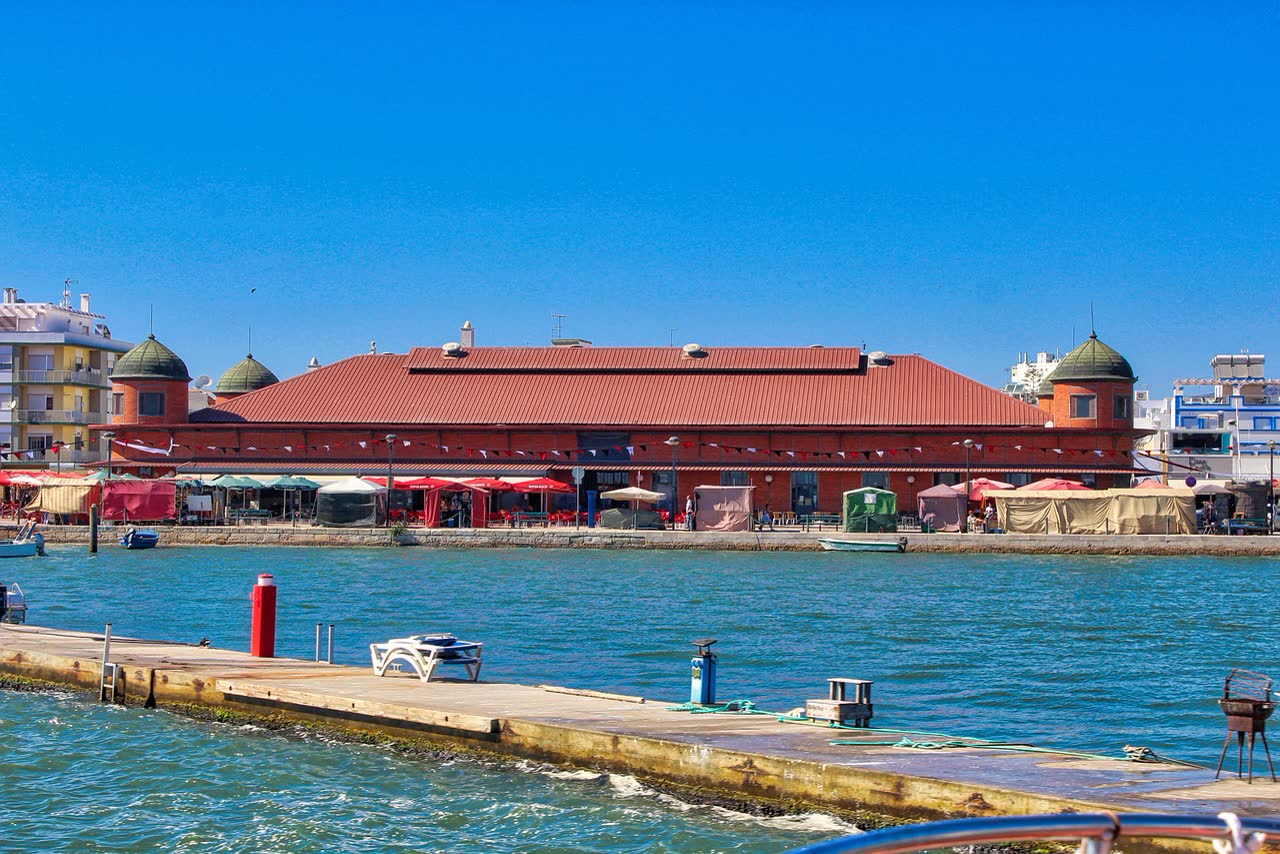
- Olhão: fish and produce halls on the seafront, plus a busy Saturday market. The two red-brick halls date from 1916: one for fish, the other for fruit and vegetables. On Saturdays stalls fill the waterfront outside. Have a coffee in the market cafés and take a ferry to the Ria Formosa islands afterwards. See Olhão.
- Lagos: a municipal market by the river and a Saturday farmers’ market. The riverside hall has fish on the ground floor, and the Saturday farmers’ market is a short walk away near the bus station. A larger monthly market is usually held on the first Saturday of the month, near the municipal stadium. See Lagos.
- Tavira: a market near the river. The modern municipal market sits close to the riverside, with fish, fruit and local produce. See Tavira.
- Faro: a modern municipal market. A bright hall with fish, produce, small food stalls and cafés, a short walk from the old town. See Faro.
- Quarteira: a big weekly street market, usually held on Wednesday mornings on the north-eastern edge of town, with clothes, shoes, ceramics, cork goods and produce. See Quarteira.
- Monthly markets: many towns and villages hold traditional fairs once or twice a month, with clothes, tools, plants, pottery and food. Albufeira, Portimão, Silves, Tavira and Monchique all have them, usually on a fixed weekday or weekend of the month.
What to buy
- Fresh produce: oranges, figs, almonds and carob.
- Fish and seafood: clams, oysters and the day’s catch.
- Sweets: Dom Rodrigo and fig and almond sweets. See Portuguese desserts.
- Medronho: a strong fruit brandy from the hills.
- Crafts: copper cataplanas, ceramics and baskets. See cataplana.
- Salt: flor de sal from the Ria Formosa salt pans makes a light, easy souvenir.
- Honey and cheese: look for local honey and small goat’s or sheep’s cheeses.
- Cork: bags, mats and coasters made from Portuguese cork are light to carry home.
What’s in season
- Winter and early spring: oranges and other citrus, which the Algarve is known for.
- Summer: tomatoes, melons, peaches and the first figs.
- Late summer and autumn: figs, grapes, pomegranates and sweet potatoes from the west coast.
A market morning
On a Saturday, start at Olhão’s halls around 8am, then drive or take the bus inland to Loulé for its market hall and the busy streets around it. Finish with lunch in Loulé’s old town. Without a car, trains run between Faro and Olhão, and buses link Faro and Loulé.
If you are staying in the western Algarve, do the same with Lagos instead: the Saturday farmers’ market first, then the riverside hall, then coffee in the old town.
How to shop like a local
- Look before you buy: walk the whole hall first to compare prices and quality.
- Prices: fish and fruit are usually priced by the kilo. Point and say how much you want, such as “meio quilo” (half a kilo).
- Fish cleaning: fishmongers will usually gut and scale your fish if you ask.
- Tasting: cheese and honey sellers often offer a taste. It’s polite to buy something if you try a few things.
- Bargaining: not expected in covered markets. At big monthly fairs, a little friendly haggling over clothes or crafts is normal.
Useful words are in our Portuguese phrases guide.
Tips
- Go early: fish markets are best before 10am.
- Cash: handy for small stalls.
- Bags: bring your own.
- Check dates: monthly markets move around, so ask at the tourist office or your hotel.
- Sundays: most covered markets are closed, though some monthly fairs fall on a Sunday.
- Parking: on Saturdays, parking near Loulé and Olhão markets fills up fast, so arrive early.
- Cool bag: bring one if you plan to buy fish or cheese and keep exploring afterwards.
FAQ
What day is Loulé market?
The market hall opens Monday to Saturday, but Saturday morning is the big day, when farmers set up around the hall and a large open-air market runs on the edge of town.
Are Algarve markets open on Sundays?
Most covered municipal markets close on Sundays. Some monthly fairs fall on a Sunday, so check local dates.
What is the best market in the Algarve?
Loulé is the best-known, for its Moorish-style hall and Saturday market. Olhão’s waterfront fish and produce halls are a close second.
Do market stalls take cards?
Some do, but many small stalls prefer cash. Carry some euros in small notes and coins.
More: Portugal souvenirs and the Algarve on a budget.
See also: what to eat in the Algarve.
Prices and details change, so please double-check before you travel. Spotted something out of date? Tell us in the groups.
Still got questions?
Ask 305,000+ travellers and locals in our free Facebook groups.