
Trip guides / Planning
Portuguese Tinned Fish: What to Try and Where to Buy
In Portugal, tinned fish (conservas) isn’t a cupboard emergency: it’s a delicacy, beautifully packaged and served in bars with bread and wine. Portugal has been canning sardines for well over a century, and today the colourful tins make one of the best souvenirs you can bring home. Here’s a guide to Portuguese tinned fish.
Quick answer: try sardines in olive oil, mackerel, octopus, tuna belly and cod roe. Buy them in the specialist tin shops of Lisbon and Porto for the packaging, or in supermarkets for the best prices. Eat them on toast with a glass of vinho verde.

Why tinned fish?
Portugal’s canning industry goes back to the mid-19th century. Ramirez, now the oldest canning company still working, traces its history to 1853 in Vila Real de Santo António, and the first sardine canneries opened in Setúbal around 1880. The industry boomed in the late 19th and early 20th centuries, with factories all along the coast, from Matosinhos to Setúbal and Portimão. By the mid-1920s, Portimão alone had around 30 canneries. Most closed in the decades after the Second World War, but the best survivors still pack fish by hand at the peak of the season.
Good tins in olive oil keep for years, and some producers sell vintage-dated sardines that fans say mellow with age, a little like wine. Portimão’s museum, in the former Feu Hermanos cannery on the riverfront, tells the story. See Portimão.
What to try
- Sardines: in olive oil, tomato, lemon or spicy. Sardines in olive oil are the classic to start with.
- Mackerel (cavala): rich and meaty, and often cheaper than sardines.
- Octopus (polvo): in olive oil and garlic.
- Tuna belly (ventresca): silky and luxurious, especially from the Azores.
- Cod (bacalhau) and cod roe.
- Squid in its ink, mussels and clams. Mussels in escabeche, a tangy vinegar marinade, are a good one to start with.
- Sardine pâté: often served with bread in restaurants as part of the couvert (which you pay for if you eat it).
How to choose a good tin
- Read the label: “azeite” means olive oil, while “óleo vegetal” means a cheaper vegetable oil.
- Look for the origin: most good brands say where the fish was caught and packed.
- Price is a guide: a supermarket tin usually costs a few euros, while premium or vintage tins in specialist shops cost much more. You’re partly paying for the packaging.
- Check the date: tins carry a best-before date, usually several years ahead, so there is no rush to eat them.
How to eat it
- Straight from the tin with crusty bread, a squeeze of lemon and some salt.
- On toast with tomatoes and herbs.
- In bars: some petisco bars serve tins with bread, salad and wine.
- With a drink: vinho verde or a cold beer. See vinho verde.
- Use the oil: mop it up with bread, or dress a salad with it.
Build your own tasting
For a cheap and easy dinner in your apartment, buy three or four different tins, a loaf of fresh bread, some olives, a tomato and a bottle of local wine. Try one fish in olive oil, one in tomato and one spicy, side by side. It’s a fun way to find your favourites before you buy tins to take home.
Where to buy
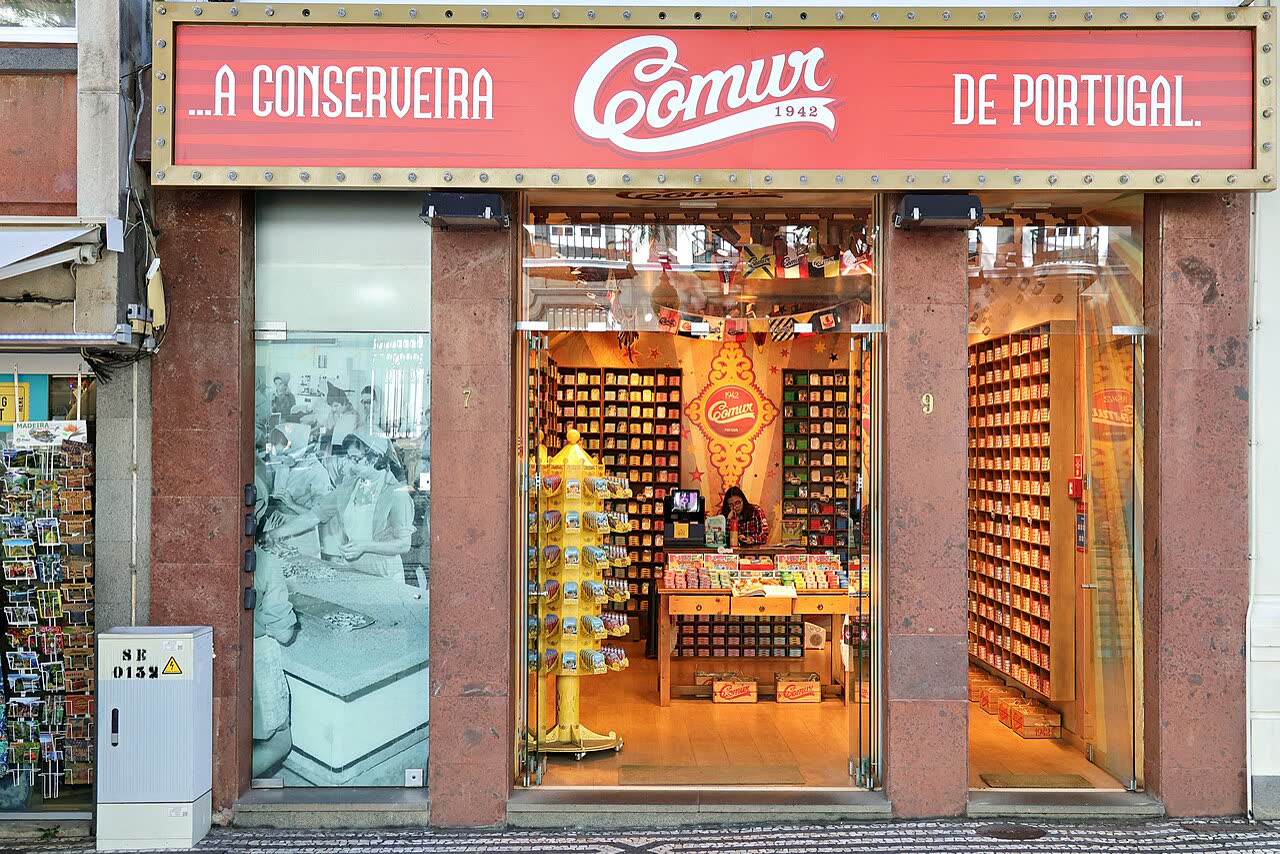
- Specialist shops in Lisbon and Porto sell tins in colourful retro packaging, often arranged like a library. Great for gifts.
- Conserveira de Lisboa: a family shop on Rua dos Bacalhoeiros in the Baixa, open since 1930. It began as a general grocer and has specialised in tinned fish since the 1940s, selling its own brands. Tins are still wrapped in paper at the counter. See shopping in Lisbon.
- Supermarkets (Pingo Doce, Continente) have excellent tins at a fraction of the price.
- Markets and delis for small producers. See Lisbon food markets.
Watch out for the flashy tin shops with fairground-style decor in tourist areas. The tins can be good, but prices are high, so compare before you buy.
Canning towns to visit
- Matosinhos: just north of Porto, still home to working canneries, including Ramirez, which traces its history to 1853. Pinhais, founded in 1920, runs guided tours of its working factory, which you book online in advance. Matosinhos is also famous for grilled fish restaurants. See Matosinhos.
- Portimão: the cannery museum and riverside sardine grills.
- Setúbal: once one of the biggest canning centres, now known for fried cuttlefish and boat trips to see dolphins. See Setúbal and Arrábida.
- Vila Real de Santo António: the Algarve border town where Ramirez began, once a centre of tuna canning. See Vila Real de Santo António.
Taking it home
Tins are light, sealed and travel perfectly in a suitcase. In hand luggage, they may count as liquids because of the oil, so check your airline and airport rules, and check your country’s import rules. A few tins and a bottle of olive oil make a great gift box. See the best souvenirs from Portugal.
FAQ
Can you take Portuguese tinned fish on a plane?
Yes, in checked luggage with no problem. In hand luggage, tins in oil or sauce may be treated as liquids, so check the rules for your airport before you fly.
Where is the cheapest place to buy tinned fish in Portugal?
Supermarkets such as Pingo Doce and Continente. Specialist shops charge more, partly for the packaging and the setting.
What is the best Portuguese tinned fish to try first?
Sardines in olive oil. Then try mackerel, octopus and tuna belly to compare.
How long does tinned fish keep?
Unopened tins usually keep for several years, and some fans age sardines on purpose. Check the best-before date and eat the fish soon after opening.
More: Portuguese seafood and what to eat in Portugal.
See also: grilled sardines.
Prices and details change, so please double-check before you travel. Spotted something out of date? Tell us in the groups.
Still got questions?
Ask 305,000+ travellers and locals in our free Facebook groups.