
Vila Real de Santo Antonio: Pombal's Border Town
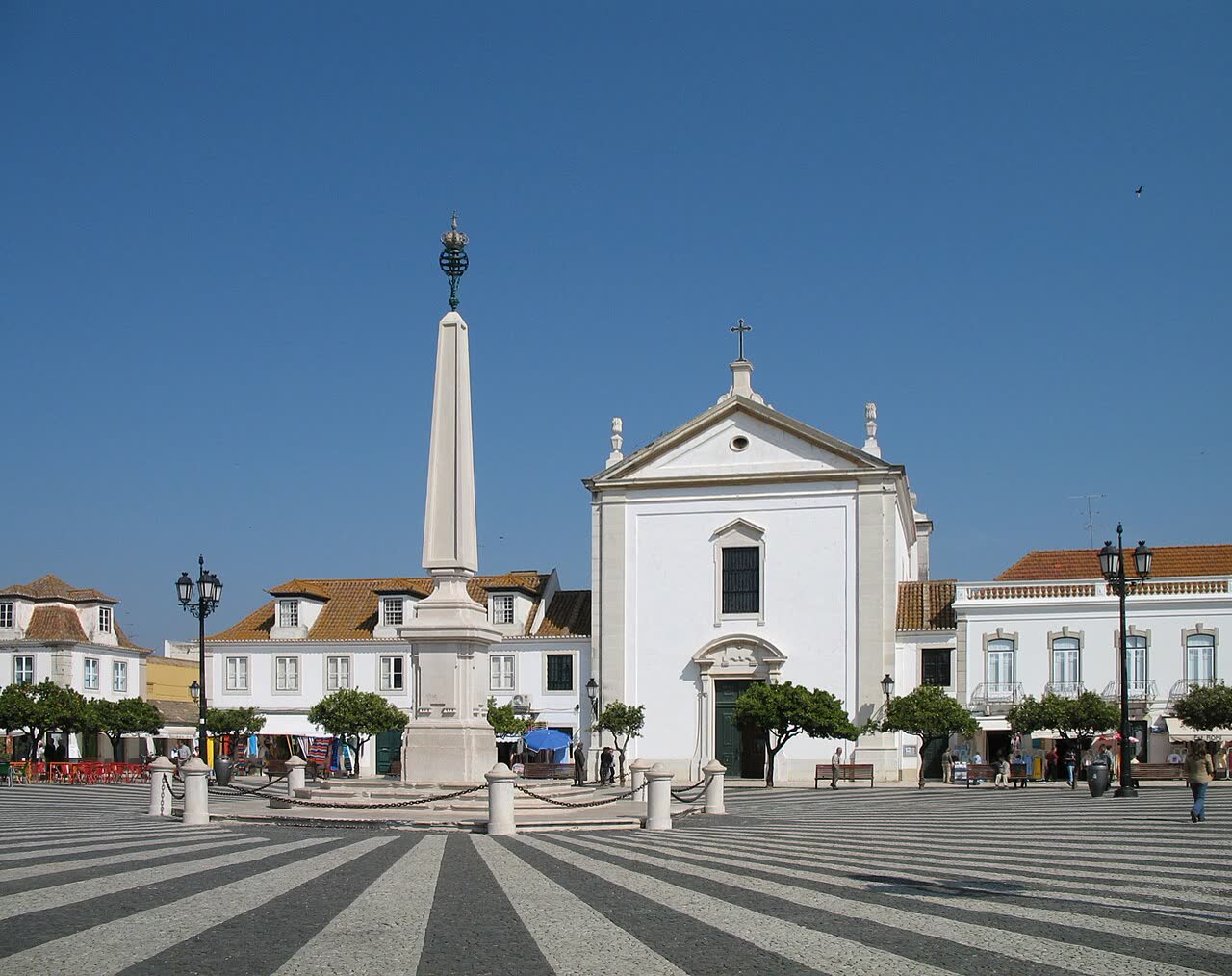
Vila Real de Santo António sits on the Guadiana river at the very eastern edge of the Algarve, facing Spain. It was rebuilt in the 18th century on a neat grid plan by the Marquis of Pombal, the same planner behind Lisbon’s Baixa, and it has an elegant central square paved in black and white stone.
Quick answer: VRSA is about 50 minutes east of Faro and the end of the Algarve railway line. Stroll the grid streets to the Praça Marquês de Pombal, walk the riverside, and take the little ferry across the Guadiana to Ayamonte in Spain. The beaches of Monte Gordo are nearby. See places to stay in VRSA.

Why go
VRSA, as everyone calls it, is not a typical Algarve beach town. The Marquis of Pombal ordered it built in 1774, on the site of an older settlement, mainly to strengthen Portugal’s presence across the river from Spanish Ayamonte and to control the fishing trade. Builders put it up in about two years, using the same ideas as Lisbon’s Baixa after the 1755 earthquake. The result is a calm, orderly town of straight streets and low, matching buildings. Add a river crossing to Spain and some of the Algarve’s longest beaches a short drive away, and it makes an easy, interesting day out.
Things to do
- Praça Marquês de Pombal: the main square with a radiating mosaic pavement in black and white stone, an obelisk in the middle and low white buildings all around. Sit at a café terrace and take it in. Allow 20 to 30 minutes.
- The grid streets: Pombaline architecture and shops selling towels and linens. Spanish visitors have crossed the river to shop here for decades, and the household linen shops are still part of the town’s character.
- The riverside: a long promenade by the marina, with views across to Spain. It is a pleasant walk in the early evening.
- The ferry to Ayamonte: a short crossing of about 15 minutes for tapas in Spain. Tickets are sold at the quay and have cost about €2.50 each way in recent years. Remember that Spain is an hour ahead, so check the last return boat in local time. See ferries in Portugal.
- Centro Cultural António Aleixo: the town’s old market hall, turned into an arts centre in the late 1990s. It is named after the popular poet António Aleixo, who was born in VRSA in 1899, and hosts exhibitions and shows.
- The lighthouse: the 46-metre lighthouse near the river mouth has worked since 1923. Like many Portuguese lighthouses, it usually opens for free visits on Wednesday afternoons. Expect more than 200 steps, and check times before you go.
- The beaches: the pine woods of the Mata Nacional das Dunas Litorais separate the town from the sea, and long sandy beaches run west to Monte Gordo. See Monte Gordo.
- Cycling: VRSA is the eastern end of the Ecovia do Litoral, the signed cycle route along the Algarve coast. The flat stretch through the pines to Monte Gordo makes an easy ride.
Getting there
- By train: VRSA is the eastern end of the Algarve line, which has been fully electric since July 2026. CP regional trains from Faro take about 1 hour 10 minutes and run roughly every one to two hours. They also stop at Tavira. See the Portugal train guide.
- By bus: regional Vamus Algarve buses link VRSA with Monte Gordo, Tavira and Faro, and long-distance coaches run to Lisbon.
- By car: take the A22 east from Faro, about 50 minutes. The A22 has been toll-free since January 2025. There is paid and free parking around the edge of the centre and near the riverside.
- From Spain: drive over the Guadiana road bridge a few kilometres north of town, or come over on the passenger ferry from Ayamonte.
How long to spend
Half a day covers the town. A full day lets you add Spain or the beach. A good one-day plan:
- Morning: coffee in the main square, then a wander through the grid streets.
- Late morning: walk the riverside and catch the ferry to Ayamonte.
- Lunch: tapas in Ayamonte’s old centre, then the ferry back.
- Afternoon: a swim at Monte Gordo, or a short drive north to Castro Marim’s castle.
Food
- Tuna: tuna fishing and canning shaped the town in the 19th and 20th centuries, and tuna dishes are still on many menus.
- Muxama and estupeta: two old tuna specialities of the eastern Algarve. Muxama is salted, air-dried tuna loin sliced thin, a bit like ham. Estupeta is salted tuna, often served as a cold dish with tomato, pepper and onion.
- Grilled fish and seafood: sardines in summer, plus clams and prawns.
- Dom Rodrigos and almond sweets: classic Algarve sweets, made with egg yolk and almonds. See Portuguese desserts.
When to go
- Spring and autumn: warm, quiet and good for walking the town.
- May: the town’s 18th-century history festival fills the streets with costumes, markets and re-enactments (15 to 17 May in 2026). Check dates each year.
- Summer: busy with beachgoers from both sides of the border.
- Winter: mild and peaceful, though some beach businesses close. At Christmas, the cultural centre usually hosts a very large nativity scene.
Nearby
- Castro Marim: a castle and salt marshes with flamingos, a few minutes north. See wildlife in Portugal.
- Cacela Velha: a tiny clifftop village over the lagoon, about 15 minutes west. See Cacela Velha.
- The Guadiana valley: see Mértola.
Tips
- ID: carry your passport or ID card on the ferry to Spain.
- Time zone: set a reminder for the last ferry back, as the hour difference catches people out.
- Shopping: some small shops close for lunch and on Sundays, so check hours if you plan to buy linens.
FAQ
How do you get from VRSA to Ayamonte?
Take the passenger ferry from the riverside quay. The crossing takes about 15 minutes, and Ayamonte’s centre is a short walk from where it lands.
Can you walk or cycle over the bridge to Spain?
No. The Guadiana bridge carries a motorway and is open to vehicles only, so on foot or by bike you need the ferry.
Does the train go on to Spain?
No. VRSA is the end of the Algarve line, and there is no rail link across the Guadiana. For Seville, take a bus or drive. See a Seville day trip from the Algarve.
Is VRSA worth visiting?
Yes, for half a day or a full day. The planned 18th-century centre is unlike any other Algarve town, and it’s the easiest jumping-off point for Ayamonte.
More: getting around the Algarve and the eastern Algarve.
Some links in this guide are affiliate or referral links (GetYourGuide, Booking.com, Discover Cars, Welcome Pickups, Airalo, Yesim, Saily, Tiqets, Radical Storage, EKTA, AirHelp, Uber). If you book or sign up through them we may earn a small commission or ride credit at no extra cost to you. It helps keep our groups and this site free.
Still got questions?
Ask 305,000+ travellers and locals in our free Facebook groups.