
Trip guides / Food and drink
Portuguese Sardines: When They Are in Season and How to Eat Them
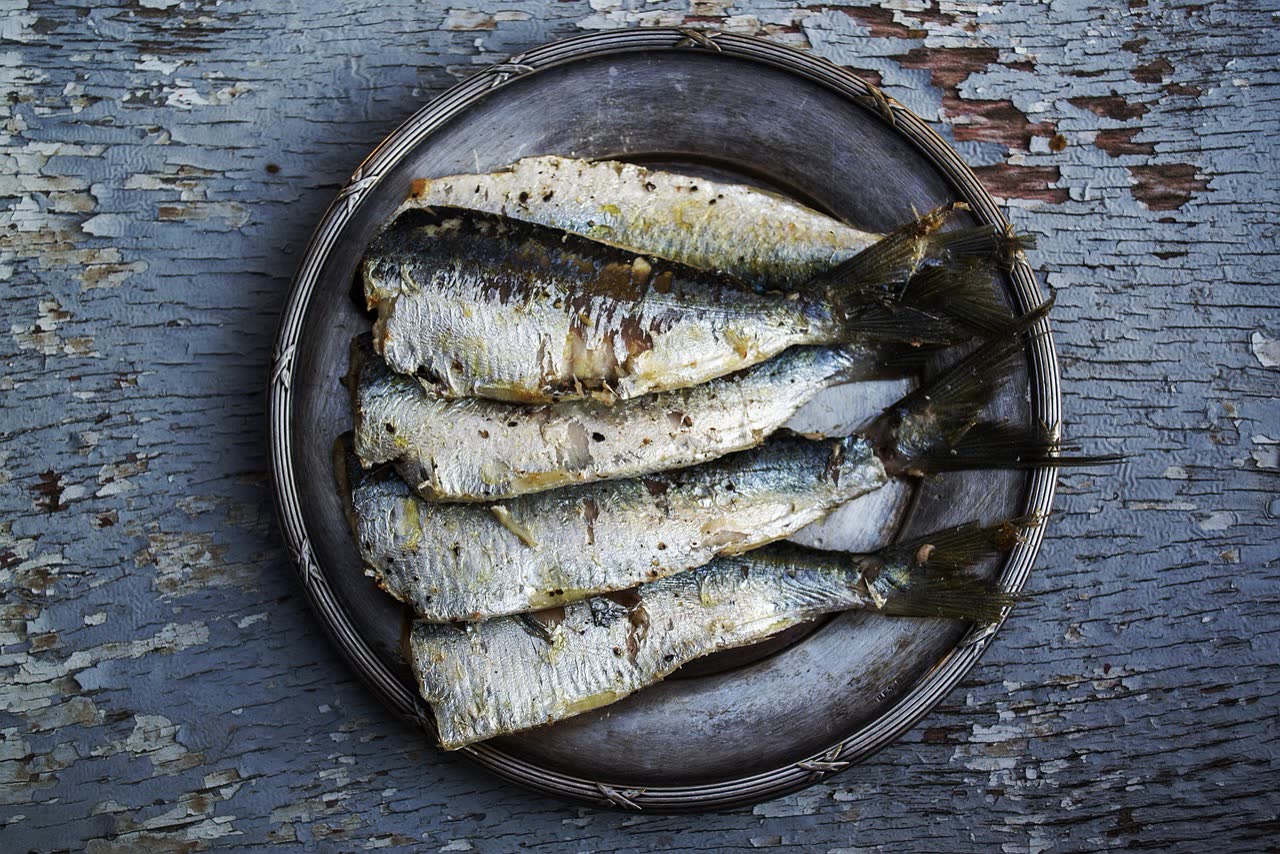
Grilled sardines are the taste of a Portuguese summer. The smell of sardines on charcoal fills the streets during the June festivals, and the fish are at their best from early summer into autumn. Here’s when and how to eat them, and where to find the best.
Quick answer: eat grilled sardines in season, roughly June to September, when they’re plump and oily. They’re traditionally served on a slice of bread, with boiled potatoes, roasted peppers and salad. Out of season, try Portugal’s excellent tinned sardines.
Why sardines matter in Portugal
Sardines have fed Portugal’s coastal towns for centuries. They were cheap, plentiful and easy to cook on a small grill outside the front door, and that habit never went away. Today sardinhas assadas (grilled sardines) are a symbol of summer, of the June saints’ festivals and of Lisbon itself. You’ll even see ceramic and painted sardines sold as souvenirs all over the city.
Each year Lisbon’s festival organisers also pick new sardine designs from a public competition, and the colourful results appear on posters, lamp posts and merchandise around the city in June.
When to eat them
Sardines are best in summer, when they’ve fattened up, and they become the star of the Santo António festival in Lisbon (12 to 13 June) and São João in Porto (23 to 24 June). Fishing is restricted at certain times of year to protect stocks. See Santo António and São João.
- The fishing season: Portugal and Spain manage the Iberian sardine stock together and share a catch limit, and fishing usually stops over winter. In 2026 the fleet started again on 4 May, with daily landing limits for each boat.
- Early in the season: May sardines are often smaller and leaner. An old Portuguese saying claims that by São João (24 June) the sardine drips its oil onto the bread.
- Peak months: June to August, with good fish usually into September.
- Winter: fresh sardines on a menu may be frozen or imported. Ask, or order tinned sardines instead.
How they’re cooked
The classic method is simple. The fish are covered in coarse sea salt, left for a short while, then grilled whole over hot charcoal for a few minutes on each side until the skin blisters and chars. Nothing else is added. In homes, many families still grill them on a small clay or metal barbecue on the balcony or in the street, which is why whole neighbourhoods smell of sardines on festival nights.
You’ll occasionally see other versions too, such as fried sardines, sardines in escabeche (a vinegar marinade), or sardine pâté served as a starter with bread.
How to eat them
- On bread: place a sardine on a slice of bread to soak up the juices, then eat the bread too.
- Whole: locals eat around the bones, and some eat the skin. Pull the fillets off the spine with your fingers or a fork.
- The head and guts: sardines are usually grilled whole and not gutted. Most people leave the head and the dark belly, but some locals eat everything.
- Sides: boiled potatoes, salad with roasted peppers, and a cold beer or vinho verde. See vinho verde.
- Portions: a plate in a tasca usually comes with five or six sardines. At festivals, the classic street snack is a single sardine on bread.
Where to eat them
- Festival grills in June in Lisbon and Porto. In Lisbon, head to Alfama, Mouraria and Bica, where street grills and long shared tables fill every square.
- Matosinhos near Porto, famous for its fish grills. See Matosinhos.
- Portimão in the Algarve, with its riverside sardine restaurants. Its Sardine Festival runs on the riverfront in early August (4 to 9 August in 2026). See Portimão.
- Peniche and Nazaré: working fishing towns on the Silver Coast where grilled fish is everyday food. See Peniche.
- Local tascas everywhere in summer. Look for a charcoal grill on the pavement and a chalkboard that says sardinhas.
The festivals in more detail
In Lisbon, the night of 12 June is the big one, when the old neighbourhoods fill with music, paper decorations, street grills and paper cups of beer or sangria. In Porto, the São João party runs through the night of 23 June, with grilled sardines, basil pots and fireworks over the river. Portimão’s Sardine Festival in August opens with a re-enactment of a fish landing at the quay and is mainly about eating, with concerts in the evening.
Ordering tips
- Look for the grill: the best sardines are cooked over charcoal, not on a flat plate in the kitchen.
- Check the price: sardines are sometimes sold by the plate and sometimes by weight or by the dozen. Ask if it isn’t clear.
- Bring napkins: eating sardines is a messy job, and that’s part of the fun.
- Not a fan of bones? Try sardine pâté or tinned fillets, which are boneless.
- Useful words: sardinhas assadas (grilled sardines), batatas cozidas (boiled potatoes) and salada mista (mixed salad). See Portuguese phrases.
Tinned sardines
Portugal’s canneries produce beautiful tins of sardines in olive oil, with lemon, chilli or tomato. They’re a great souvenir. See Portuguese tinned fish.
Canning took off in Portugal in the late 1800s, and towns like Matosinhos, Setúbal, Portimão and Olhão once had dozens of factories. Only a few remain, but tins are now a proper food culture. Some bars serve them with bread and wine, and shops sell vintage-style tins, sometimes with the year printed on them. Tins travel well in your luggage, and many fans say good ones improve with age.
Airport security staff sometimes treat food in oil or sauce as a liquid, so packing tins in your checked bag is the safest choice.
FAQ
When is sardine season in Portugal?
Fresh sardines are at their best from June to September. Fishing usually stops over winter and reopens in spring, which in 2026 was on 4 May.
Do you eat the bones in Portuguese sardines?
Most people pull the fillets off the spine and leave the bones, head and belly. Some locals eat almost everything, especially with small, well-grilled fish.
Where is the best place to eat sardines in Portugal?
The June festivals in Lisbon and Porto, the fish grills of Matosinhos and the riverside restaurants of Portimão are the classic choices. In summer, almost any tasca with a charcoal grill outside will do.
Are Portuguese tinned sardines a good souvenir?
Yes. They’re cheap, keep for years and come in beautifully designed tins. To be safe, pack them in checked luggage.
More: the Portuguese seafood guide and what to eat in Portugal.
See also: what to eat in the Algarve.
Prices and details change, so please double-check before you travel. Spotted something out of date? Tell us in the groups.
Still got questions?
Ask 305,000+ travellers and locals in our free Facebook groups.