
Lisbon Travel Tips: 40 Things to Know Before You Go (2026)
Lisbon rewards a little local knowledge. The hills are steep, several famous lifts are shut, and the best-value tickets and meals are rarely the obvious ones. These 40 quick tips are about the city itself; for country-wide advice, see things to know before visiting Portugal and the mistakes tourists make in Portugal.
Quick answer: check the fixed airport taxi fare for your zone (€16 to €23) before you get in. Buy one navegante card each and load zapping credit (€1.72 a ride) rather than paying €3.30 on the tram. Plan around the closed Santa Justa Lift and funiculars with the Graça funicular, buses 737 and 734 and the free metro escalators to Chiado. Keep Monday for Sintra, as Jerónimos and Belém Tower shut that day. And eat your main meal at lunch, a street or two away from Rua Augusta.

Getting in and around
- Check the airport taxi fare first. Since 15 October 2026, taxis in the airport scheme charge fixed fares into Lisbon, luggage included: €16 or €19 on weekdays from 7am to 10pm, and €20 or €23 at night, at weekends and on public holidays. The Baixa, Alfama, Chiado and Belém are in the dearer zone, so confirm the price before you get in. See Lisbon airport to the city centre.
- Terminal 2 is for departures only. Every flight lands at Terminal 1, where the metro, the taxi rank and the ride-app pick-up are. Terminal 2 handles some low-cost departures and has no metro, so take the metro to Terminal 1 and the free shuttle bus across, allowing an extra 10 to 15 minutes. See Lisbon Airport Terminal 2.
- The metro won’t get you to a dawn flight. It runs from about 6:30am to 1am. For an early departure, book a ride the night before, sleep near the airport or pre-book a fixed-price airport transfer.
- Get one navegante card each. The green card costs €0.50 at metro machines, and two people can’t share one on the same journey. Each card holds one ticket type at a time, so zapping credit, a 24-hour pass or singles, not a mix. Don’t bend it, as the paper cards can stop working. See Lisbon public transport.
- Know the fares before you tap. Zapping costs €1.72 a ride, a single ticket €1.90, and a contactless bank card at the metro gates €1.92. A tram ticket bought on board is €3.30. The €7.25 24-hour pass starts from your first tap and pays off at about five rides a day.
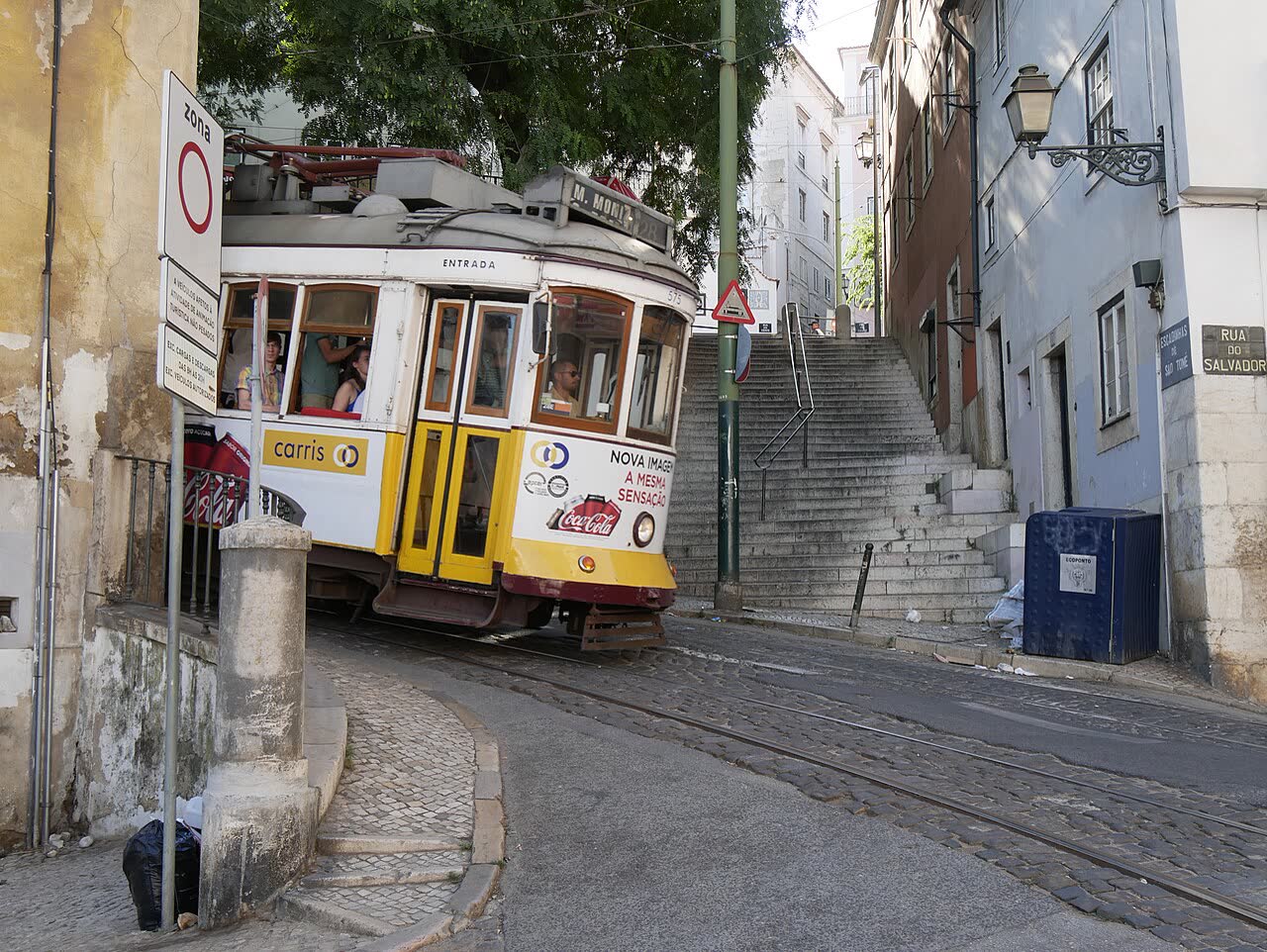
- Tram 28 isn’t the only yellow tram. Tram 12 is a short clockwise loop round the castle hill, tram 24 climbs from Chiado through Príncipe Real, and tram 25 runs through Santos, Lapa and Estrela on weekdays only. All three are calmer than tram 28. See the Lisbon trams guide.
- Take the train to Belém. Tram 15 takes about 25 minutes and is packed in summer. The Cascais-line train from Cais do Sodré reaches Belém in about 7 minutes, but check that yours stops there, as some fast trains skip it. See Belém.
- Ride apps have no-pickup zones. Uber and Bolt can’t collect you on central parts of Avenida da Liberdade, Rua do Ouro or Rua de Belém, so walk to the meeting point the app suggests. Surge pricing has had no legal cap since 1 September 2026, so compare both apps. See is Lisbon safe?
Hills, shoes and weather
- Don’t plan around the old lifts. The Santa Justa Lift and the Glória, Bica and Lavra funiculars have been closed since the Glória accident in September 2025, and Glória isn’t expected back before about 2029. Photograph Santa Justa from Rua do Ouro instead. See the Santa Justa Lift.
- Use the Graça funicular and the free escalators. The modern Graça funicular reopened on 30 April 2026 and runs daily from about 7am to 9pm, from Rua dos Lagares in Mouraria up to the Miradouro da Graça. It takes a navegante card, or €4.30 on board for two trips. Inside Baixa-Chiado metro station, free escalators carry you up to Chiado. See Graça.
- Let a bus do the climb. Bus 737 runs from Praça da Figueira up to São Jorge Castle, and bus 734 from Martim Moniz to Graça. The small electric 51E loops from Restauradores up to Largo do Carmo and past São Pedro de Alcântara.
- Walk the viewpoints downhill. Start at Senhora do Monte, the highest, then drop to the Graça viewpoint, Portas do Sol and Santa Luzia: about 2km and two hours with stops. For sunset, arrive 30 to 45 minutes early. See the best Lisbon viewpoints.
- Pack for indoors as well as out. Wear shoes with grip in every season, as the polished stone pavements are slippery after rain. November and December are the wettest months, and many buildings aren’t well heated, so bring a warm layer. In December the sun sets around 5:15 to 5:30pm, so start early.
- Check the calendar before you book. Prices jump around the Santo António festival in June and during the Web Summit week in November. The night of 12 June is the loudest, and 13 June is a Lisbon public holiday, so skip an Alfama room that night if you want sleep. See the best time to visit Lisbon.
Money and paying
- Budget for the €4 tourist tax. Lisbon charges €4 per person per night for guests aged 13 and over, for up to seven nights. It is often collected on arrival, even if you prepaid the room. See Portugal’s tourist tax.
- Skip the Euronet machines in the Baixa. The yellow and blue machines on tourist streets and at the airport commonly charge €5 to €8 a withdrawal. Use a bank-run Multibanco machine, and always choose to pay in euros. See money in Portugal.
- Send back the couvert if you don’t want it. Bread, olives or cheese placed on the table are charged if you eat them. Say não, obrigado and they go back, as an untouched couvert can’t be charged. See the couvert in Portugal.
- Free museum days aren’t for visitors. Free entry days at national museums and monuments are for residents of Portugal only. The Gulbenkian is free for everyone on Sundays from 2pm, and its garden is free every day. See Lisbon on a budget.
Eating and drinking
- Make lunch the main meal. The prato do dia (dish of the day), chalked up outside many tascas, often costs around €10 to €15 with a drink. Look for a handwritten menu, paper tablecloths and office workers queuing at 1pm.
- Walk two streets off the main squares. Photo menus and staff calling you in on Rua Augusta and around Rossio are a cue to keep walking. Ask the price per kilo before fish or shellfish is cooked. A Lisbon food tour is an easy way to find good tascas. See the best restaurants in Lisbon.
- Check closing days. Many traditional restaurants shut on Sunday, Monday or both, and some tascas open on weekdays only. Cervejaria Ramiro closes on Mondays and O Trevo on Sundays. The Time Out Market opens daily, but avoid its 12:30 to 2:30pm rush. See the Time Out Market.
- Ask for warm natas. A pastel de nata costs about €1.30 to €1.60 at the best-known bakeries; ask “Tem quentinhos?” for warm ones. At Pastéis de Belém, skip the takeaway queue and walk inside for a table. See the best pastel de nata in Lisbon.
- Eat a bifana standing up. The garlicky pork roll is a counter snack, best with mustard and an imperial (a small draught beer). O Trevo in Chiado opens Monday to Saturday, and As Bifanas do Afonso on Rua da Madalena charges about €2.50 to €3.50 and usually opens on weekdays only. See what to eat in Lisbon.
- Order ginjinha com elas or sem elas. The sour-cherry liqueur comes with or without the cherries. A Ginjinha on Largo de São Domingos, by Rossio, charges about €1.50 to €2 a glass, and it’s strong, usually around 18 to 24%. See ginjinha.
- Buy late drinks early. Since 14 February 2026, Lisbon shops can’t sell alcohol to drink outside after 11pm from Sunday to Thursday, or after midnight on Fridays, Saturdays and the eves of public holidays.
Sights, tickets and queues
- Never plan Belém for a Monday. Jerónimos, Belém Tower and the Coach Museum close on Mondays, and the MAAT on Tuesdays. Wednesday to Saturday is the best time to go, as weekends are the busiest.
- Book Belém Tower a day ahead. Since reopening in May 2026, the tower (€15) admits up to 60 people every half hour, about 900 a day. Book it at least 24 hours ahead and the Jerónimos cloister (€18) a few days ahead; the monastery church is free. See Belém Tower.
- Do the Lisboa Card sums. The card costs €31, €51 or €62 for 24, 48 or 72 hours and pays off with two or three paid sights a day. Don’t start it on a Monday, and collect the physical card first, as Jerónimos and Belém Tower slots are booked with its number. See is the Lisboa Card worth it?
- Visit the castle late in summer. São Jorge Castle (€17) stays open until 9pm from March to October and 6pm from November to February, so summer visitors can watch sunset from the walls. Under-12s go free, and 13 to 25-year-olds pay half. See São Jorge Castle.
- Check which museums are open. The National Tile Museum is closed for works with no reopening date. The National Museum of Ancient Art reopens partly on 21 November 2026, with free entry until 1 December. See Lisbon museums.
Safety and scams
- Ignore the “hashish?” sellers. In Rossio, the Baixa and Bairro Alto, men mutter offers of drugs to passers-by. What they sell is usually pressed bay leaves or flour, so don’t reply; keep walking. See Lisbon tourist traps.
- Wear your bag in front on tram 28 and at sunset. Pickpockets work tram 28, tram 15, the airport metro, Rua Augusta and busy miradouros at sunset, often in small groups. Use a zipped crossbody bag and keep your phone off café tables. See is Lisbon safe?
- Know where the tourist police are. Lisbon’s tourist police station (Esquadra de Turismo) is at the cruise terminal by Jardim do Tabaco, below Alfama. Officers speak several languages and can help with theft reports for insurance. In an emergency, call 112.
Day trips
- Take the train to Sintra and book the palaces. Trains from Rossio take about 40 minutes and cost €2.55 for a single, or €2.05 with zapping. Pena (€20 for the Essential Visit) and Quinta da Regaleira (€20) both use timed slots, and Regaleira needs its own booking. Pena and the other Parques de Sintra palaces open on Mondays. See Lisbon to Sintra and Sintra palace tickets.
- Buy the Sintra bus separately. CP’s Train and Bus day ticket is suspended, so pay for the train, then the 434 bus: about €4.55 a single, or €13.50 for a 24-hour pass that also covers the 435 to Regaleira and Monserrate. Board at the station, the first stop, as queues build by mid-morning.
- Sit on the left for Cascais. Trains from Cais do Sodré take about 40 minutes and cost €2.05 with zapping or €2.55 for a single, with sea views on the left. Late in the evening, buses replace trains between Caxias and Cascais, from about 9:50pm on weekdays. Bus 1624 links Cascais and Sintra via Cabo da Roca for a loop. See Lisbon to Cascais.
- Cross the river for ten minutes. Ferries run from Cais do Sodré to Cacilhas in about 10 minutes, with views back over the city, and zapping works on most ferries. From Cacilhas, a bus runs to the Cristo Rei statue.
Local etiquette
- Greet in Portuguese, not Spanish. A bom dia (good morning) or boa tarde (good afternoon), and obrigado (said by men) or obrigada (said by women), go a long way. English is widely spoken.
- Stay silent during fado. When the lights dim, there’s no talking and staff stop serving during songs. Check for a minimum spend before you sit down. The 50-minute Fado in Chiado show (about €23, Monday to Saturday) suits early sleepers and families. See fado in Lisbon.
- Tip in cash, if at all. Rounding up or leaving 5 to 10% for good service is appreciated but not expected, and card machines rarely have a tip option. See tipping in Portugal.
Plan it: get maps and ride apps working the moment you land with a Portugal eSIM, compare places to stay in Lisbon (the flat Baixa suits a first visit; see where to stay in Lisbon), and book Sintra palace tickets with a time slot before you go.
FAQ
How many days do you need in Lisbon?
At least two or three days for the city itself, plus a day for Sintra. Avoid putting Belém on a Monday, when its main sights are closed.
Is Lisbon walkable?
Yes, the centre is compact, but it is hilly. With the Santa Justa Lift and three funiculars closed, mix walking with trams, buses 737 and 734, the Graça funicular and the metro.
What is the cheapest way from Lisbon airport to the centre?
The red metro line: €0.50 for the card plus €1.90 for a single, and 25 to 40 minutes to the centre. Uber and Bolt usually cost €10 to €20 from the P2 car park, and fixed taxi fares run from €16 to €23.
Is tram 28 worth it?
Yes, if you ride it before 9am from Martim Moniz or from the quieter western end at Campo de Ourique. At midday, tram 12, or tram 25 on weekdays, gives a similar ride with fewer people.
Do you need cash in Lisbon?
Only a little. Cards work almost everywhere, and you can tap a bank card at the metro gates, but keep a few coins for small cafés, markets and tips.
More: things to do in Lisbon, first time in Portugal, Porto travel tips and Madeira travel tips.
Some links in this guide are affiliate or referral links (GetYourGuide, Booking.com, Discover Cars, Welcome Pickups, Airalo, Yesim, Saily, Tiqets, Radical Storage, EKTA, AirHelp, Uber). If you book or sign up through them we may earn a small commission or ride credit at no extra cost to you. It helps keep our groups and this site free.
Still got questions?
Ask 305,000+ travellers and locals in our free Facebook groups.