
Ginjinha: Lisbon's Cherry Liqueur and Where to Drink It
Ginjinha (or ginja) is Lisbon’s favourite drink: a sweet, ruby-red liqueur made from sour Morello cherries, knocked back in a tiny glass at a hole-in-the-wall bar, or sipped from an edible chocolate cup in Óbidos. Here’s everything you need to know about ginjinha, and where to try it.
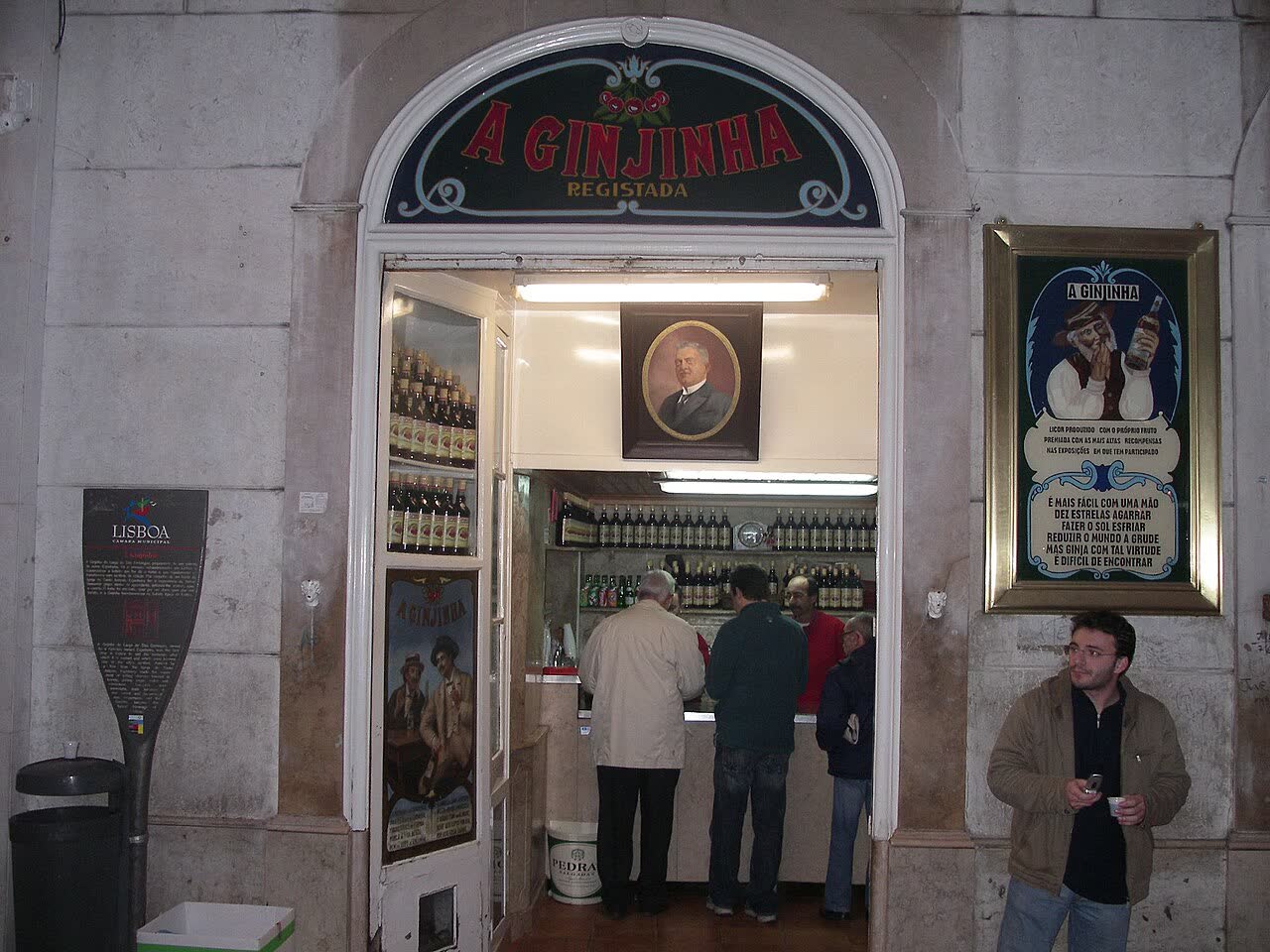
Quick answer: in Lisbon, order a shot at a tiny ginjinha bar near Rossio, com elas (with the cherries) or sem elas (without). In Óbidos, have it in a chocolate cup. It usually costs a euro or two, and it’s strong (around 18–24%).

Why try it
Standing in a Lisbon square with a tiny glass of ginja is one of the simplest and cheapest local experiences you can have. It’s a drink with a long history, a few rules about how to order it, and a strong link to two places: old Lisbon and the Óbidos area.
It takes about five minutes. You walk up to the counter, ask for one, pay, and drink it on the pavement while you watch the square. There are no seats, no menus and very little ceremony, which is a big part of its charm.
What is ginjinha?
Ginja berries (sour cherries) are soaked in aguardente (a grape spirit) with sugar, and sometimes cinnamon or cloves, for months. The result is sweet, warming and fruity, a bit like a cherry brandy but sweeter. “Ginjinha” simply means “little ginja”, and the two names are used for the same drink.
The colour is a deep red, and the drink is thick and syrupy. Every producer has its own recipe, so some taste sharper and fruitier, while others are sweeter with more spice. Homemade versions are common in the countryside, where families make a batch each summer when the cherries are ripe.
A short history
The best-known story links ginjinha to Francisco Espinheira, a Galician who opened a tiny bar on Largo de São Domingos in Lisbon around 1840. He is said to have followed a recipe from a friar at the nearby Church of Santo António. Whether or not every detail is true, the bar is still there, and the drink has been a Lisbon institution ever since. In the Óbidos and Alcobaça area, sour cherries have been grown for centuries, and the local fruit now has protected status as Ginja de Óbidos e Alcobaça.
Where to drink it
Lisbon
- Around Rossio: the most famous ginjinha bars are tiny counters near Rossio and Largo de São Domingos, where locals stand on the street with their glass. Expect a queue of tourists and old regulars alike. A Ginjinha Espinheira on Largo de São Domingos is the classic.
- Alfama: little bars and window counters sell homemade ginja, especially during the June festivals. See Alfama.
- How to order: “uma ginjinha, com elas” (with the cherries) or “sem elas” (without).
A Ginjinha Espinheira is recognised by Lisbon’s “Lojas com História” scheme, which protects the city’s historic shops. It usually opens from morning until late evening, and a glass costs about €1.50 to €2. Largo de São Domingos is a short walk from Rossio metro station, so it’s easy to fit in on a walk through the Baixa. See Mouraria, which starts just behind the square.
Óbidos
The medieval town is famous for ginja de Óbidos, served in little dark chocolate cups that you eat after drinking. You’ll find it on every corner, especially along the main street, Rua Direita. Shops often let you taste before you buy a bottle. See Óbidos.
Óbidos is about an hour’s drive north of Lisbon, and Rede Expressos and other coaches run there from Lisbon. It’s easy to combine with Caldas da Rainha or the beaches of the Silver Coast. See the Silver Coast.
Alcobaça
The nearby monastery town also makes ginja, and pairs well with a visit to the Alcobaça Monastery.
How to drink it like a local
- Size: it comes in a small shot glass. Sip it or drink it in two or three goes.
- Time of day: locals drink it any time, often before lunch or as a digestif after a meal.
- Cherries: if you order “com elas”, eat the cherries at the end. They’re soaked in alcohol.
- Chocolate cup: in Óbidos, drink the ginja first, then eat the cup.
When to go
Ginja is sold all year, but the best atmosphere in Lisbon is during the Santo António festivities in June, when Alfama and Mouraria fill with street parties. See the Santo António festival. In winter, a warming glass after a cold walk makes even more sense.
Óbidos is busiest at weekends and during its big events, such as the Christmas village, Vila Natal, which usually runs from late November to early January. Go on a weekday morning if you want the streets to yourself.
Tips
- Go easy: it’s sweet but strong.
- Mind the stones: the cherries usually still have their stones.
- Cash: the smallest bars may prefer cash, so carry a few coins.
- Take some home: bottles of ginja make great souvenirs. See the best souvenirs.
- Check the label: look for brands from Óbidos or Lisbon producers rather than generic supermarket bottles.
- On a food tour: most Lisbon food tours include a ginjinha stop. See food tours.
- Flying home: bottles over 100ml must go in your checked luggage, unless you buy them after security at the airport.
FAQ
How strong is ginjinha?
Usually around 18–24% alcohol, depending on the producer. That’s stronger than wine but weaker than most spirits.
How much does a ginjinha cost in Lisbon?
Usually a euro or two for a glass at a traditional bar near Rossio. Bottles to take home cost more, depending on the brand and size.
What does “com elas” mean?
It means “with them”, the cherries. Say “com elas” if you want a cherry or two in your glass, or “sem elas” if you don’t.
What is the difference between ginja and ginjinha?
There’s no difference. Ginjinha simply means “little ginja”, and both names refer to the same sour cherry liqueur.
More Portuguese drinks: port, vinho verde and coffee. More Lisbon: Lisbon nightlife.
See also: Baixa and Rossio.
Some links in this guide are affiliate or referral links (GetYourGuide, Booking.com, Discover Cars, Welcome Pickups, Airalo, Yesim, Saily, Tiqets, Radical Storage, EKTA, AirHelp, Uber). If you book or sign up through them we may earn a small commission or ride credit at no extra cost to you. It helps keep our groups and this site free.
Still got questions?
Ask 305,000+ travellers and locals in our free Facebook groups.