
Trip guides / Planning
Couvert in Portugal: Do You Pay for the Bread? (2026)
Sit down in almost any Portuguese restaurant and, before you’ve opened the menu, a waiter may set down bread, butter, olives and perhaps a little cheese or pâté. This is the couvert, and it’s a normal part of eating out in Portugal. It isn’t free, but you only pay for what you eat, and you can send it all back.
Quick answer: the couvert is not free and not compulsory. Under Portuguese law, a restaurant can’t charge for anything you didn’t ask for and didn’t touch, so if you don’t want it, say não, obrigado and it will be taken away. If you eat any of it, expect to pay for what you ate. A simple couvert usually adds a few euros, and its prices must be on the menu.
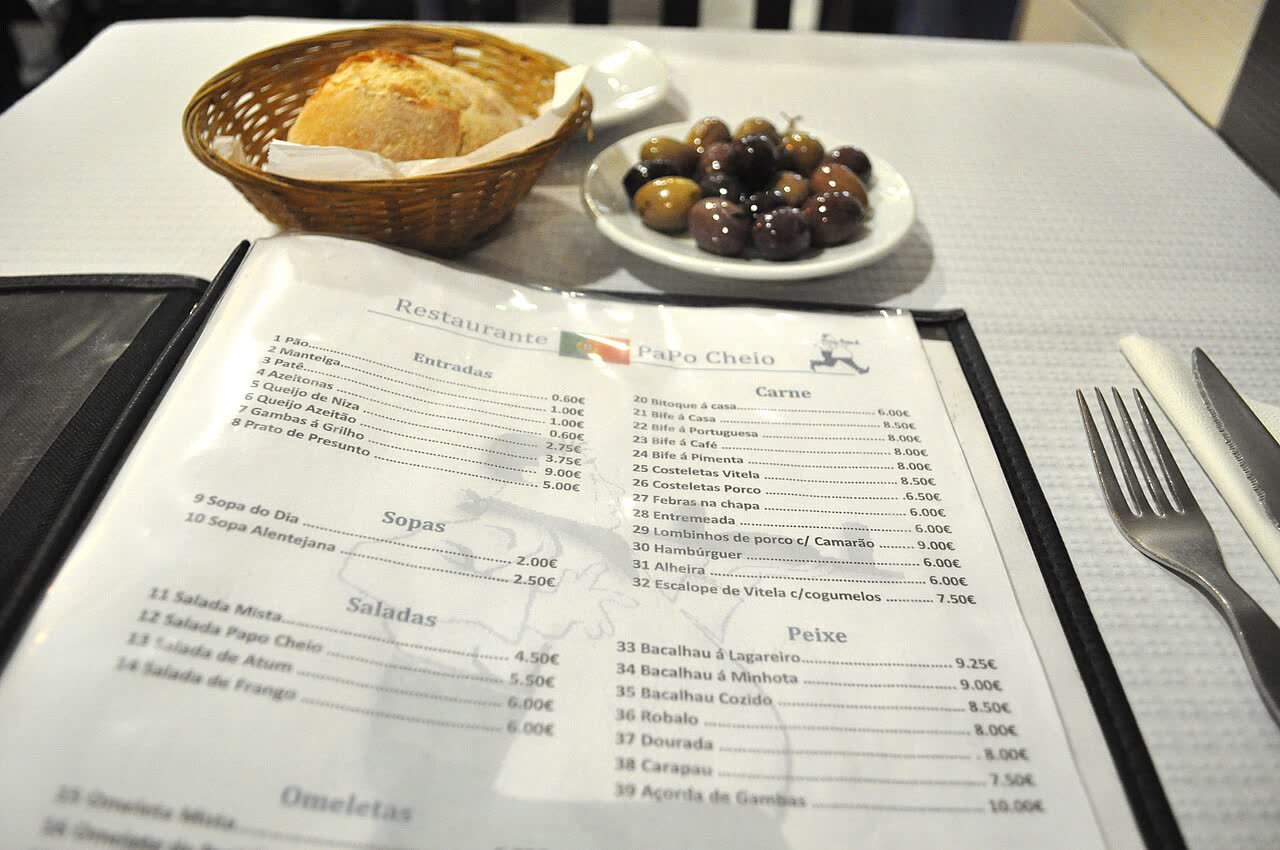

What’s in a couvert
The couvert (also called entradas, or starters) is the small spread put on the table at the start of a meal. Portuguese diners pay for it too: it’s simply how many restaurants work, not a trick aimed at visitors.
- The basics: a basket of bread or rolls, butter pats and a dish of olives.
- Common extras: sardine pâté, marinated carrots or a little cheese. See the Portuguese cheese guide.
- Smarter places: cured ham (presunto), chouriço, goat’s cheese or seafood starters, with prices to match.
What Portuguese law says
The rules are in Article 135 of Portugal’s legal regime for commerce, services and restaurants, approved by Decree-Law 10/2015 and in force since March 2015. The consumer association DECO PROteste repeated the same guidance in 2026.
- Nothing unrequested can be charged: no dish, food or drink, including the couvert, can be charged unless you asked for it or rendered it unusable (inutilizado).
- What “unusable” means: eaten, or handled so it can’t be served to anyone else. Opening a butter pat or unwrapping packaged bread counts.
- Prices on display: restaurants must have a price list at the entrance and inside, written in Portuguese, showing every item, including the couvert. A QR code on its own doesn’t replace a physical menu.
- The line on the menu: the price list must also state the rule. Look for “Nenhum prato, produto alimentar ou bebida, incluindo o couvert, pode ser cobrado se não for solicitado pelo cliente ou por este for inutilizado”, often in small print at the bottom.
The law defines the couvert as starters listed on the menu as couvert and supplied at the customer’s request before the meal. In practice it often arrives unasked, which is exactly why you’re free to send it back.
How to say no politely
Sending the couvert back is completely normal, and nobody takes offence. Do it as soon as it arrives, before anyone at the table starts nibbling. If items are priced separately, you can also keep some, such as the bread, and send back the rest. See Portugal etiquette.
- Não, obrigado / obrigada: no, thank you (obrigado if you’re male, obrigada if you’re female).
- Pode levar, por favor: you can take it away, please.
- Não queremos entradas: we don’t want any starters.
- Só o pão, por favor: just the bread, please.
- Quanto custa? How much is it?
More words for eating out are in Portuguese phrases.
How much it costs in 2026
There’s no official average, and prices vary from place to place. As a rough guide from recent menus and local guides:
- Single items: bread, butter, olives or a pot of sardine pâté often cost from under €1 to about €2 each.
- A simple couvert: bread, butter and olives usually add a few euros, typically around €2 to €5.
- Cheese, ham and seafood: these cost noticeably more, so check the price before you tuck in.
Items may be priced one by one, per basket or as a set per person, so read the couvert section of the menu. See money in Portugal.
What if you eat one olive?
Then expect to pay for the olives. Once something has been eaten or handled, it can’t be served to another table, so the restaurant can charge for it, even if you never asked for it. DECO PROteste’s view is that refusing to pay for something you’ve eaten isn’t fair.
- Priced per item: you should only pay for the items you touched, not the whole spread.
- Priced as a set: touching part of it usually means paying for the set.
- Not sure? Ask what it costs before anyone helps themselves.
Normal or a tourist trap?
Most couverts are honest and cheap. A few signs that something isn’t right:
- Normal: a modest spread of bread, butter and olives, with each item and its price on the menu.
- Worth questioning: a large platter of cheese, ham or prawns that arrives without anyone asking, with no price you can find.
- Not allowed: charging for a couvert you sent back untouched, or adding a fee that doesn’t match anything you were served.
- What to do: politely ask for the charge to be removed. If that fails, a restaurant can’t refuse you the complaints book (Livro de Reclamações), and you can also complain to ASAE, Portugal’s food and economic safety authority.
Reading the bill
Couvert items usually appear as separate lines on the bill. Check them before you pay, and before you work out a tip.
- Words to look for: couvert, pão (bread), manteiga (butter), azeitonas (olives), queijo (cheese), paté and entradas (starters).
- Quantities: make sure the numbers match what you actually ate.
- Charged for something you sent back? Say “Não pedimos isto” (we didn’t order this) or “Pode tirar isto da conta?” (can you take this off the bill?).
- Tap water: restaurants must give diners tap water free of charge in a reusable glass. Ask for água da torneira. Bottled water is charged, and filtered water (água filtrada) can be charged if it’s clearly listed on the menu.
Couvert and tipping
The couvert is food, not a service charge or a seat fee, so it has nothing to do with the tip. Pay for what you ate, then tip if you were happy with the service. Tipping in Portugal is voluntary: around 5 to 10% for good service, or a rounded-up bill in a simple tasca. If a tip has been added to the bill without your agreement, you can refuse to pay it. See tipping in Portugal.
FAQ
Do I have to pay for the bread in Portugal?
Only if you ordered it or eat it. Bread put on the table without being asked for can’t be charged if you leave it untouched, so send it back if you don’t want it.
Is the couvert mandatory in Portugal?
No. You can refuse all of it, or keep some items and send back the rest. The law treats the couvert as something supplied at your request, not something you have to accept.
Can a restaurant charge for a couvert I didn’t touch?
No. Under Article 135 of the regime approved by Decree-Law 10/2015, nothing, including the couvert, can be charged unless you asked for it or ate or handled it. Ask for it to be taken off the bill.
Is the couvert a scam aimed at tourists?
No. It’s a normal custom, and locals pay for it too. Just check the prices on the menu, especially for cheese, ham or seafood starters.
Should I tip on top of the couvert?
The couvert and the tip are separate. Pay for the couvert items you ate, then leave a tip if you were happy with the service.
More: what to eat in Portugal, the best restaurants in Lisbon and Portugal on a budget.
Prices and details change, so please double-check before you travel. Spotted something out of date? Tell us in the groups.
Still got questions?
Ask 305,000+ travellers and locals in our free Facebook groups.