
Caldas de Monchique: The Algarve's Spa Village
Caldas de Monchique is a tiny historic spa village tucked into a wooded valley in the Monchique hills, above the Algarve coast. With its old spa buildings, shady square, spring water and cool air, it feels a world away from the beaches. It’s an easy stop on the way up to Fóia.
Quick answer: Caldas de Monchique is about 25 minutes north of Portimão, just below Monchique town. Stroll the square and the woodland paths, taste the spring water, book a spa treatment, and continue up to Fóia, the Algarve’s highest point, for the views. Try medronho, the local fruit brandy.

Why go
People have come here for the water for around 2,000 years. The Romans used the springs to treat skin and stomach complaints, and in the 19th century the village became a fashionable retreat for Portuguese and Spanish high society. Today it is the only recognised thermal spa in the Algarve. The whole village is small enough to see in an hour, but the shade, the sound of the stream and the cooler air make it a lovely place to slow down on a hot day.
The village lies inside the Serra de Monchique, a range of rounded hills that rises behind the coast between Portimão and Lagos. The landscape here is green and steep, with cork oaks, chestnuts and terraces, which makes a real change from the beach resorts below.
Things to do
- The spa: thermal waters used since Roman times, with treatments today. The water is very alkaline, with a pH of about 9.5, often described as the most alkaline in Portugal, and it is also bottled and sold across the country. The spa sits within a small resort that took over the old village buildings, but the spa has been under renovation as part of works expected to run to about 2027, so check what is open for non-guests before you go.
- The village square: historic buildings and cafés under tall trees. Most of the pastel buildings date from the 19th century, when the spa was at its height.
- The spring fountain: fill a bottle or just taste the warm, slightly mineral water.
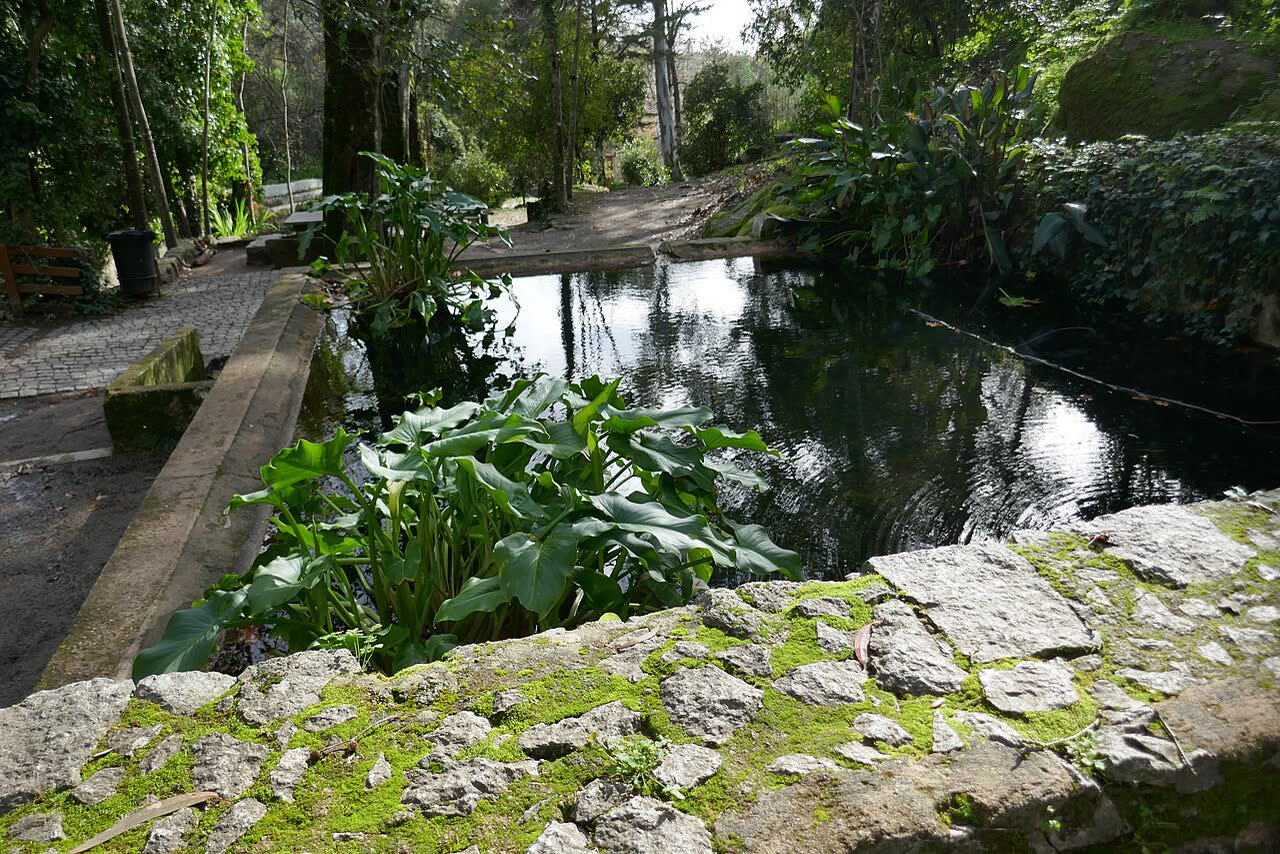
- Woodland walks along the stream, through eucalyptus, cork oak and chestnut. Short paths start near the square and take 20 to 40 minutes.
- Medronho and honey: local specialities. Medronho is a strong brandy made from the fruit of the strawberry tree, which grows wild on these hills. Shops in the village sell it alongside local honey.
- Monchique and Fóia: the hill town and the Algarve’s highest point, at 902 metres. A road climbs all the way to the summit from Monchique, so you can drive up in about 15 minutes. On a clear day you can see the coast from Lagos to Portimão. See Monchique and Silves.
Getting there
- By car: take the N266 north from Portimão towards Monchique. Caldas is signposted off the main road, about 20 km from Portimão and roughly 6 km before Monchique town. The road is winding but easy. There is parking near the village.
- By bus: Vamus Algarve buses run between Portimão and Monchique and stop at Caldas, but services are infrequent. Check current times before you go.
- From further away: allow about 1 hour from Lagos or Albufeira and 1 hour 15 minutes from Faro. The A22 motorway, which you use for most of the way from the east, has been toll-free since January 2025.
How long to spend
An hour or two is enough for the village itself. Add a spa treatment and lunch and it becomes a relaxed half day. For a full day inland, try this route:
- Morning: drive up to Fóia for the views while the air is clear.
- Late morning: walk the steep lanes of Monchique town.
- Lunch: eat in Monchique or Caldas.
- Afternoon: a stroll and spa time in Caldas, then drive on to Silves to see the red sandstone castle.
Food
The Monchique hills are known for hearty mountain food rather than seafood. Look out for:
- Smoked sausages: the hills are known for chouriço, farinheira and other cured pork, often grilled or added to stews.
- Hearty stews: bean, cabbage and pork dishes that suit the cooler climate.
- Medronho and honey: often sold together, and sometimes mixed into a sweet drink called melosa.
- Chicken piri-piri: an Algarve favourite you will find on menus all over the region. See piri-piri chicken in the Algarve.
When to go
- Summer: the shade and altitude make it noticeably cooler than the coast.
- Spring: wildflowers and green hills. Monchique’s traditional sausage fair, the Feira dos Enchidos, is usually held over a weekend in early March, with local producers, music and free entry. Check the dates for the year you travel.
- Winter: quiet and misty, and a spa visit is a good rainy-day plan. See the Algarve in winter.
Tips
- Cooler: a good escape on very hot days, but bring a layer as it can feel chilly in the shade.
- Car: the easiest way to get there.
- Wildfires: the Monchique hills have suffered serious fires, including a major one in August 2018 that briefly closed the spa. In summer, follow any local warnings and never light fires or throw cigarettes.
- Combine with Silves on a day trip inland. See the best day trips from the Algarve.
- From the coast: if you are staying in Portimão or Praia da Rocha, Caldas makes an easy morning out. See things to do in Portimão.
FAQ
Can you use the spa without staying at the hotel?
Usually, yes. Non-guests can normally book treatments and spa time, but places are limited, so contact the resort ahead and check what is on offer.
Can you drink the spring water?
Yes. People fill bottles at the public fountain, and the same water is bottled and sold across Portugal. It is very alkaline and tastes slightly mineral.
How far is Caldas de Monchique from Portimão?
About 20 km, or roughly 25 minutes by car on the N266. Monchique town is about 6 km further up the same road.
Is Caldas de Monchique worth a visit?
Yes, as a short stop combined with Monchique, Fóia or Silves. On its own it only takes an hour or two, unless you book a spa treatment.
More: the best Algarve villages and the best spa hotels.
See also: thermal spas in Portugal.
Prices and details change, so please double-check before you travel. Spotted something out of date? Tell us in the groups.
Still got questions?
Ask 305,000+ travellers and locals in our free Facebook groups.