
Trip guides / Food and drink
Portuguese Breakfast: What Locals Eat and What to Order
Breakfast in Portugal is simple and quick. Most locals have a coffee and a pastry or toast at the counter of their local pastelaria on the way to work. Here’s what Portuguese people eat for breakfast, how to order, and where to find a bigger brunch.
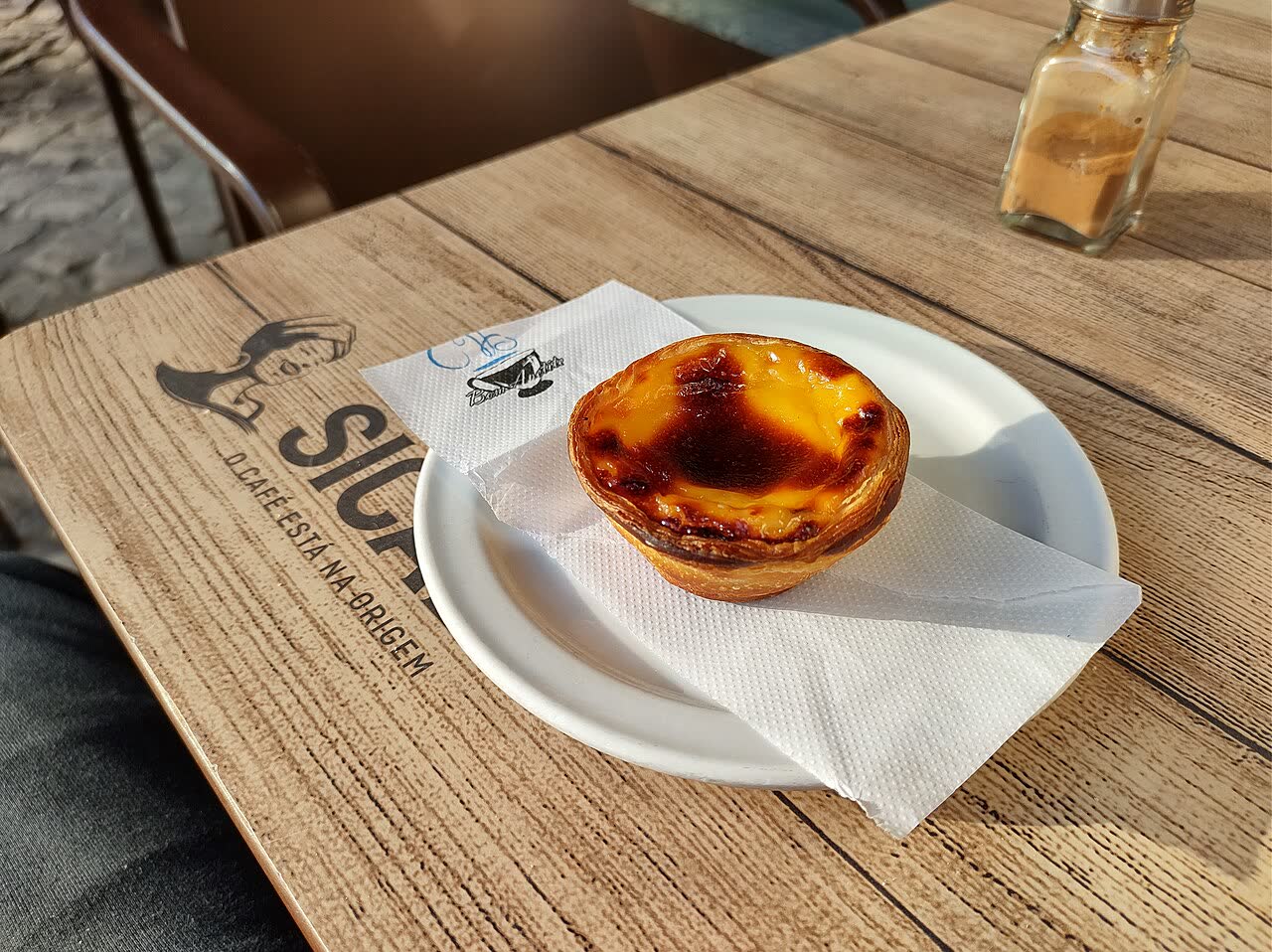
Quick answer: a typical Portuguese breakfast is a coffee (a bica or a galão) with a pastry, such as a pastel de nata or a croissant, or torrada (thick buttered toast). A tosta mista (toasted ham and cheese) is a popular savoury choice. Hotels usually serve a buffet, and brunch cafés are now common in Lisbon and Porto.

How breakfast works in Portugal
Breakfast is called pequeno-almoço, which means “small lunch”. It is light, because lunch is the main meal of the day. Many people eat standing up at a café counter in five minutes, then come back mid-morning for another coffee. Don’t expect a big cooked breakfast outside hotels and brunch places. Eggs and bacon are not part of the local habit.
Coffee breaks carry on through the day. A mid-morning coffee with a small cake is normal, and so is an espresso straight after lunch. If you see office workers crowding a café counter at 10.30am, that’s why.
What to order
- Coffee: a bica (espresso in Lisbon), a galão (milky coffee in a tall glass) or a meia de leite (half coffee, half milk). In Porto, an espresso is often called a cimbalino. See the Portuguese coffee guide.
- Torrada: thick slices of toast, generously buttered. It usually comes cut into strips and is meant to be eaten with your fingers.
- Tosta mista: a toasted ham and cheese sandwich.
- Pastries: pastel de nata, croissant (often sweet in Portugal), bola de Berlim and queijadas. See Portuguese desserts.
- Fresh juice: fresh orange juice (sumo de laranja natural).
- Pão com manteiga: a simple bread roll with butter.
- Pão com chouriço: bread baked with slices of smoked sausage inside, a good savoury option when you can find it fresh.
More pastries to look for
- Bolo de arroz: a light rice-flour muffin in a paper case, a classic with a galão.
- Pão de Deus: a soft sweet roll with a coconut topping, sometimes filled with ham and cheese.
- Croissant misto: a sweet croissant filled with ham and cheese, an odd-sounding but very popular mix.
- Palmier: a crisp, sugary puff pastry, sometimes filled with egg cream.
Coffee words that help
- Abatanado: a longer black coffee, the nearest thing to an Americano.
- Pingado: an espresso with a drop of milk.
- Descafeinado: decaf. Ask for “uma bica descafeinada”.
- Chocolate quente: hot chocolate, often thick and rich.
Regional breakfasts
- Lisbon: the home of the pastel de nata. Many cafés bake them through the morning, so ask for one warm with cinnamon on top. See the best pastel de nata in Lisbon.
- Porto and the north: heartier bread, cimbalino coffee and, in some cafés, a bola de carne (a bread roll baked with meat).
- Madeira: bolo do caco, a round flatbread cooked on a stone slab, served warm with garlic butter or as a sandwich. See the Madeira travel guide.
- Alentejo: good bread is the star, often with local cheese, olive oil or presunto (cured ham).
How to order
- Bom dia: say “good morning” when you walk in.
- Point: most pastries sit in a glass case, so you can simply point and say “um destes, por favor” (one of these, please).
- Coffee first: say “uma bica” or “um galão” and add what you want to eat.
- Paying: in many places you pay at the till when you leave. Tell them what you had.
Learn a few more useful words in Portuguese phrases.
The pastelaria
Pastry shops are at the heart of Portuguese daily life. Stand at the counter for a quick coffee and pastry, which is cheaper than sitting at a table in some places. It’s a great way to start the day like a local. Pastelarias open early, often around 7am, and the best pastries sell out by mid-morning. Most also serve light lunches and snacks through the day.
Look for places busy with locals rather than tourists, a glass case full of fresh pastries and a menu board with prices. Historic cafés with ornate interiors are worth a visit, but expect to pay more for the setting.
Hotel breakfasts
Most hotels include a buffet breakfast, though some list it as an extra, so check when you book. A typical spread has bread, cheese, ham, fruit, yoghurt, cereal, cakes and pastries, with eggs cooked to order in better hotels. If breakfast is extra, the café round the corner is usually much cheaper.
Brunch
Lisbon and Porto now have plenty of brunch cafés serving eggs, pancakes and avocado toast, especially in Príncipe Real, Cedofeita and around LX Factory. Brunch is most popular at weekends, when you may need to queue or book. See Príncipe Real and Cedofeita.
Brunch cafés are also common in surf and expat areas such as Ericeira, Lagos and Cascais. Expect brunch prices to be several times the cost of a counter coffee and pastry.
Tips
- Timing: breakfast is early and quick. Lunch is the big meal.
- Prices: a coffee and a pastry at the counter are very cheap.
- Hotels: buffets often include cheese, ham, fruit, eggs and pastries.
- Tourist areas: cafés on the main squares charge more, especially for table service. Walk a street or two away for local prices.
- Vegetarians: savoury snacks often contain ham, so ask for a tosta de queijo (cheese toastie). See Portugal for vegetarians.
- Plant milk: many city cafés now offer soya or oat milk, but smaller local places may not.
FAQ
What do Portuguese people eat for breakfast?
Usually a coffee with a pastry, buttered toast or a toasted ham and cheese sandwich. It’s a light meal, often eaten standing at a café counter.
What time is breakfast in Portugal?
Most people eat early, before work, and pastelarias often open around 7am. Hotel breakfasts usually run until about 10am, but check with your hotel.
Can you get a cooked breakfast in Portugal?
Not in a traditional café. Look for hotel buffets or the brunch cafés in Lisbon, Porto and the main beach towns.
Is breakfast expensive in Portugal?
No. A coffee and a pastry at the counter of a local pastelaria is one of the cheapest meals you’ll have. Table service and tourist squares cost more.
More: the best pastel de nata in Lisbon and what to eat in Portugal.
Prices and details change, so please double-check before you travel. Spotted something out of date? Tell us in the groups.
Still got questions?
Ask 305,000+ travellers and locals in our free Facebook groups.