
Lisbon in Winter: Weather, Christmas and What to Do
Lisbon in winter is one of Europe’s best-kept secrets: mild, often sunny days, Christmas lights, roasted chestnuts on every corner, cosy fado taverns, no queues and much lower hotel prices. It does rain, so pack a raincoat, but there are plenty of bright days to enjoy the viewpoints. Here’s what to expect.
Quick answer: from December to February, expect days of about 14–17°C and nights of 6–9°C, with rain on some days (December and January are wettest). Enjoy the Christmas lights and Wonderland fair (late November to early January), New Year’s Eve on Praça do Comércio, museums, food and fado. Hotels are often half their summer price.

Why go in winter
Lisbon is one of the mildest capitals in Europe in winter. You can often sit outside for coffee at midday in January, while cities further north are grey and freezing. The big sights are quiet, locals outnumber visitors in the restaurants, and the city feels more like itself. Just plan for a few wet days and shorter daylight: the sun sets at about 5:15pm in December.
The weather
- Days: often 14–17°C, warm in the sun but cool in the wind.
- Nights: 6–9°C, and many buildings have little heating, so check your hotel has it.
- Rain: comes in spells, often followed by bright, clear days. February tends to be drier.
- Light: the low winter sun makes Lisbon’s colours glow. Great for photos.
- Sea: about 14–16°C, too cold for most people to swim, but beach walks in Cascais and on the Caparica coast are lovely on sunny days.
Winter highlights
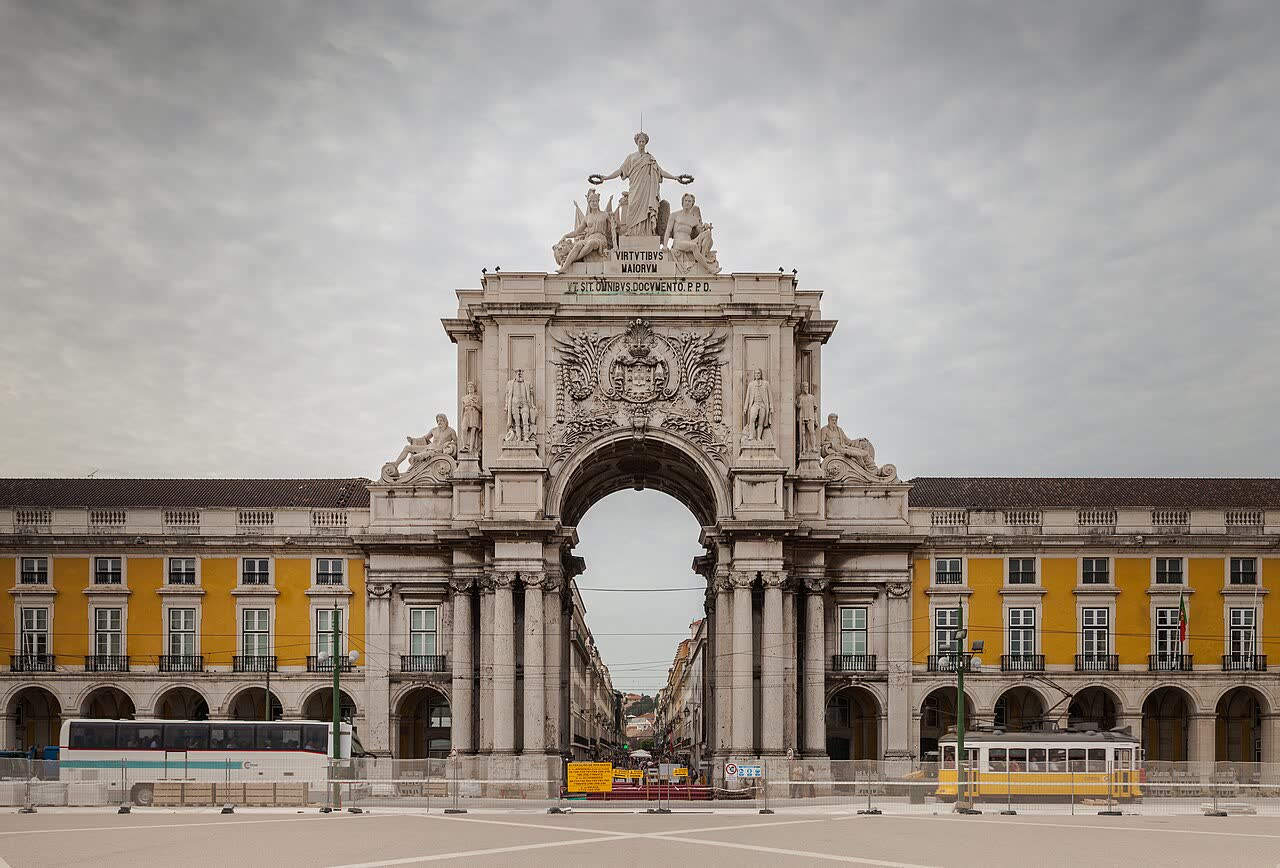
- Christmas lights: a giant tree on Praça do Comércio and lights across Baixa, Chiado and Avenida da Liberdade from late November.
- Wonderland Lisboa: the Christmas fair in Parque Eduardo VII with a Ferris wheel, ice rink, market stalls and street food, usually late November to early January (the 2025/26 edition ran from 28 November to 4 January). Entry is free; the rides cost extra. It’s very busy at weekends, so go on a weekday evening if you can.
- New Year’s Eve: a free concert and fireworks over the river at Praça do Comércio (in 2025/26 the fireworks were synchronised with a 250-drone show). Roads close and the metro gets packed, so arrive early.
- Dia de Reis (6 January): the end of the Christmas season, when bakeries are full of bolo-rei, a ring-shaped cake topped with candied fruit.
- Carnival: in February (9 February 2027 is Carnival Tuesday), with parades nearby in Torres Vedras. See Carnival in Portugal.
- Roasted chestnuts: smoky street carts sell paper cones of castanhas assadas. Pair them with a ginjinha, the local cherry liqueur.
More festive ideas: Christmas in Portugal.
Best things to do in winter
- Museums: the Gulbenkian (its main museum reopened in July 2026 after an 18-month renovation; closed on Tuesdays), the MAAT and the Coach Museum. See Lisbon on a rainy day and Lisbon’s museums.
- The Oceanário: great for families on a wet day. See Parque das Nações.
- Fado: cosy taverns are at their best in winter. See fado in Lisbon.
- Food: hearty stews, cozido, bacalhau and warming soups. See what to eat in Portugal.
- Viewpoints on sunny days: fewer crowds and clear air. See the best Lisbon viewpoints.
- Sintra: misty and magical, with far fewer visitors. Opening hours are shorter in winter, so start early. See Sintra in one day.
Two big museums are closed: the National Tile Museum has been shut for restoration since November 2025, with no confirmed reopening date, and the National Museum of Ancient Art closed in September 2025, with reopening planned for late 2026. Check before you go.
What to eat and drink
Winter is the season for comfort food. Cozido à portuguesa is a big boiled dinner of meats, sausages and vegetables. Caldo verde, a kale and potato soup with a slice of chouriço, warms you up at lunch. Salt cod (bacalhau) is the classic Christmas Eve dish, served with potatoes, cabbage and eggs. Look out for sonhos and filhós, fried Christmas sweets, in the bakeries. A glass of port or a hot coffee in a pastelaria is the local way to warm up.
A sample winter day
- Morning: São Jorge Castle or a viewpoint while the light is clear. From November to February the castle closes at 6pm, so don’t leave it until late afternoon.
- Lunch: soup and the dish of the day in a small tasca in Alfama.
- Afternoon: a museum, or the riverside if the sun is out.
- Early evening: the Christmas lights in the Baixa and chestnuts on Rossio.
- Night: dinner and fado.
What to pack
- A warm jacket, layers and a waterproof (umbrellas struggle in the river wind).
- Shoes with grip: the cobbles get very slippery when wet.
- Something warm to sleep in, as rooms can be chilly.
- Sunglasses: the winter sun is low and bright.
Prices and crowds
Outside Christmas and New Year, winter is low season: hotel rates drop sharply, there are no queues at the big sights, and restaurants are full of locals. Christmas and New Year’s Eve are busy, so book early. Note that 1 December, 8 December, 25 December and 1 January are public holidays, and many shops, restaurants and museums close on 25 December and 1 January. Lisbon also adds a tourist tax of €4 per person per night (under-13s are free). See where to stay in Lisbon and hotels with a heated indoor pool.
Practical tips
- The historic lifts are closed: the Glória, Bica and Lavra funiculars and the Santa Justa lift are out of service, so use trams, buses or the metro on wet days. See Lisbon public transport.
- Check the forecast each morning and swap indoor and outdoor plans around the rain.
- Book fado and New Year’s dinners in advance.
FAQ
Is Lisbon worth visiting in winter?
Yes, if you don’t need beach weather. Days are mild, the sights are quiet and hotels cost far less than in summer, though you should expect some rain.
Does it snow in Lisbon?
Almost never, and frost is unusual in the city. Rain and wind are the main things to plan for.
What is the warmest winter month in Lisbon?
The three winter months are similar, with days of about 14–17°C. February tends to be drier and has longer days, so it’s often the most pleasant.
Is Lisbon busy at Christmas?
The days around Christmas and New Year’s Eve are busy and hotel prices rise, so book early. The rest of December, January and February is quiet.
More: Portugal in winter and the Algarve in winter.
See also: New Year’s Eve in Portugal and Christmas markets.
Prices and details change, so please double-check before you travel. Spotted something out of date? Tell us in the groups.
Still got questions?
Ask 305,000+ travellers and locals in our free Facebook groups.