
Santiago de Compostela Day Trip from Porto
Santiago de Compostela, in Spanish Galicia, is the end of the famous Camino pilgrimage routes. Its huge cathedral and granite old town are a UNESCO World Heritage site. It’s a popular day trip from Porto, though a long one. Here’s how to get there, what to see and whether to stay the night.
Quick answer: Santiago is about 230km north of Porto, roughly 2.5 to 3 hours by road each way. An organised day trip is the easiest option, and many stop at the fortress town of Valença on the border. Spain is one hour ahead of Portugal. See Santiago tours from Porto.
Why go
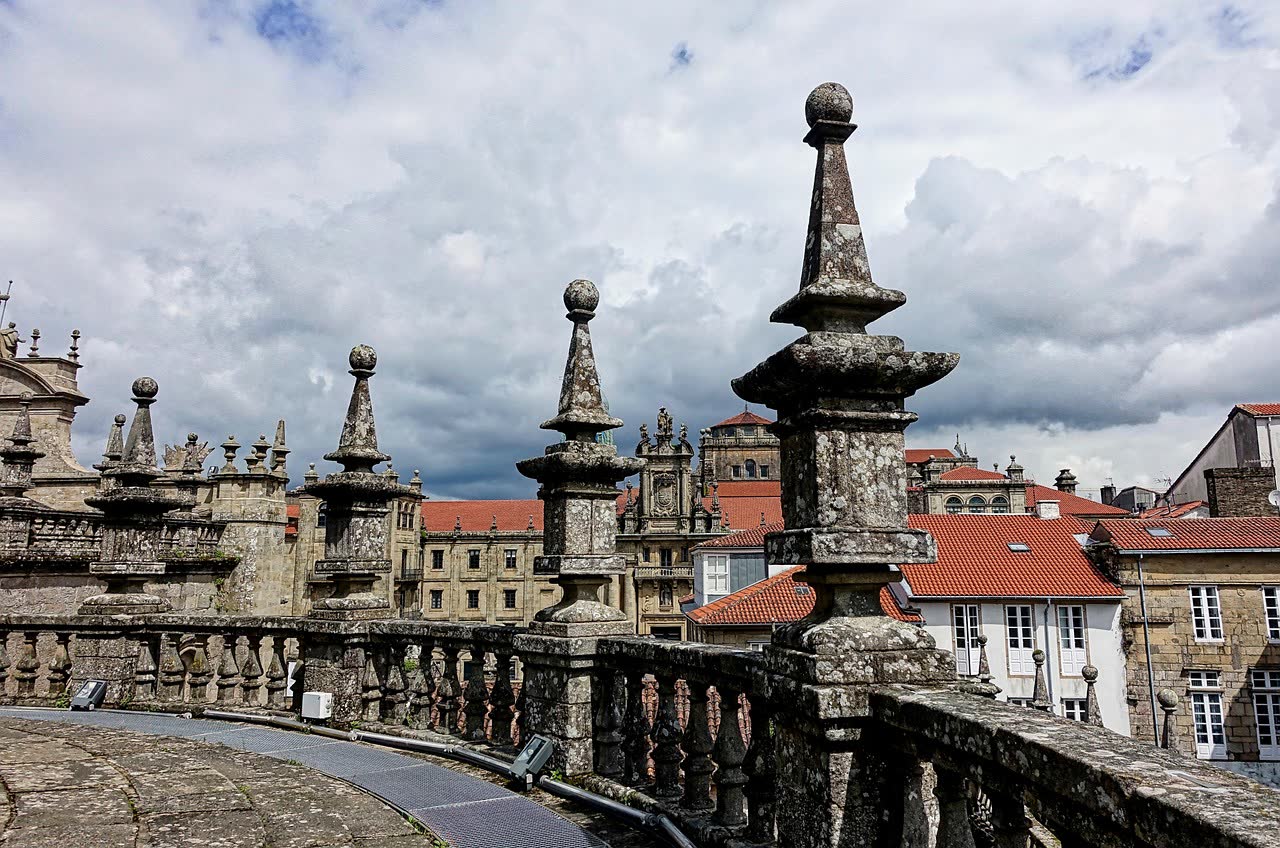
Few places feel as charged as the square in front of Santiago’s cathedral, where pilgrims arrive after walking for days or weeks. The old town is a maze of granite streets, arcades and churches that has drawn travellers for a thousand years. From Porto it’s the easiest way to add a taste of Spain to a Portugal trip.
How to get there
- Organised tour: the simplest option. It includes transport, a guided walk around the old town and free time. Most also stop at Valença. Expect a long day of 11 to 12 hours.
- Bus: direct buses run by companies such as Alsa and FlixBus link Porto and Santiago several times a day. Most take about 3 to 4 hours. Some leave from Porto airport as well as the city.
- Car: straightforward by motorway, about 2.5 hours each way without stops. Check that your rental car is insured for Spain, and ask how tolls work on both sides of the border, as you’ll pay motorway tolls in both countries. Parking in Santiago is easiest in a car park outside the old town. See driving in Portugal.
- Train: the Celta train links Porto Campanhã and Vigo, usually twice a day in each direction, taking about 2 hours 20 minutes. From 6 April 2026 until about April 2027, works on the Spanish side mean every Celta service uses a replacement bus between Valença and Vigo-Guixar. Timetables stay the same, but arrival times can vary with traffic, and the bus can’t take wheelchairs or pets. From Vigo, Spanish trains reach Santiago in about an hour. It’s too slow for a day trip but fine if you stay over.
What to see
- The Cathedral: the destination of the Camino. The present building was begun in 1075. Inside, see the Portico of Glory, a carved Romanesque entrance by Master Mateo finished in 1188, and the tomb of St James beneath the altar. Entry to the cathedral itself is free, usually from 7am to 9pm through the Platerías door. The Portico of Glory, the museum and the rooftops are ticketed visits. Allow about an hour.
- The botafumeiro: a giant incense burner weighing about 53kg, swung across the cathedral by a team of eight men. It swings only on major feast days and at some booked services. Since mid-August 2026 it has been out of use while the dome above it is restored for the 2027 Holy Year, so check the cathedral’s website before you plan around it.
- The Pilgrim’s Mass: held daily, with the best-known service at noon. Arrive early, as it fills up fast in summer.
- Praza do Obradoiro: the grand square where pilgrims arrive, facing the cathedral’s baroque façade. On one side is the Hostal dos Reis Católicos, a former pilgrims’ hospital that is now a parador hotel.
- The cathedral rooftops: guided tours take you up onto the stone roofs for views over the old town. Book ahead.
- The old town: granite arcades, churches and convents. Rua do Franco and Rua do Vilar are good for wandering.
- The Mercado de Abastos: the main market, for Galicia’s seafood and cheeses. It’s open Monday to Saturday, mainly in the morning, and closed on Sundays.
- Alameda Park: a short walk from the centre, with a classic view of the cathedral towers.
Galician food
- Pulpo a la gallega: boiled octopus with paprika, olive oil and salt.
- Padrón peppers: small fried green peppers. Most are mild, but the odd one is hot.
- Tetilla cheese: a soft, mild Galician cow’s cheese.
- Tarta de Santiago: an almond cake marked with the cross of St James.
- Albariño: a crisp white wine from nearby Rías Baixas.
A day-trip plan
- Early start from Porto, with a stop at Valença’s walls on the way.
- Late morning: the Praza do Obradoiro and the cathedral.
- Lunch: tapas and pulpo in the old town (remember the hour’s time difference, as Spanish lunch runs late).
- Afternoon: the market, the old streets and Alameda Park, then head back.
If you can, stay overnight. The old town is magical in the evening once the day-trippers leave.
Walking the Portuguese Camino
The Camino Português is the second most popular route to Santiago, starting in Lisbon or, more often, Porto. From Porto, it takes about 10 to 14 days on foot, via the inland route through Ponte de Lima and Valença or the coastal route. To receive the Compostela certificate, you must walk at least the last 100km, which many people start from Tui, just across the river from Valença. See Ponte de Lima and Valença.
When to go
- Spring and early autumn: the best balance of weather and crowds.
- 25 July: the feast of St James, with big celebrations and fireworks the night before. Very busy.
- Holy Years: when 25 July falls on a Sunday, it’s a Jubilee year and pilgrim numbers soar. The next one is 2027, so book beds early for that year.
- Winter: quiet but often wet.
Tips
- Time zone: Spain is one hour ahead.
- Weather: Santiago is one of the rainiest cities in Spain, so bring a waterproof.
- Cathedral visits: dress modestly, and don’t sightsee during Mass.
- Bags: backpacks are not allowed inside the cathedral, so travel light or leave yours in storage first.
- Money: both countries use the euro.
- ID: there are no routine border checks between Portugal and Spain, but carry your passport or ID card.
FAQ
Can you visit Santiago de Compostela as a day trip from Porto?
Yes, but it’s a long one: about 2.5 to 3 hours by road each way, and 11 to 12 hours on a tour. Staying one night is more relaxed.
Is there a train from Porto to Santiago?
Not directly. The Celta runs from Porto to Vigo, with a replacement bus between Valença and Vigo until about April 2027, and then you change to a Spanish train for Santiago.
Will I see the botafumeiro swing?
Probably not right now. It has been out of use since mid-August 2026 during restoration works, and even in normal times it swings only on set feast days and at some booked services.
More: the best day trips from Porto, Viana do Castelo and the Minho and the best Porto tours.
See also: walking the Camino Portugues.
Some links in this guide are affiliate or referral links (GetYourGuide, Booking.com, Discover Cars, Welcome Pickups, Airalo, Yesim, Saily, Tiqets, Radical Storage, EKTA, AirHelp, Uber). If you book or sign up through them we may earn a small commission or ride credit at no extra cost to you. It helps keep our groups and this site free.
Still got questions?
Ask 305,000+ travellers and locals in our free Facebook groups.