
Trip guides / North Portugal
Valenca: Fortress Town on the Spanish Border
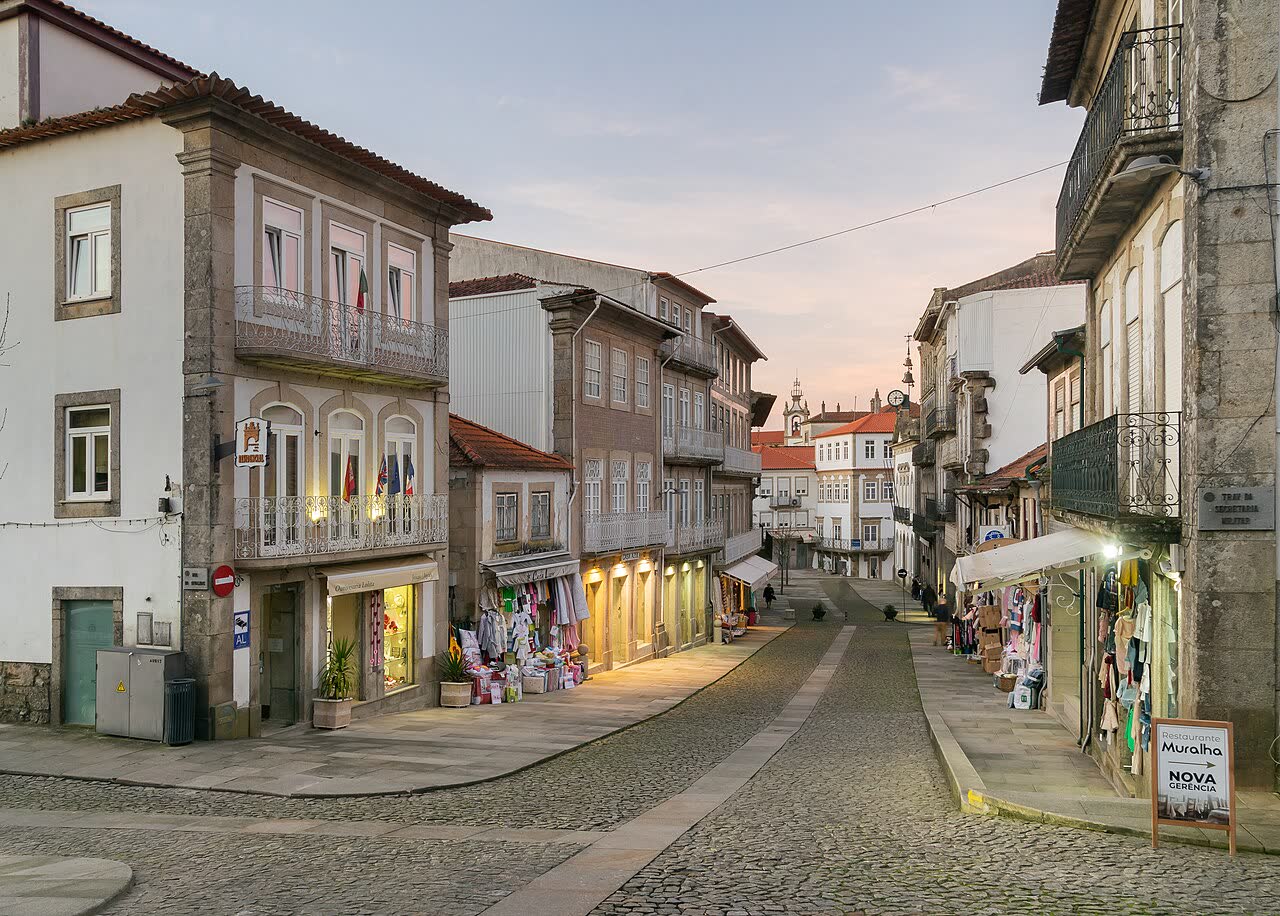
Valença is a star-shaped fortress town on the Minho river, facing the Spanish town of Tui across an old iron bridge. Its walled old town is full of shops selling linens and towels, and it’s a key stop on the Camino Português.
Quick answer: Valença is about 1 hour north of Porto. Walk the ramparts of the fortress for views over the river to Spain, browse the shops inside the walls, and cross the bridge to Tui to see its cathedral. Cycle the Ecopista do Rio Minho along the river. See places to stay in Valença.
.jpg)
Why go
Valença guarded Portugal’s northern border for centuries, and its fortress is one of the best preserved in the country. The first walls went up in the 13th century, and the huge bastions you see today were added in the 17th and 18th centuries. Inside, the old town is a car-light maze of cobbled streets, small squares and shops. Across the river sits Tui, so you can walk between two countries and two old towns in one easy day.
The bastions follow the star-shaped design used across Europe at the time, with angled walls so defenders could cover every approach. From above, the outline is easy to make out, and from the ramparts you get a sense of how seriously the two neighbours once watched each other.
Things to do
- The fortress: massive star-shaped walls and bastions around the old town. It’s made up of two walled sections joined across a ditch, with four main gates. Allow an hour or two to walk round.
- The ramparts: views over the Minho and Spain. Look for the old cannons along the north wall facing Tui.
- The churches: the parish church of Santo Estêvão, rebuilt in the 18th century, and the older church of Santa Maria dos Anjos.
- The Roman milestone: a 1st-century AD milestone from a Roman road, set up inside the fortress.
- Shopping: linens, towels and household goods, popular with Spanish visitors. Prices and quality vary, so look around before you buy.
- Tui: cross the river to the Spanish town and its fortress-like cathedral, begun in the 12th century, which looks down over the river from the top of the old town. Spain is one hour ahead.
- The international bridge: the old iron bridge, opened in the 1880s, carries trains on one level and cars and walkers on the other. Walking across takes about 10 minutes.
- The Ecopista do Rio Minho: a greenway on an old railway line along the river, running about 17 km from Valença towards Monção. It’s flat and good for families. See cycling in Portugal.
Getting there
- Driving: about 1 hour to 1 hour 15 minutes north of Porto on the A3 motorway, which has tolls. There is parking outside the fortress walls, and some inside, but the old town is best on foot. See Portugal’s tolls explained.
- Train: CP regional trains run on the Minho line from Porto Campanhã to Valença. The trip usually takes about 2 hours or more, depending on the train. The station is a short walk below the fortress.
- The Celta to Vigo: the international Porto to Vigo train stops at Valença. Because of Spanish engineering works, from April 2026 to April 2027 the stretch between Valença and Vigo runs as a replacement bus, so check with CP before you plan an onward trip.
- Bus: FlixBus and other coaches run from Porto, taking about 2 hours. Check current times before you go.
How long to spend
Half a day is enough for the fortress and a walk on the walls. Make it a full day if you want to cross to Tui or ride part of the Ecopista.
A one-day route
- Morning: walk the ramparts and the streets of the fortress, then browse the shops.
- Lunch: a local restaurant inside the walls.
- Afternoon: walk across the old bridge to Tui and climb up to the cathedral. Remember the time change.
- Or: hire a bike and ride part of the Ecopista along the river instead.
With more time
Valença pairs well with the riverside towns of the upper Minho. Monção and Melgaço, further upstream, are the heart of Alvarinho wine country, and Caminha, at the river mouth, has beaches nearby. See Caminha.
Food
The Minho river is known for its fish, especially lamprey (lampreia), a winter and spring speciality usually cooked with rice. You’ll also find bacalhau, roast kid, and vinho verde from the surrounding vineyards, including Alvarinho from nearby Monção and Melgaço. See the vinho verde guide.
Restaurants inside the walls are used to day-trippers and many offer a set lunch menu on weekdays. On summer weekends, arrive before 1pm or book, as tables fill with visitors from both sides of the river.
When to go
Spring to early autumn is best for walking and cycling. Summer weekends get busy with day-trippers from Spain. Winter is quiet, often wet, and the time for lamprey. On weekdays outside summer, the old town is calm and easy to enjoy.
Practical tips
- Two time zones: phones may switch to Spanish time near the river. Check which time your train or bus uses.
- Shoes: the ramparts and streets are uneven cobbles, and some wall edges have no railings, so keep an eye on children.
- Money: both towns use the euro, so there’s no need to change money.
The Camino
Valença is the last Portuguese stop on the Central Camino before Spain, and Tui, just across the bridge, is the classic starting point for walking the final stretch of just over 100 km to Santiago. See walking the Camino Português.
FAQ
Can you walk from Valença to Spain?
Yes. The old international bridge has a walkway, and the walk to Tui takes about 10 minutes. Spain is one hour ahead.
Is Valença worth a day trip from Porto?
Yes, especially if you like old fortifications and want to add a second country. Half a day covers the fortress, and a full day lets you see Tui too.
Can you get to Valença by train?
Yes. Regional trains on the Minho line and the Celta international train run from Porto Campanhã, taking around 2 hours.
What do people buy in Valença?
Mostly towels, bed linen and household textiles, sold in the shops inside the fortress walls.
More: Viana do Castelo and the Minho, Ponte de Lima and Santiago de Compostela.
Some links in this guide are affiliate or referral links (GetYourGuide, Booking.com, Discover Cars, Welcome Pickups, Airalo, Yesim, Saily, Tiqets, Radical Storage, EKTA, AirHelp, Uber). If you book or sign up through them we may earn a small commission or ride credit at no extra cost to you. It helps keep our groups and this site free.
Still got questions?
Ask 305,000+ travellers and locals in our free Facebook groups.